Your Custom Text Here
Many people discovered hand crafts during the Covid lockdowns of 2020. Other embroiderers, like me, taught online as well as taking up new skills. Initially I enrolled in an online course on bookbinding: an introduction to making contemporary books with photographs. In opening a door to a new world of fine binding and designer bookbinders, I discovered the local bookbinding guild offered workshops for basic binding. Over the last few years, I found a new home amongst a group of stimulating makers.
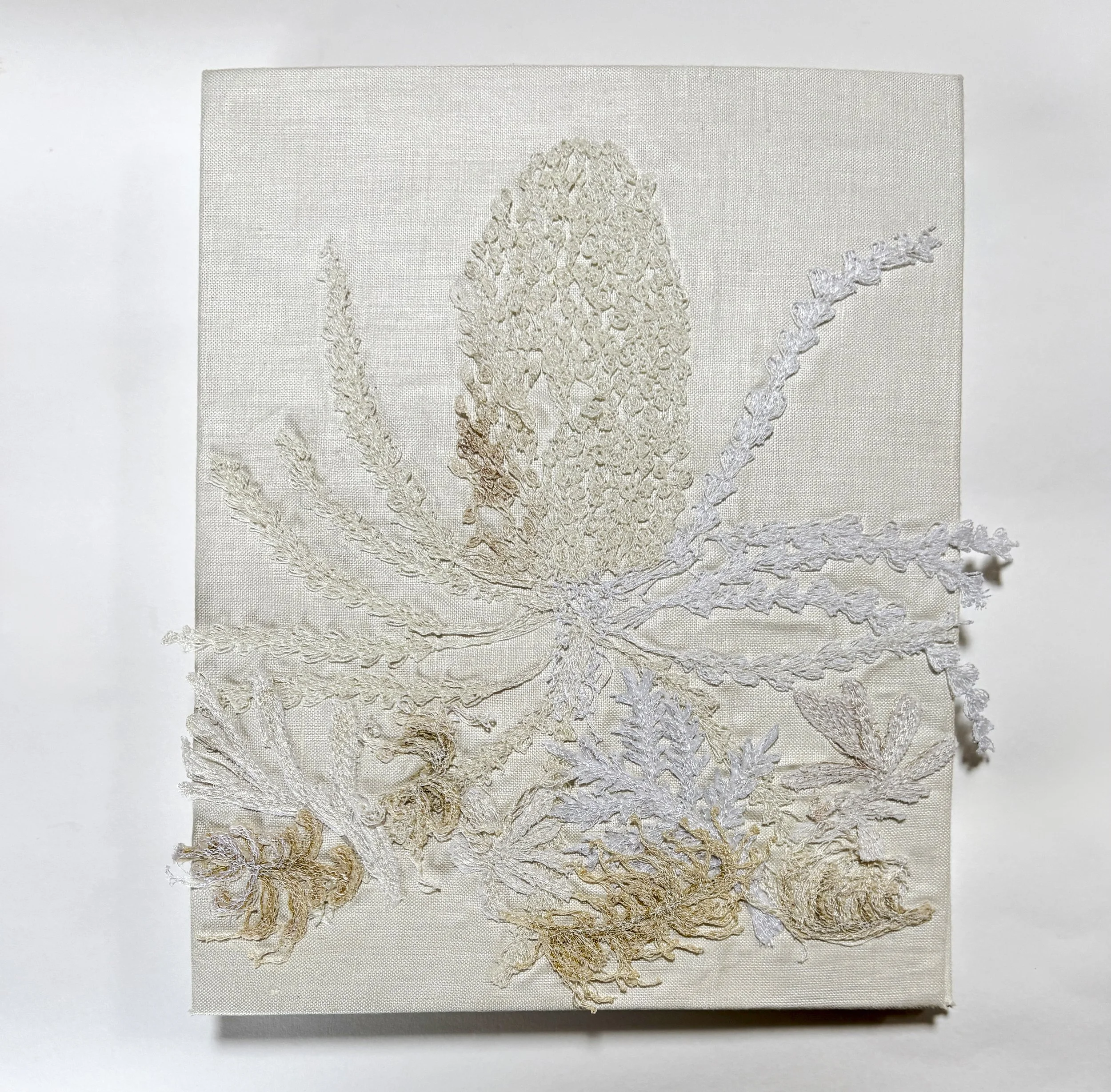
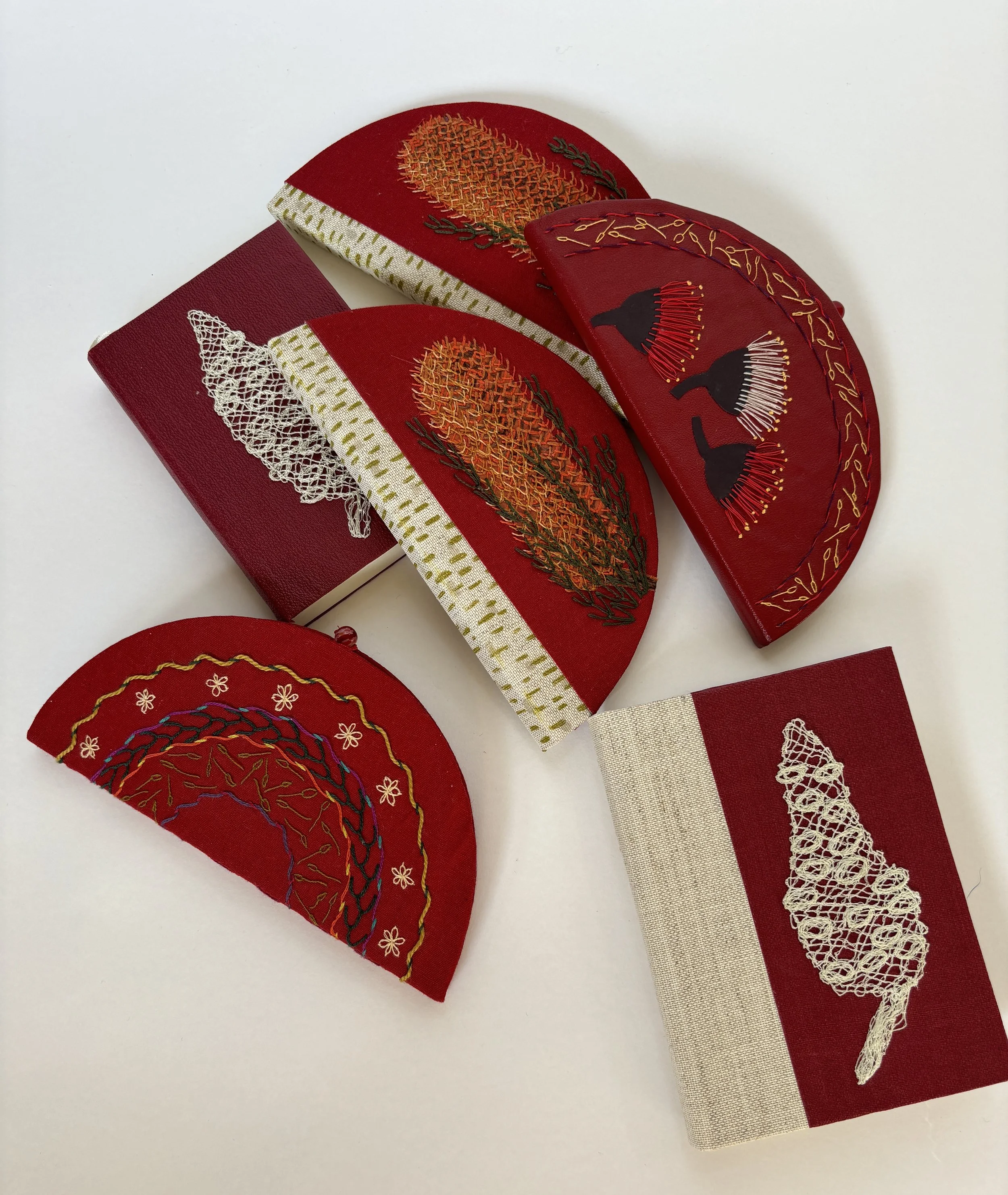
My intention in joining the bookbinders’ guild was not to embroider covers, but to understand the making of books. However, one of the early classes I took, was making bookcloth, the basic fabric on cloth covered books. Preparing an assortment of flatweave fabrics to use, gave me confidence to begin embroidering cloth specifically for covers.
I continue taking book making and book binding classes to learn various techniques. having a new medium to express ideas has been refreshing.
Learning to finely stitch text has also been a new venture which holds much potential. While I have stitched text for many years, I had never bothered to see how to really improve the readability of my stitching. It does not take as long as I had imagined.
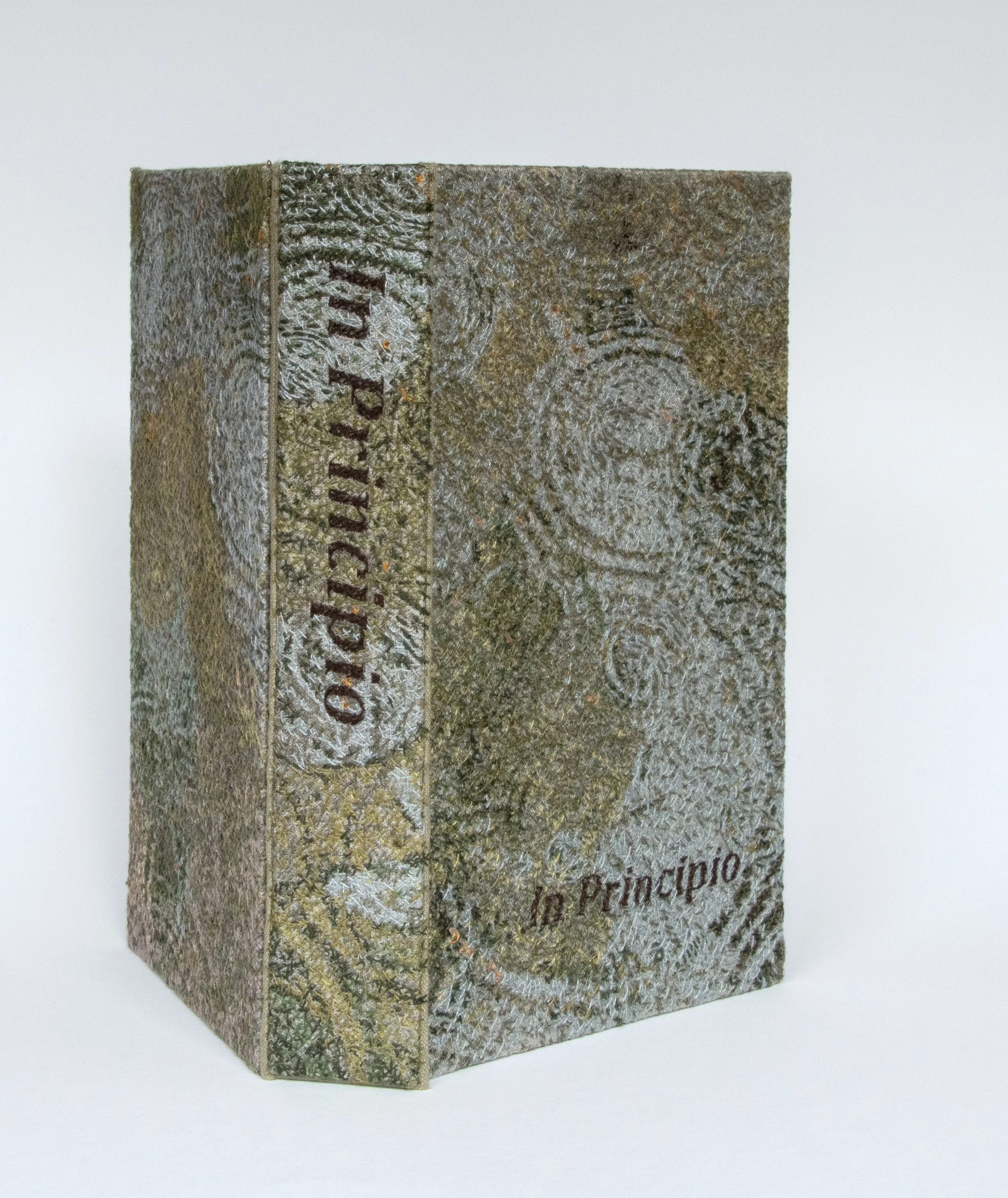
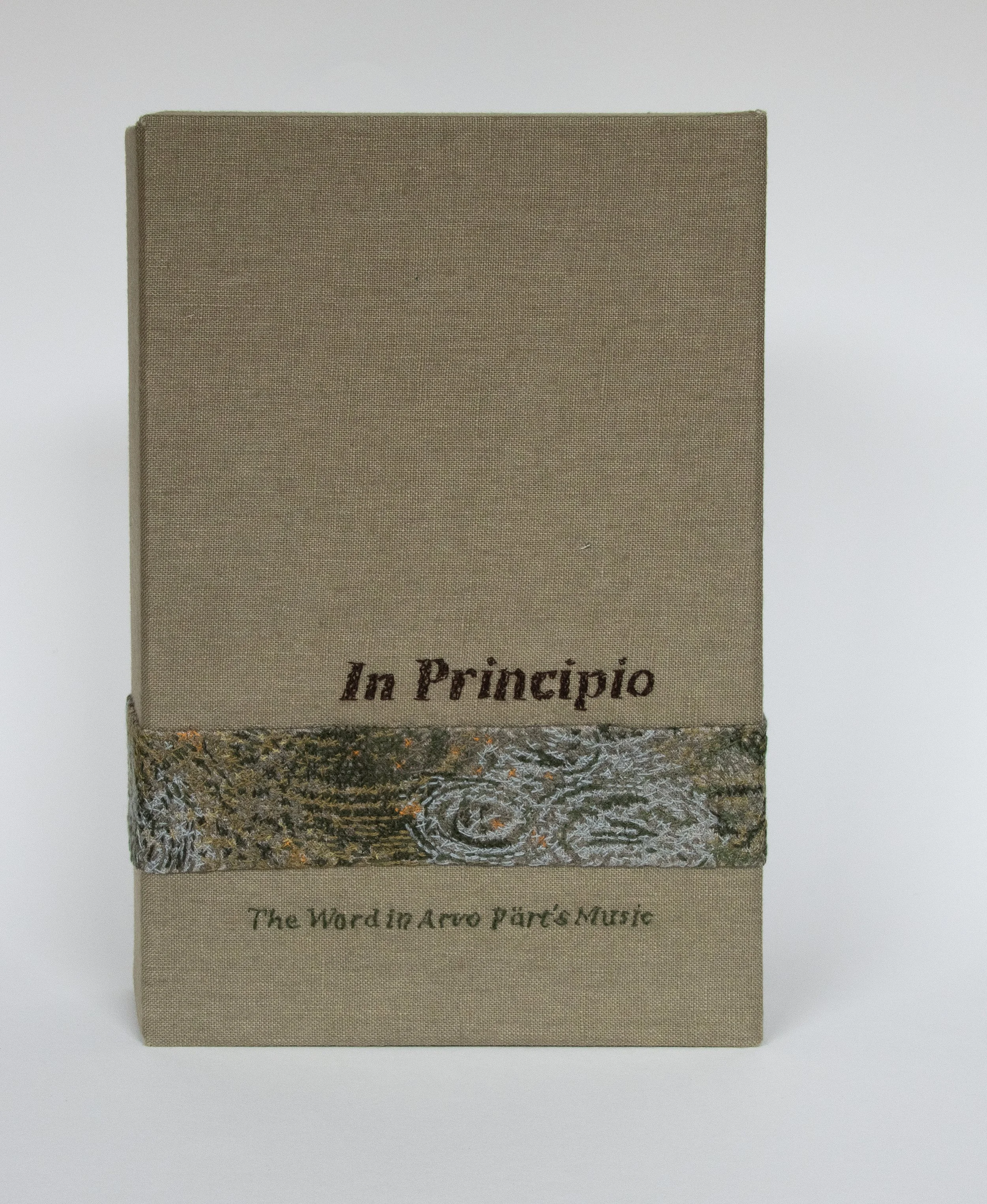
The last twelve months or so has been incredibly rewarding. My binding of In Principio The Word of Arvo Pärt’s Music was exhibited at the National Museum in Tallinn, Estonia, September 2025.
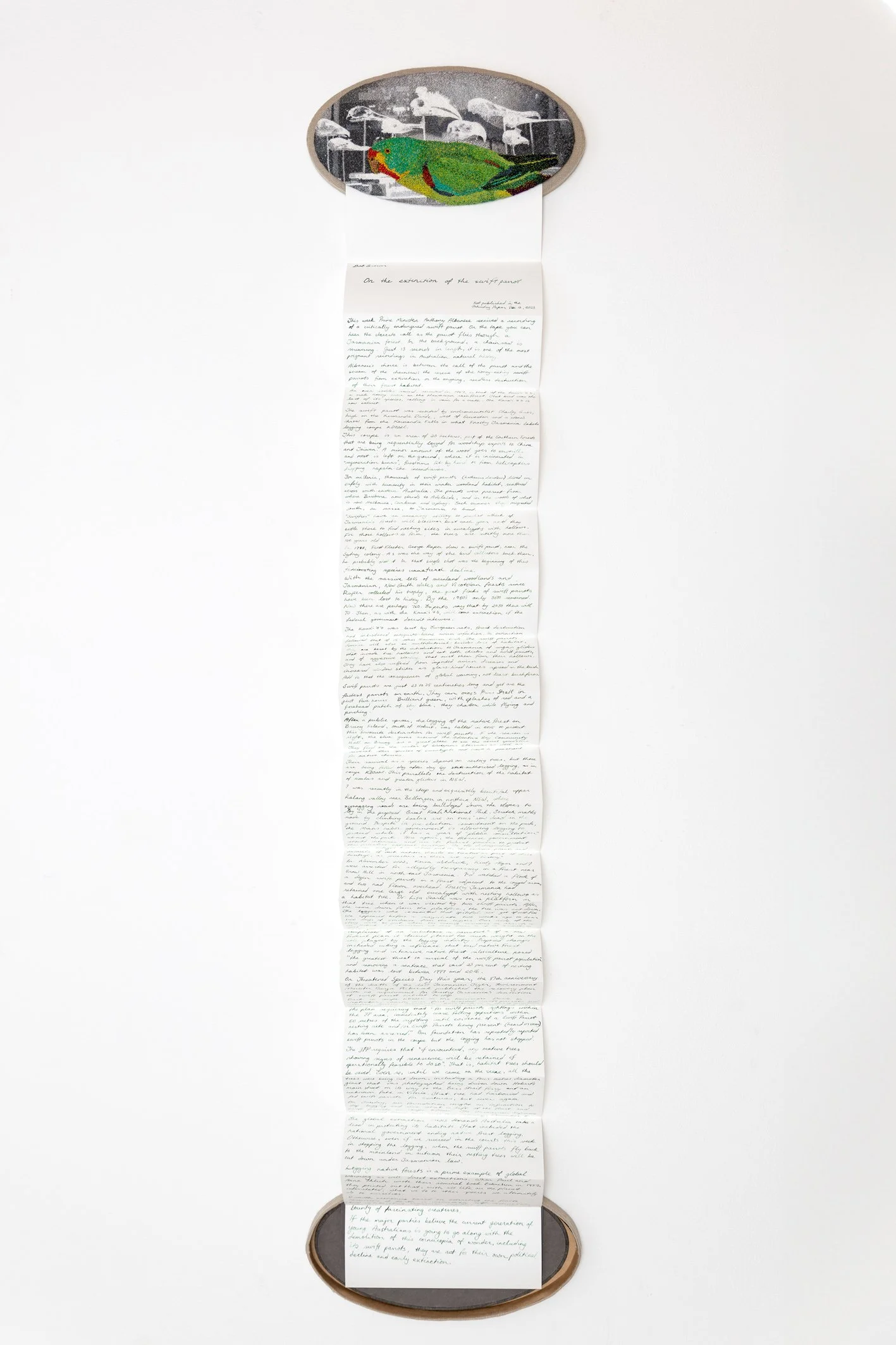
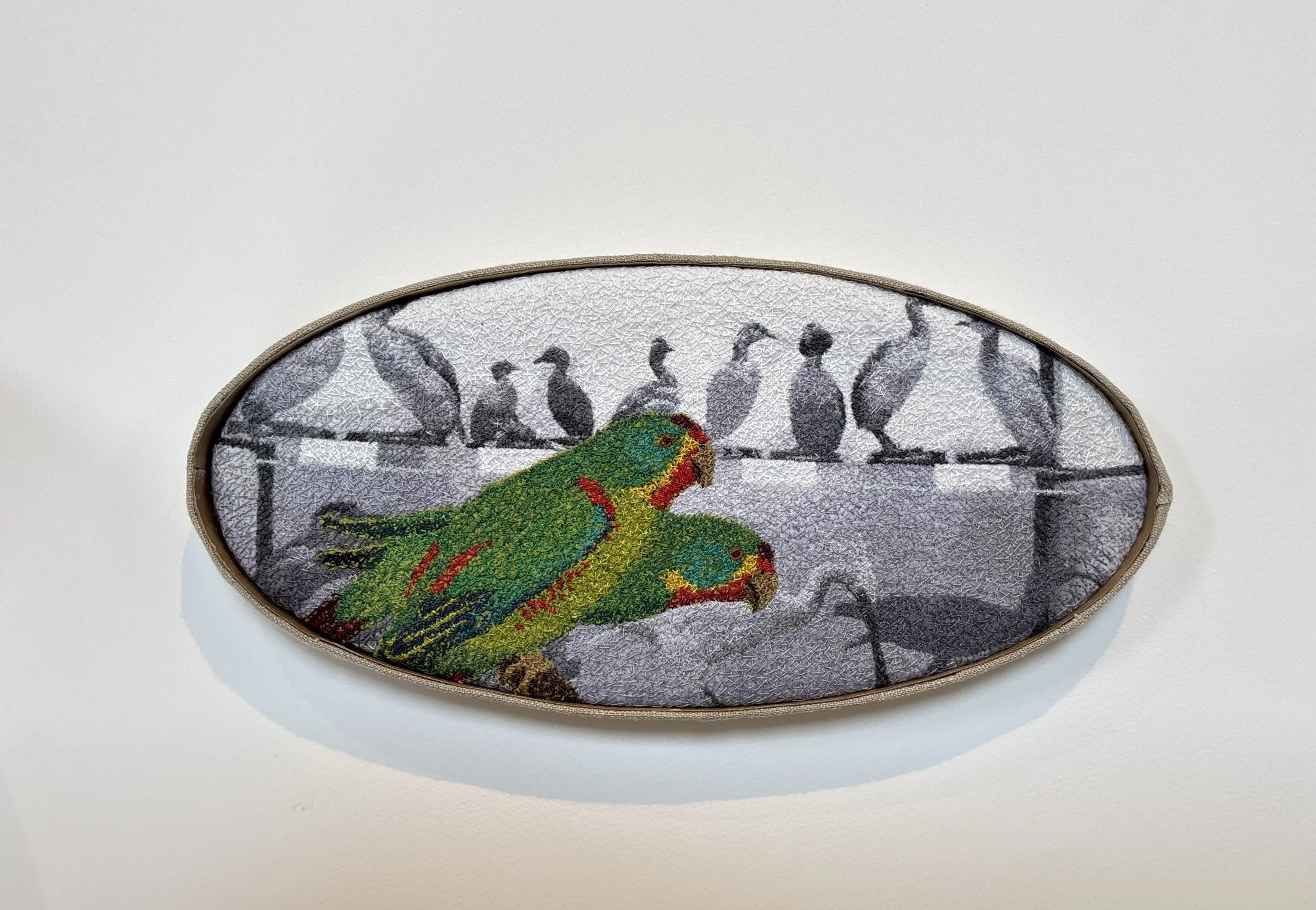
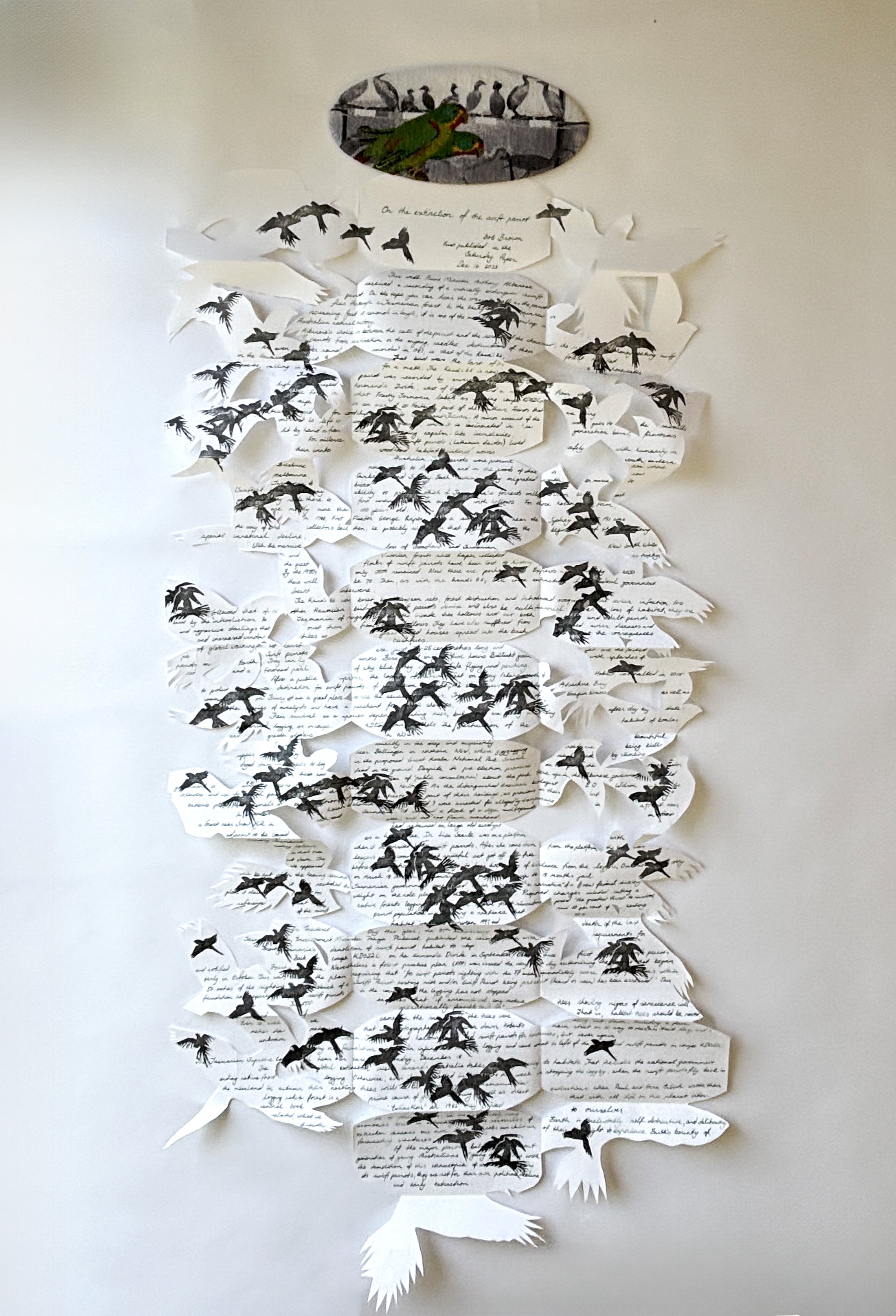
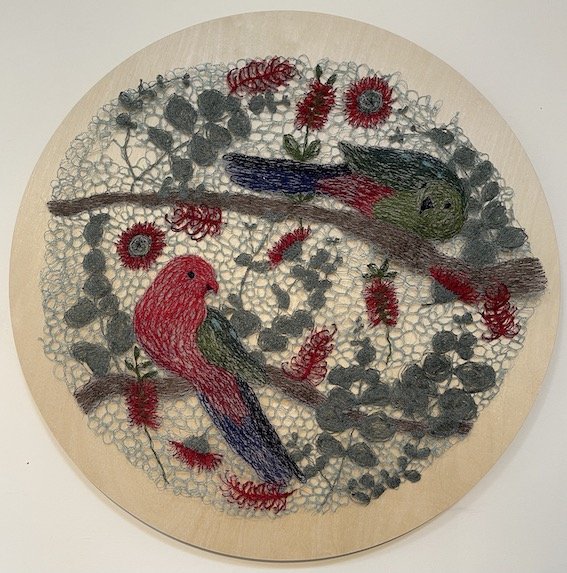
I have been playing around with images of the Swift Parrot for three years or so. First it was as an embroidered work. I then made it into a very long concertina book using the Letter to Anthony Albanese from Bob Brown. This made it to the Make Awards, organised by the Australian design Centre in Sydney.
The next iteration was as a map-fold book using rubber stamps that I hand carved, large cut-out of swift parrots and the Bob Brown letter again. The final iteration was as a handbound book, using the rubber stamps again and cutting out silhouettes of the Swift Parrot. This is a pop-up book. Rather than using the whole text of the Bob Brown letter, I used it as inspiration for the text of my book.
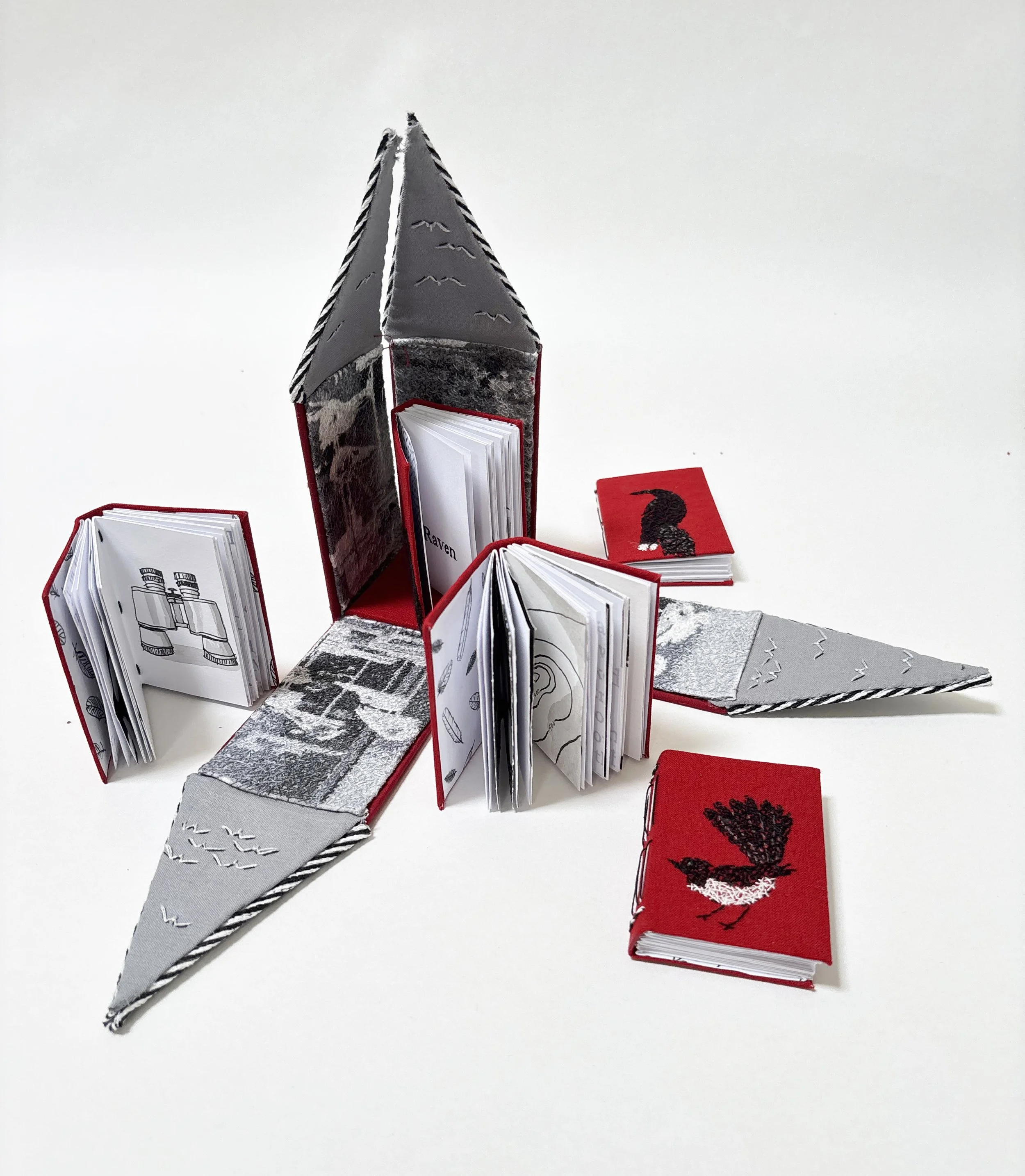
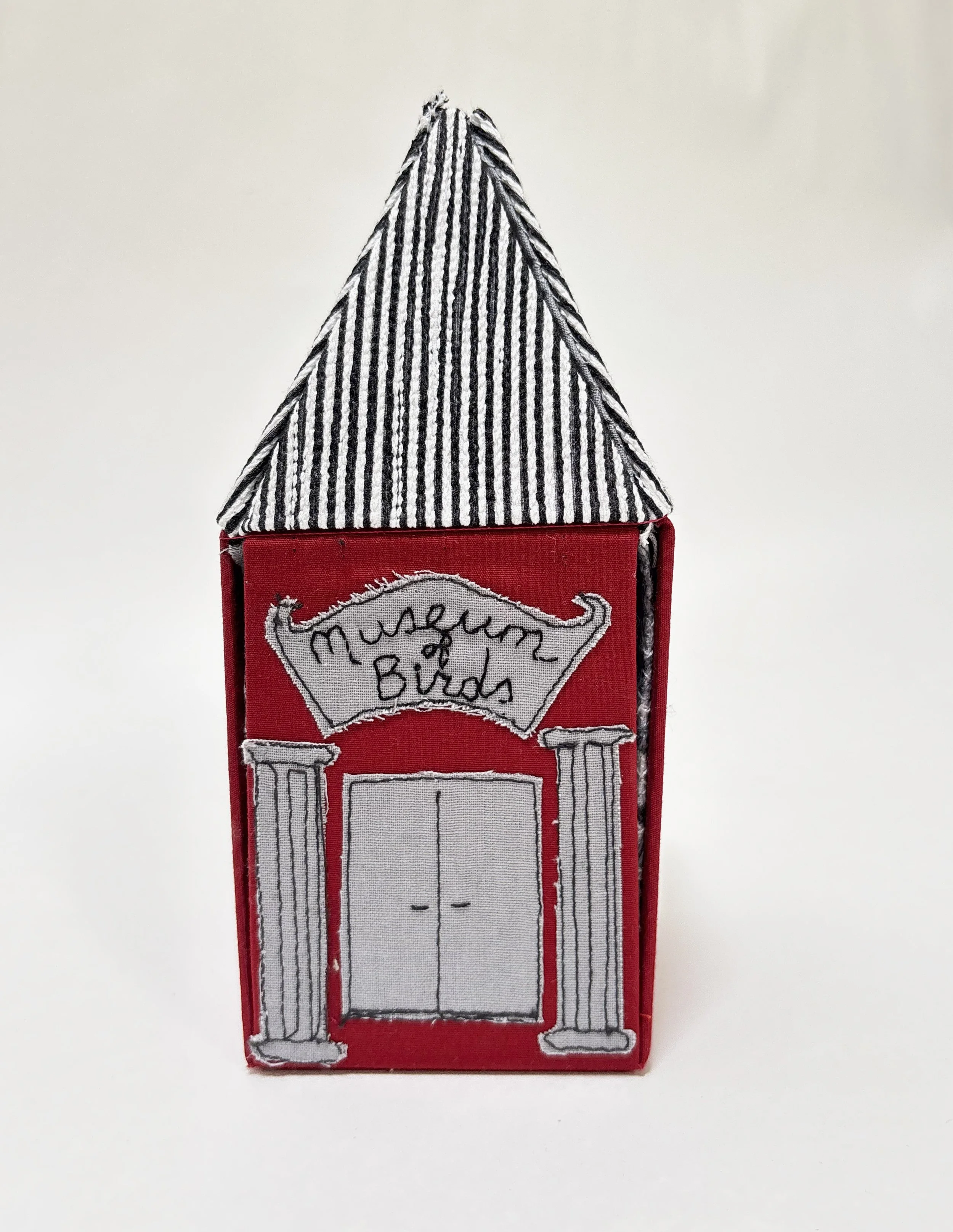
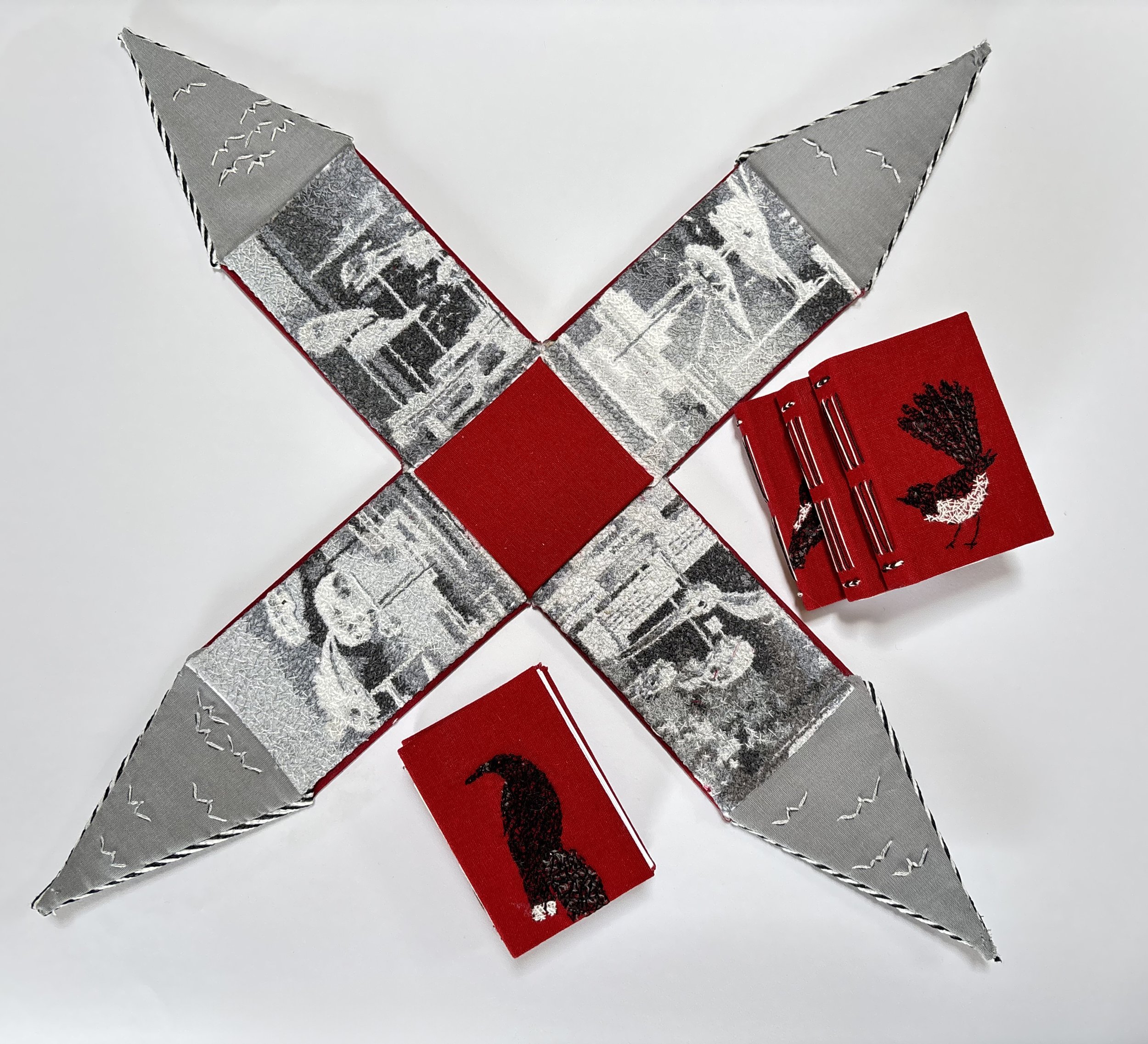
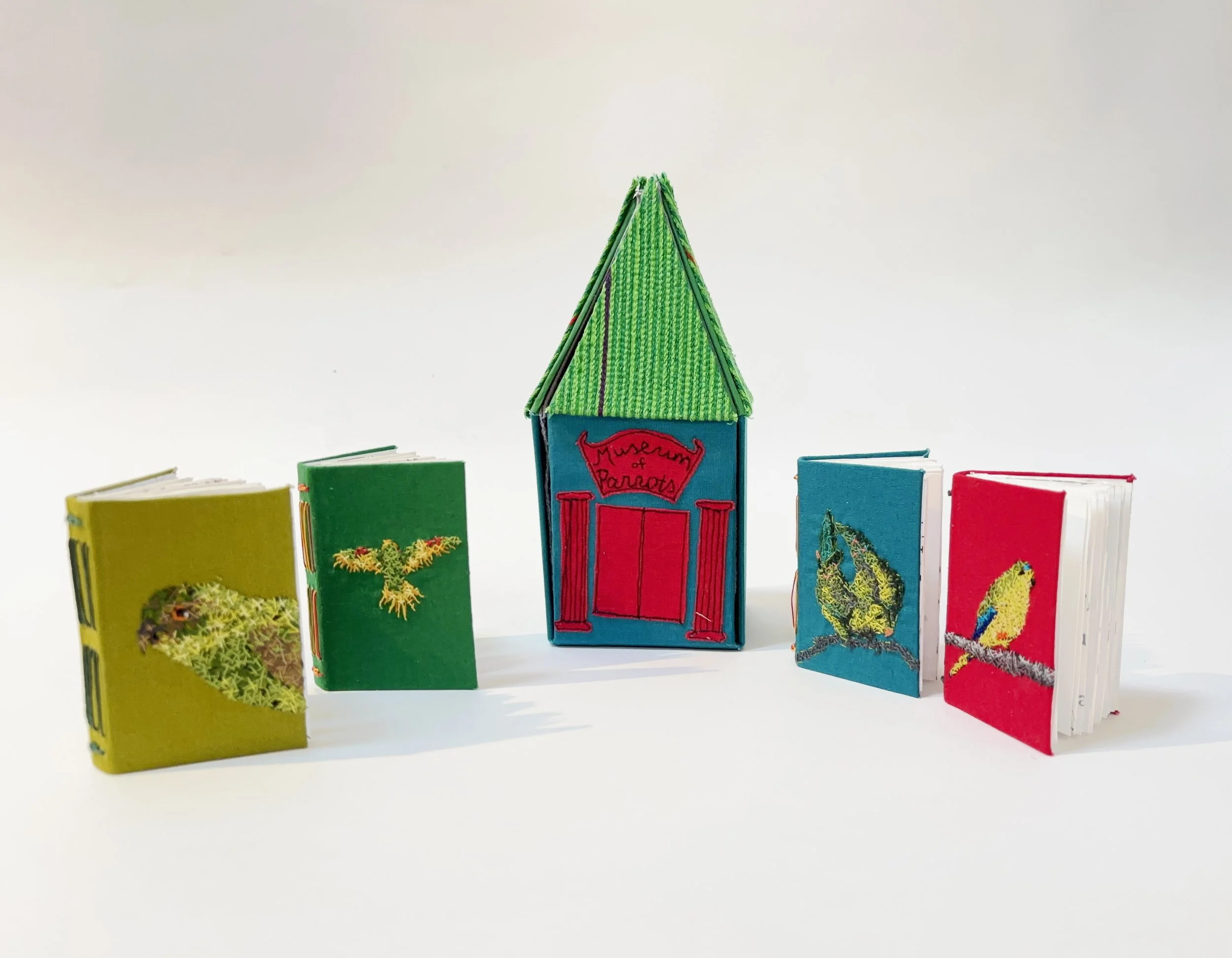
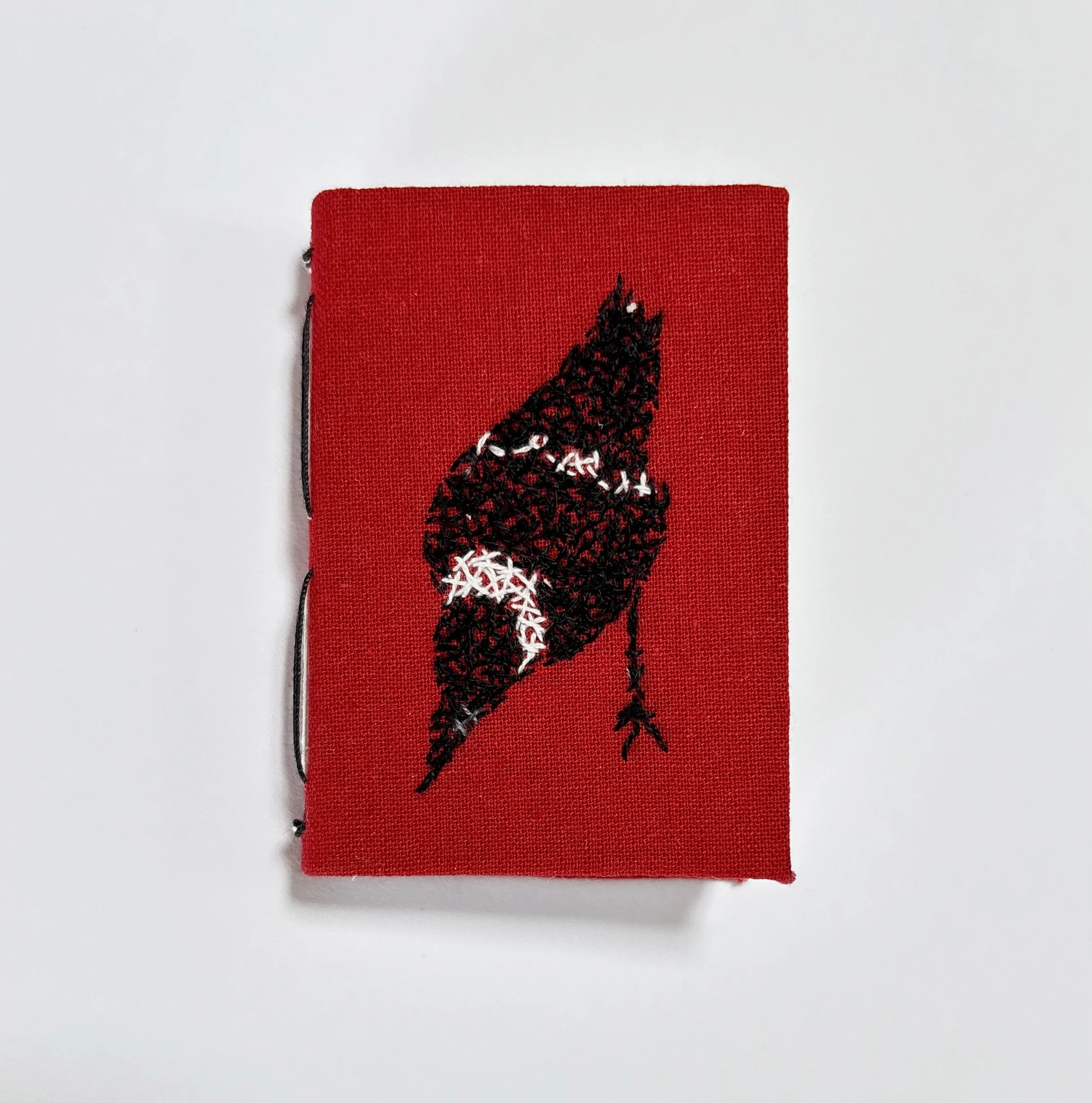
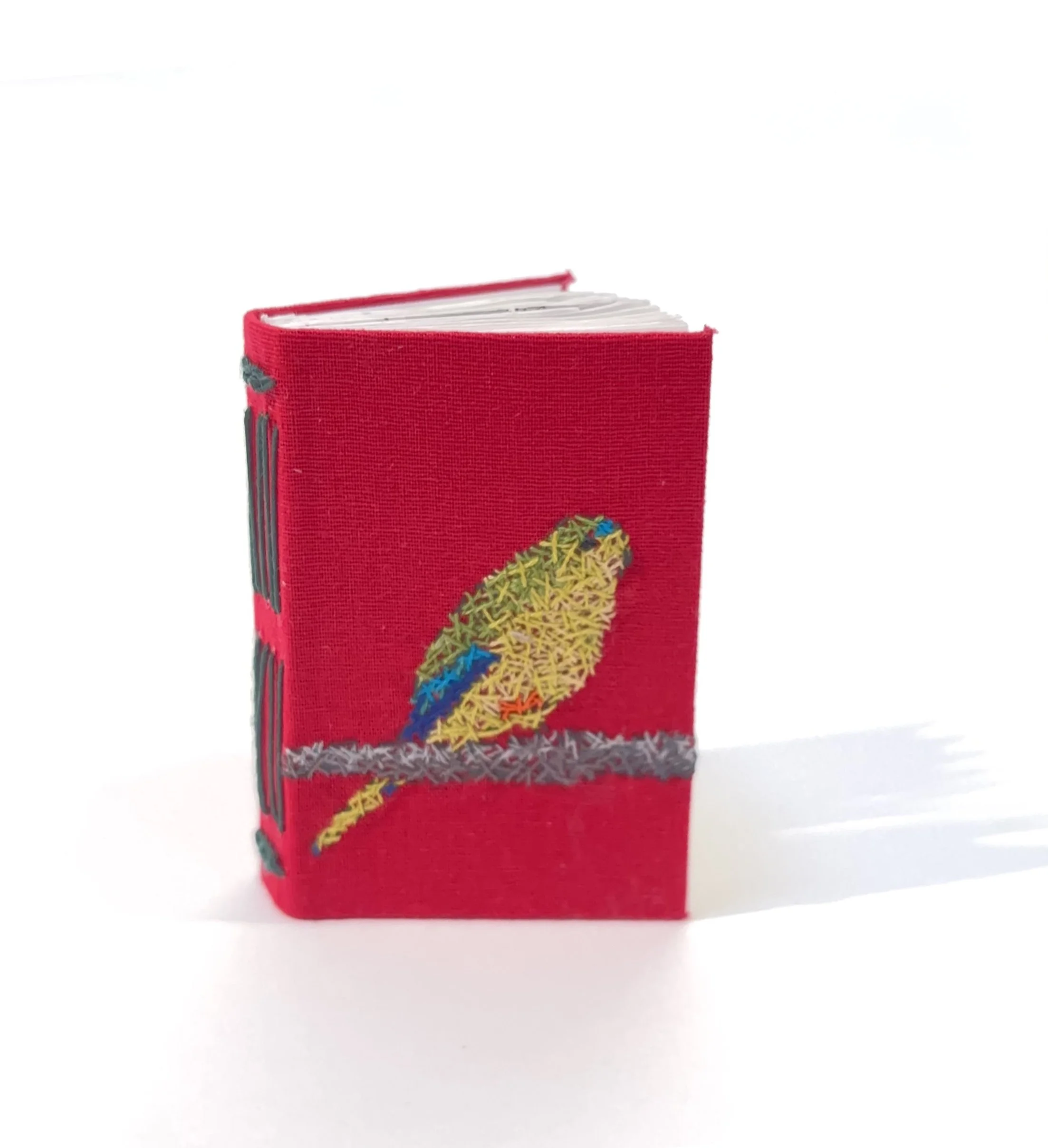
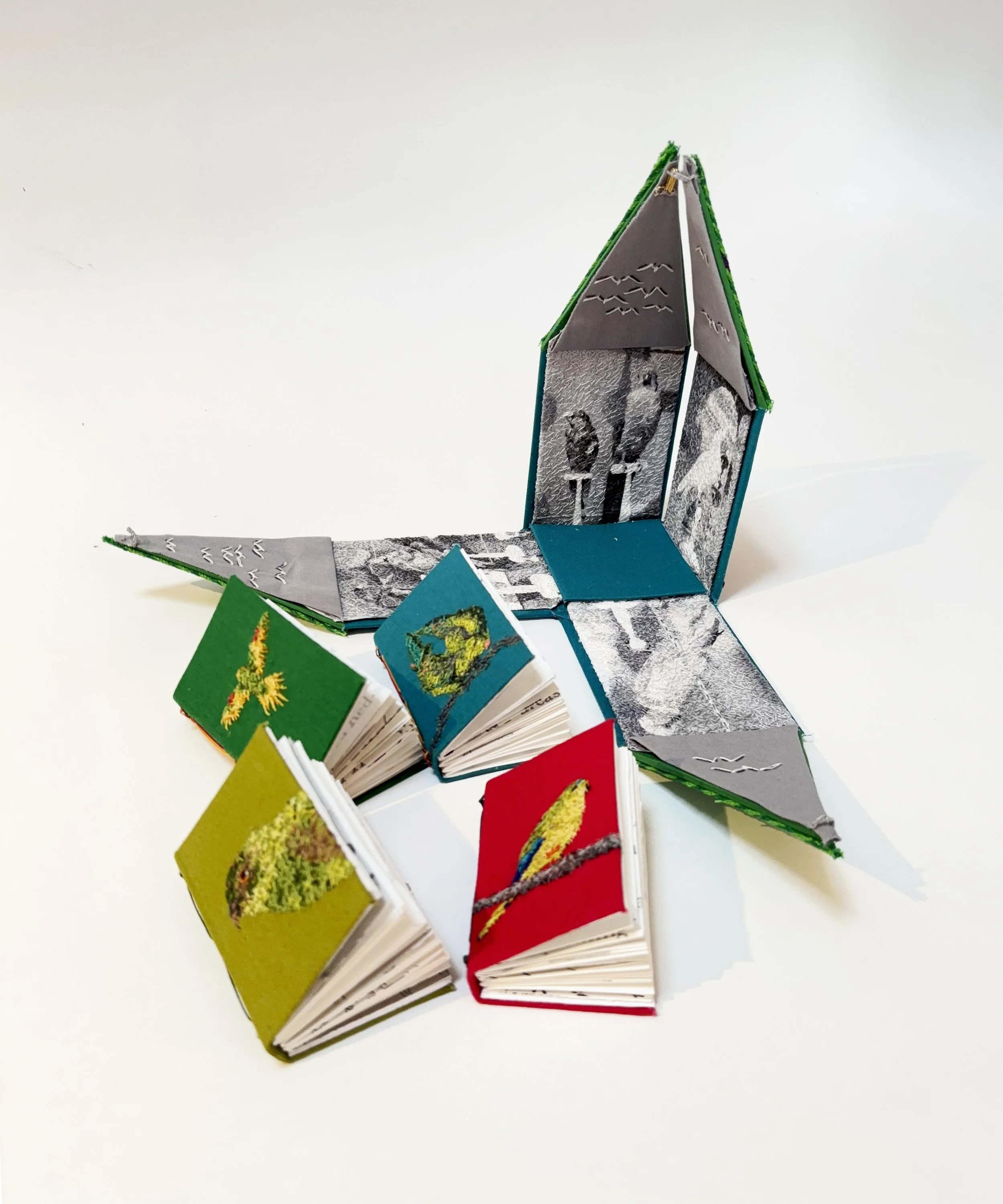
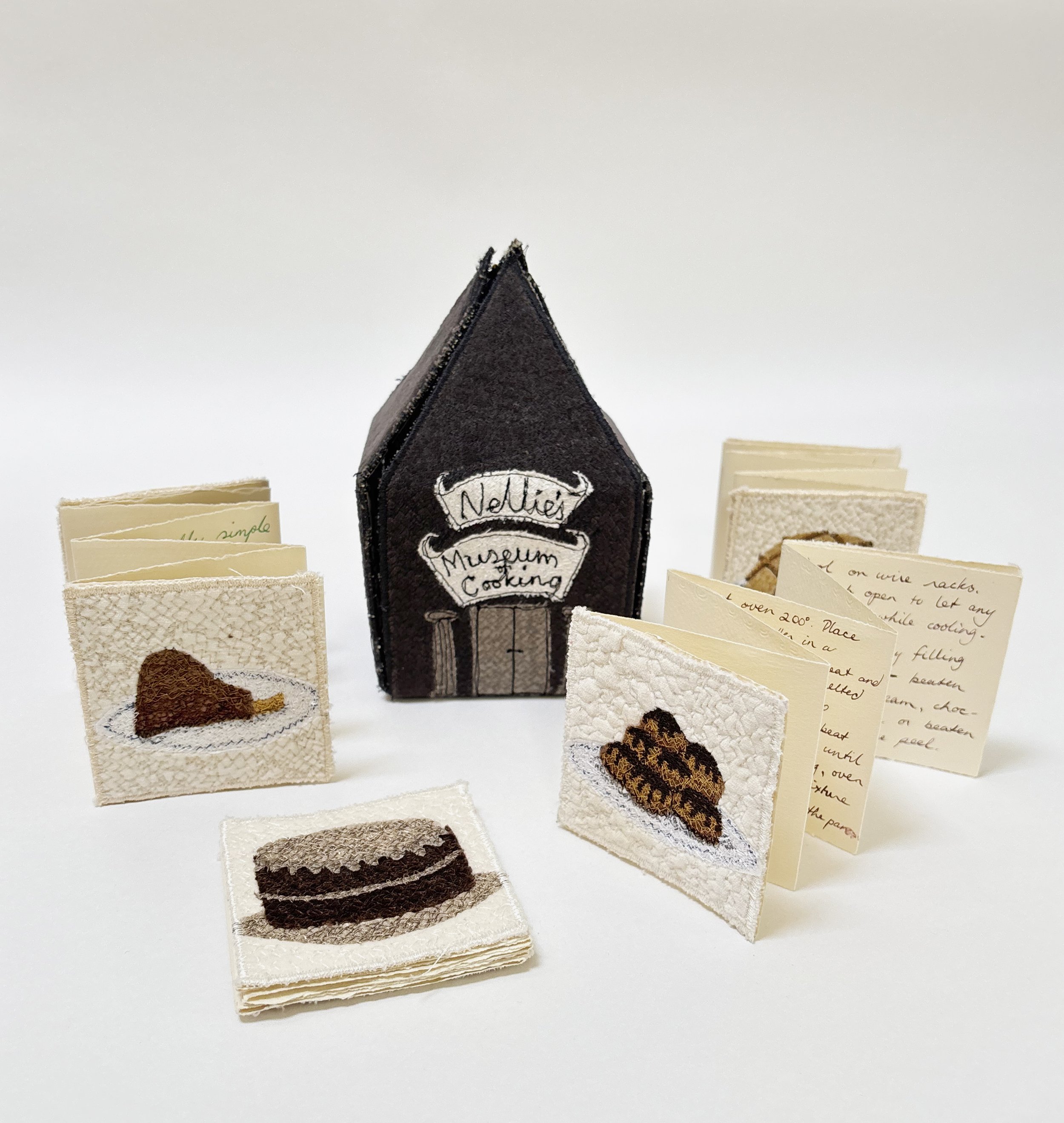
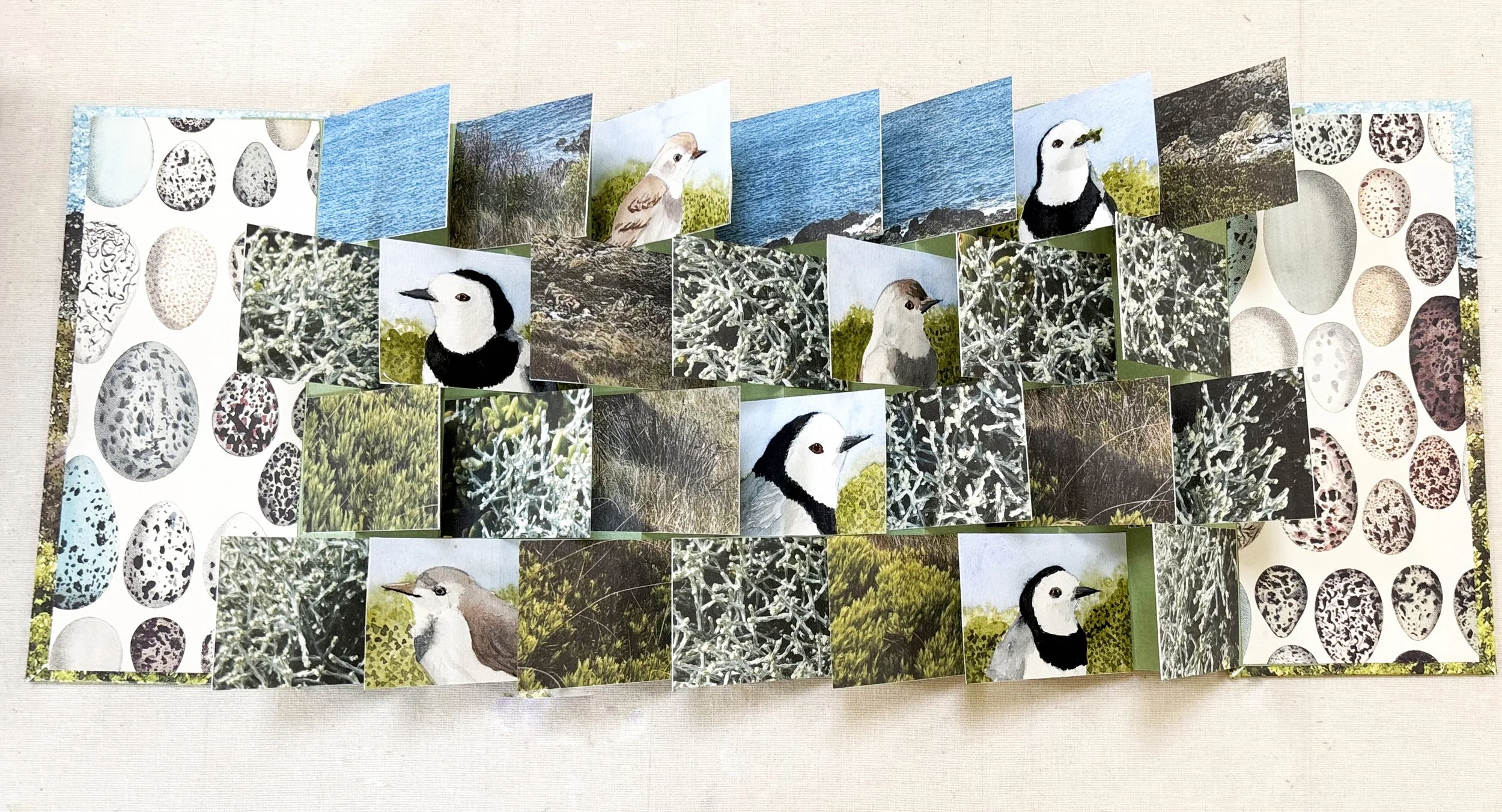
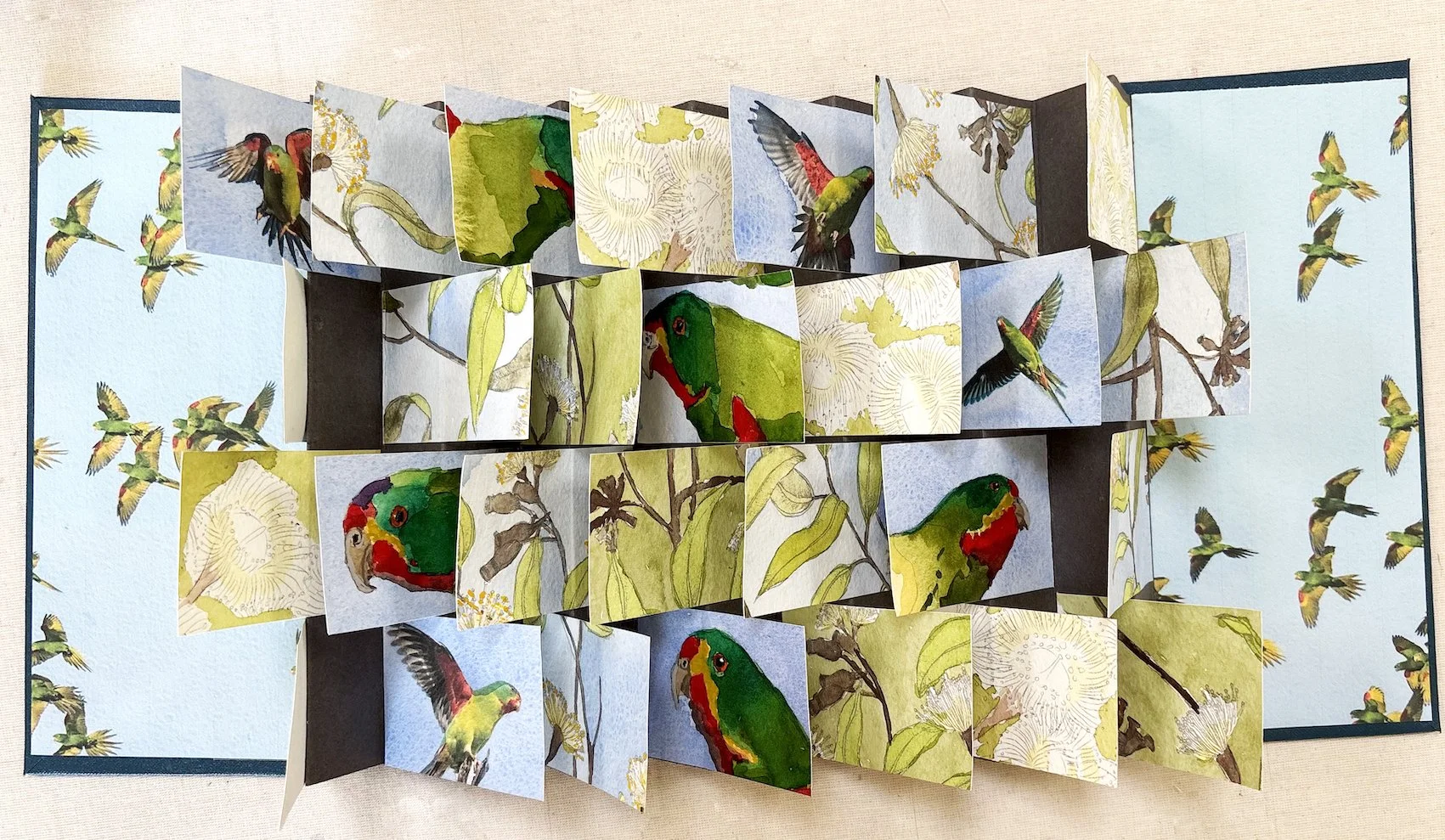
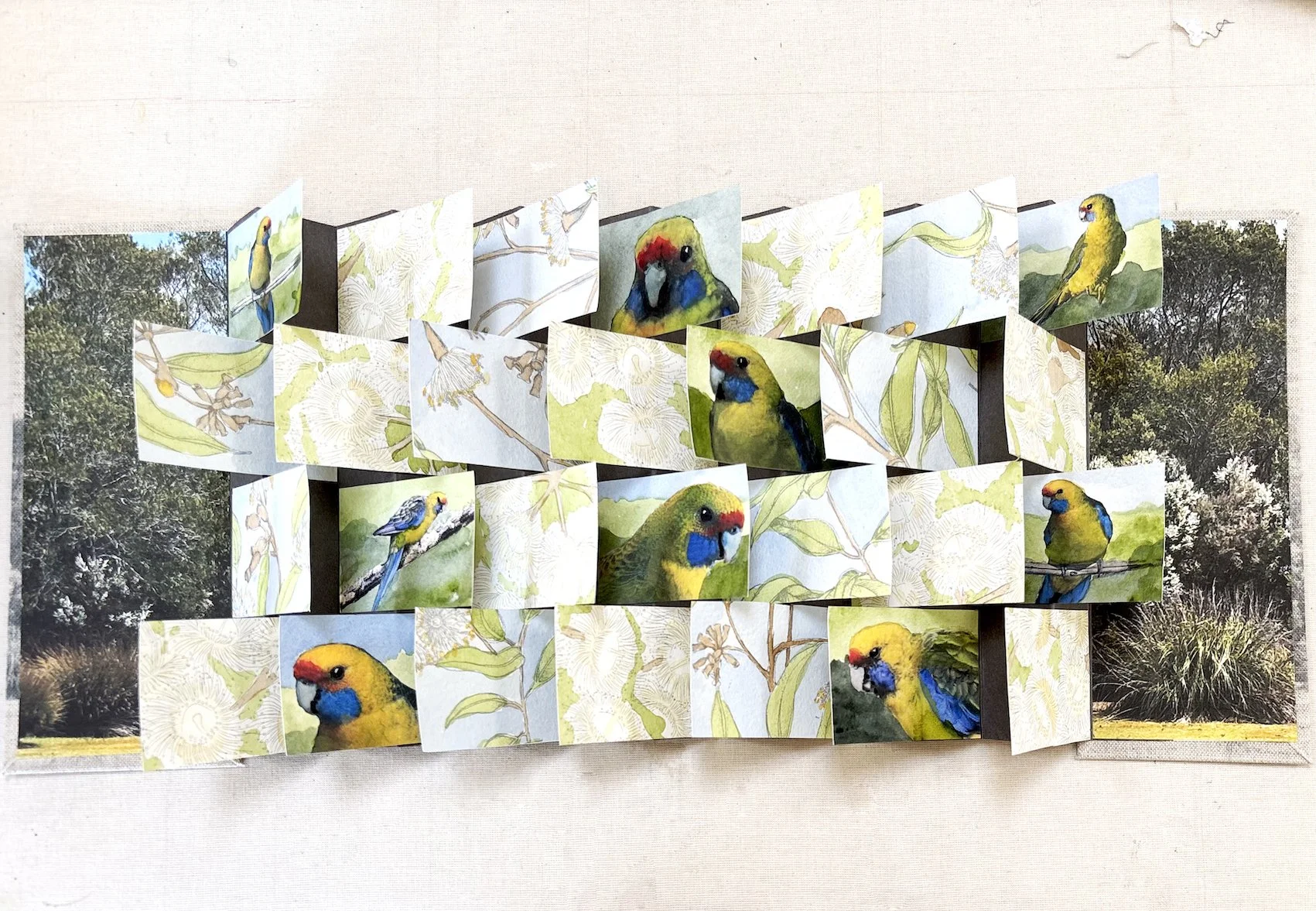
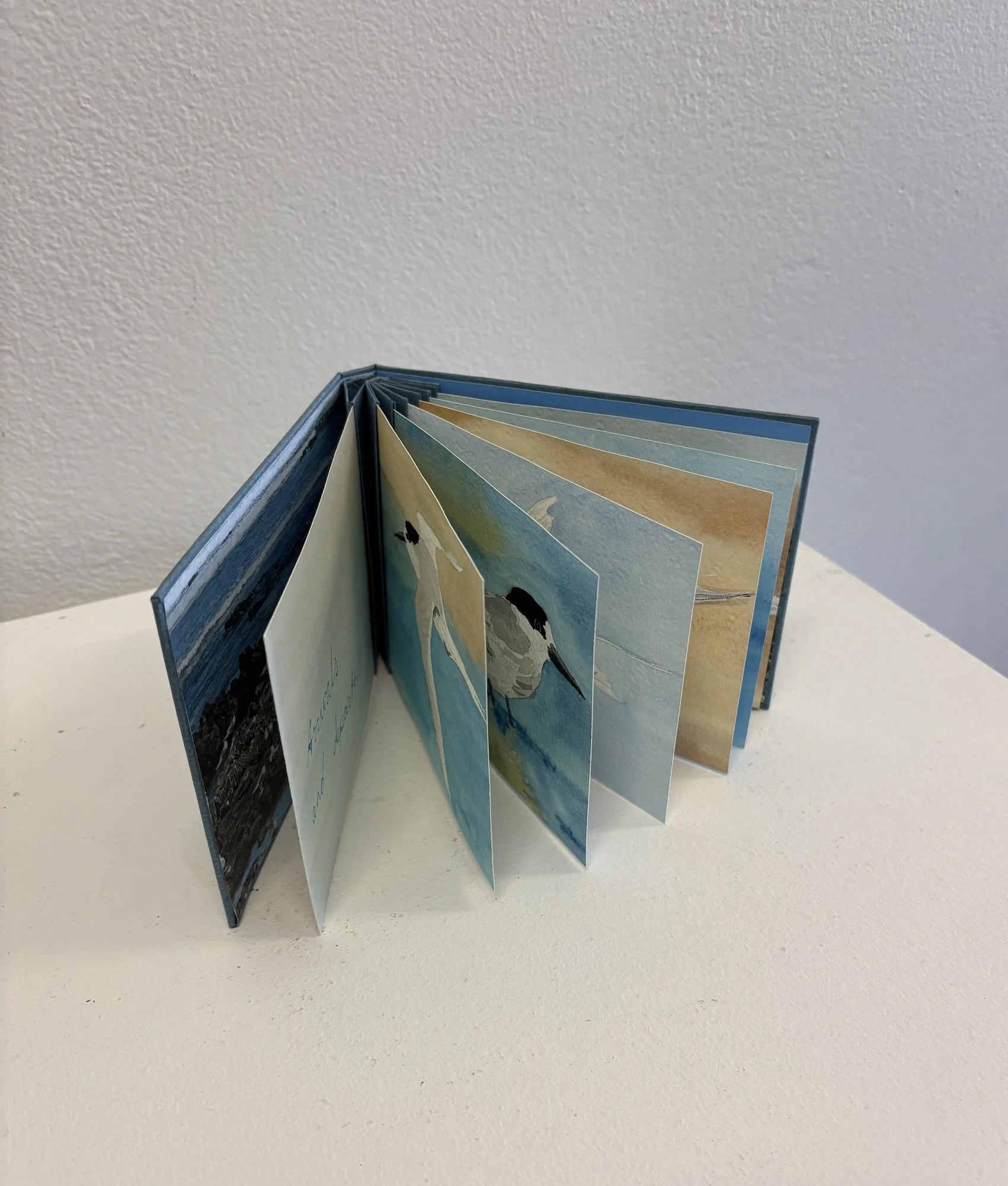
I have been making ‘museums’ with miniature books for a few years. The original one was The Red Shoe Museum from 2011. I then made another for my daughter when she left home. These were filled with recipes that our family enjoyed. At the end of 2025 I began making them again. This time with a little more knowledge of bookbinding, however I ended up making it six times to get it right. I made the Museum of Birds filled with books on the black and white birds that visit my garden here in Canberra. The second one, The Museum of Parrots, is filled with the five Australian parrots that are near-extinct.
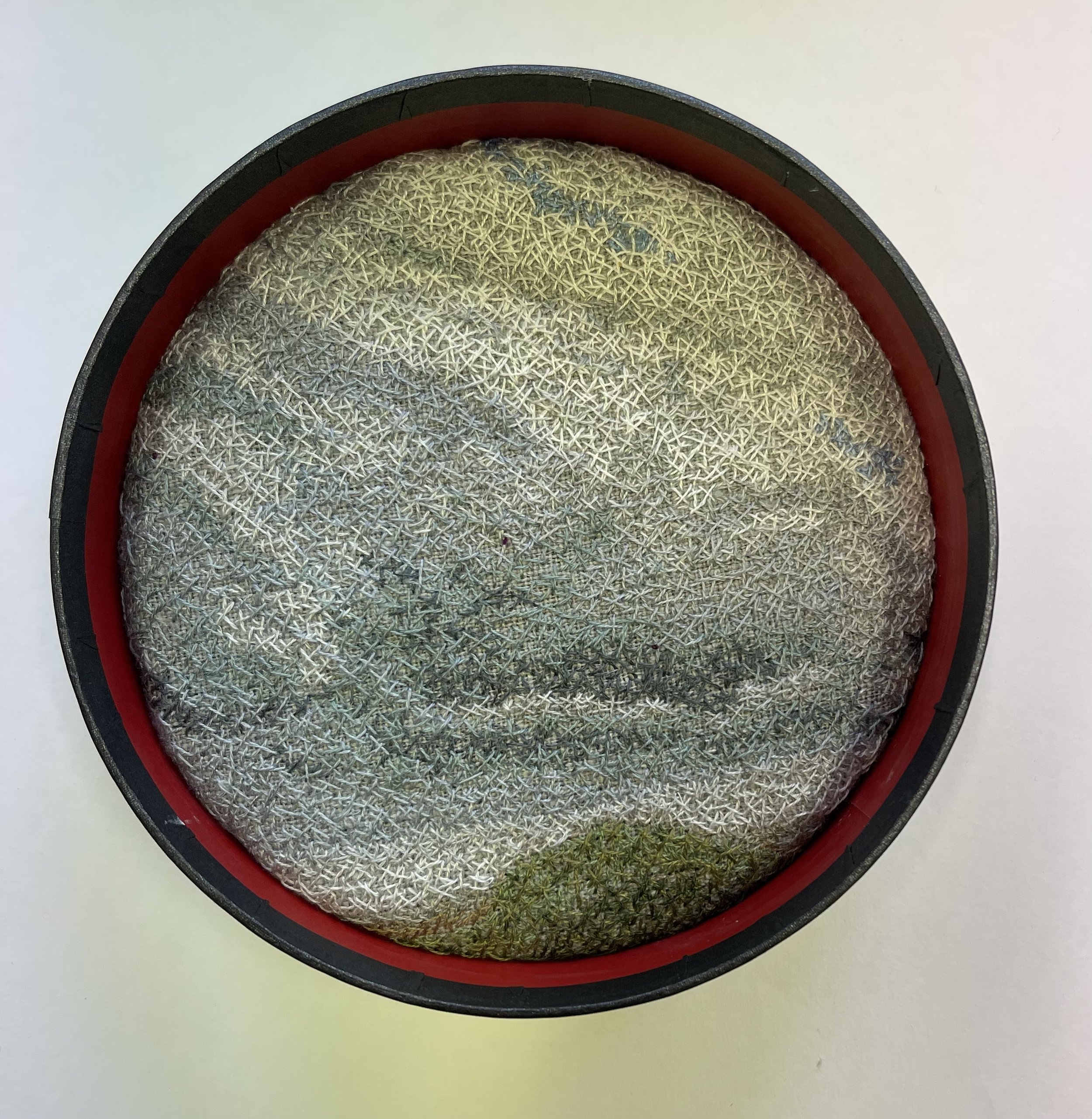
Last year my book November Skies made it into the Lanyon Art Prize, here in Canberra. This was a fold-out book and I used images of the clouds – and skies over the historic Lanyon Homestead.
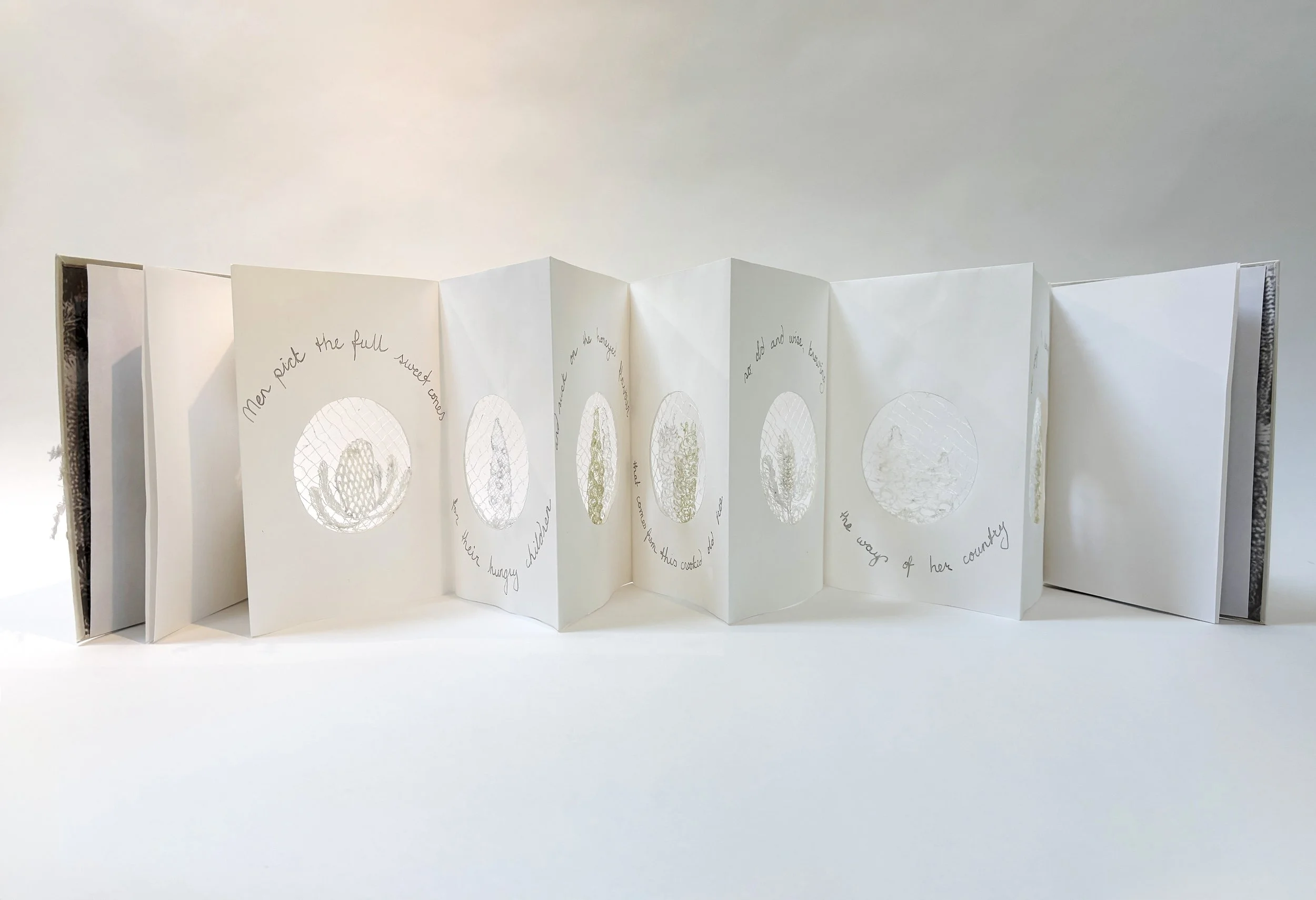
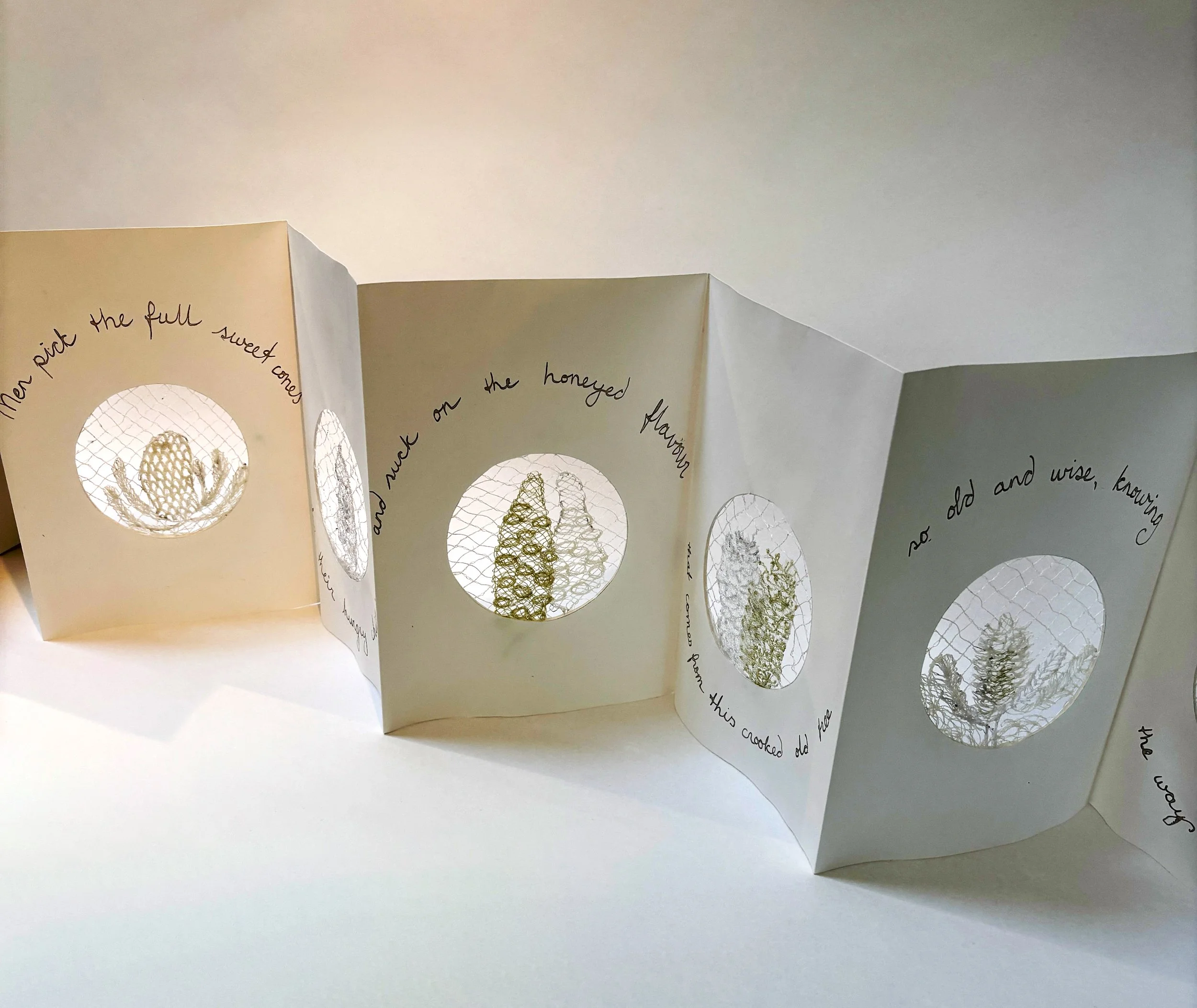
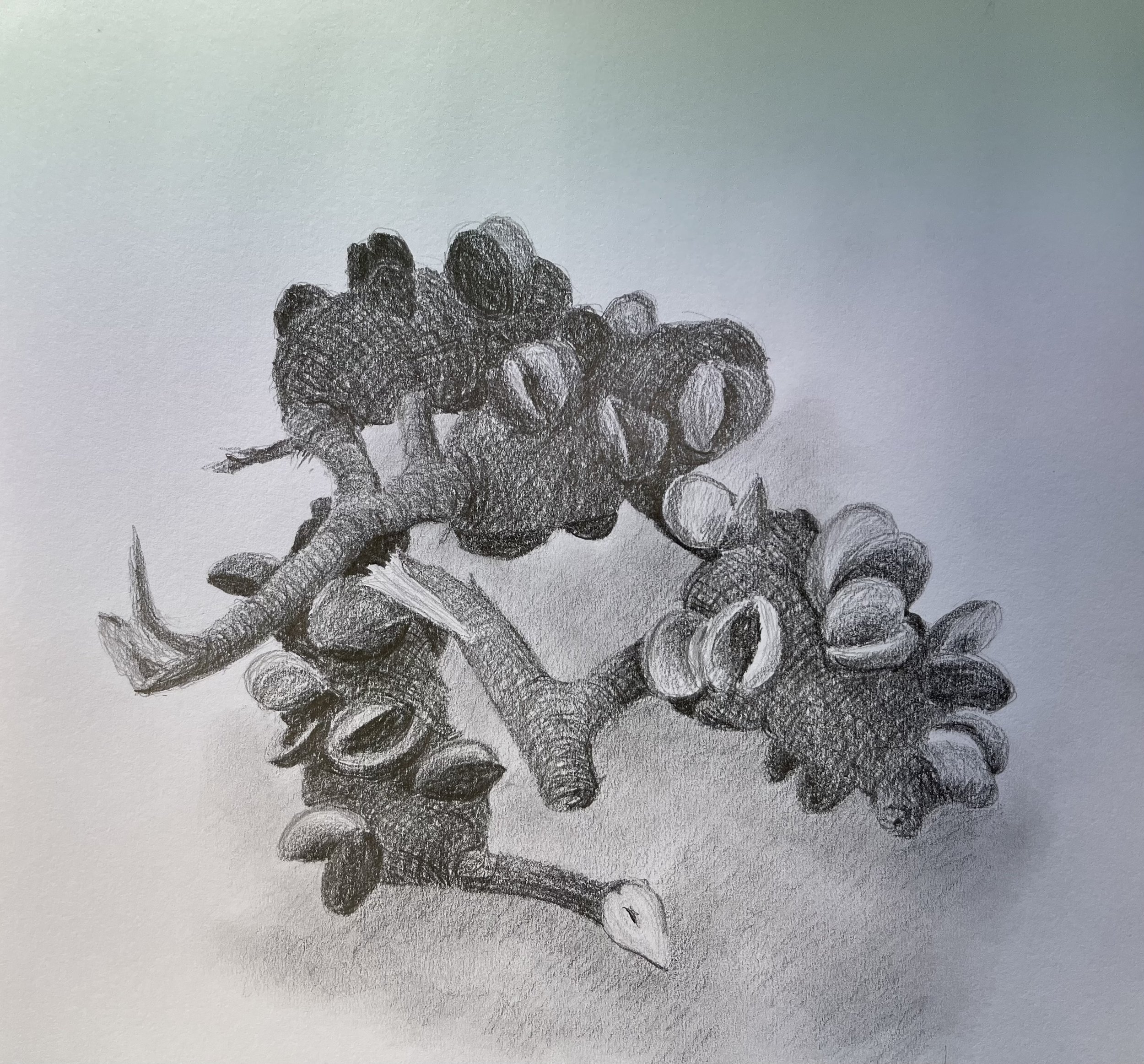
The book at the bottom is trial book about Banksias. I have made it in creams and this year will make a colour version.
In October 2024, as artist in residence on King Island in the Bass Strait between mainland Australia and Tasmania, I prepared to work on my long-term focus of birds and bird sounds. My motivation for applying was, in the previous year, I had hand bound a copy of a letter written by the French explorer Nicholas Baudin written from King Island in 1802. Bound copies of the letter, printed by the South Australian State Library, were shown in a travelling exhibition in several small galleries in Australia. I embroidered an image of the extinct King Island emu for the cover of the book and stitched a map within the book-case. I was keen to travel to the source to build on my work on birds.
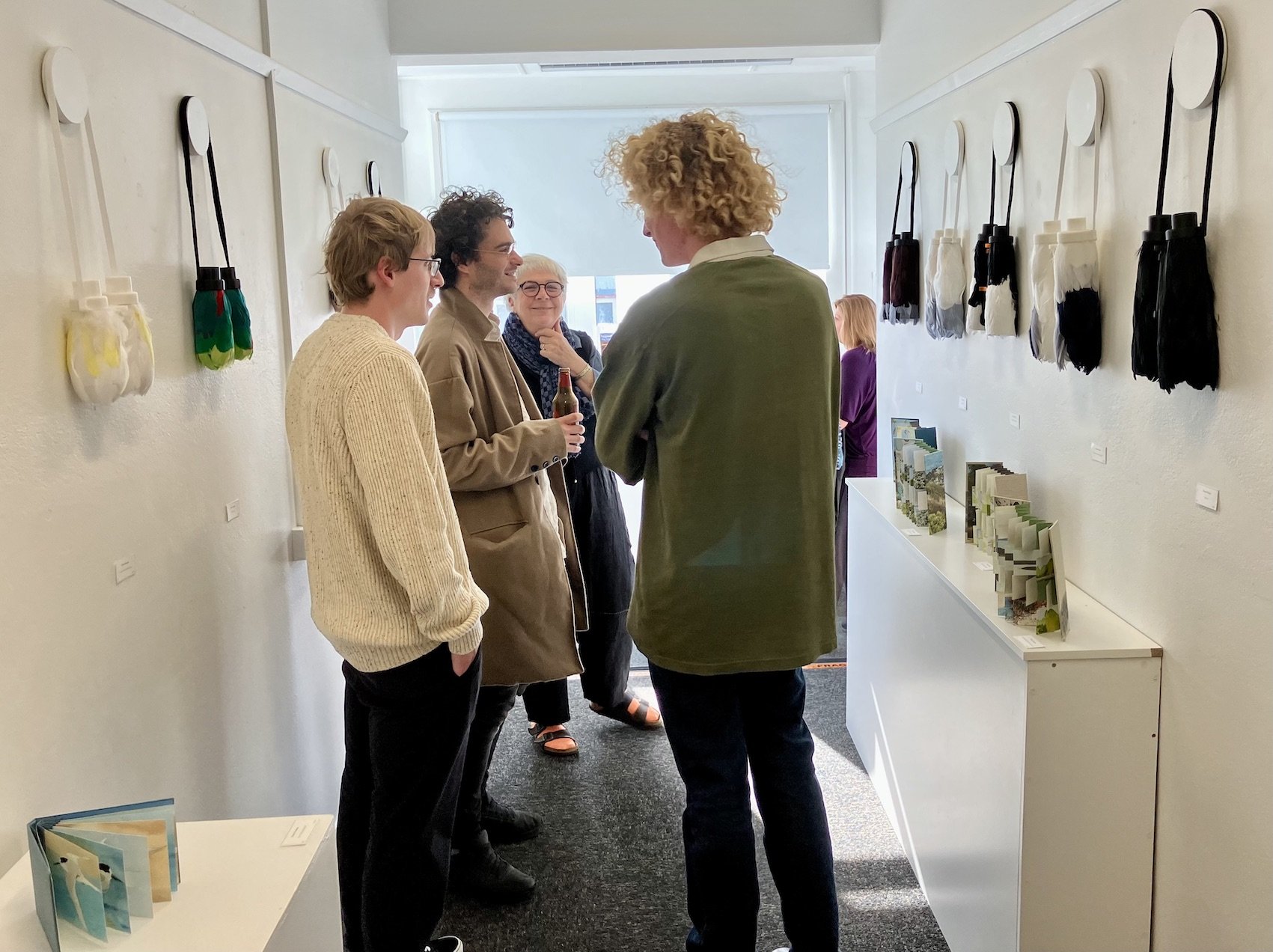
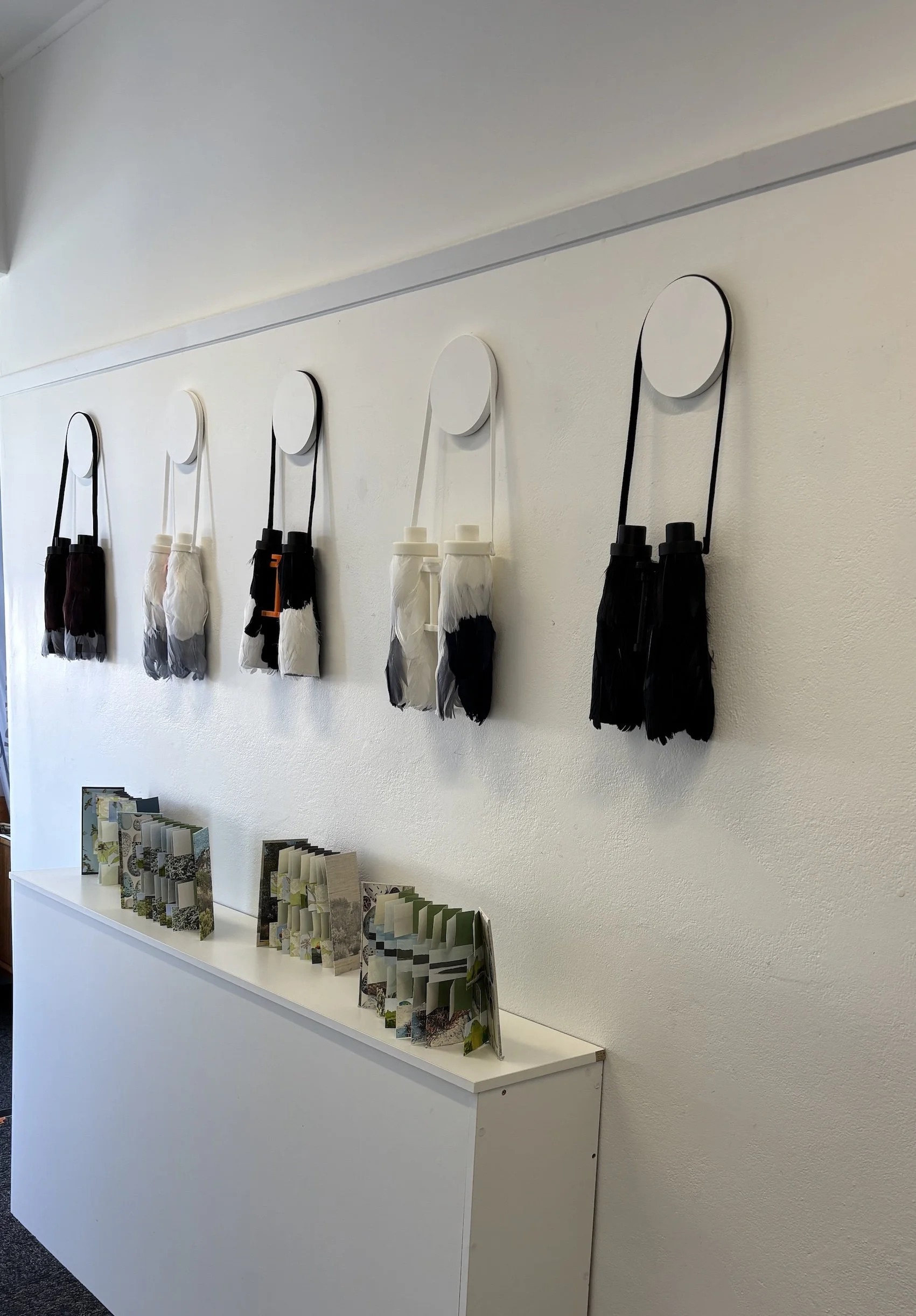
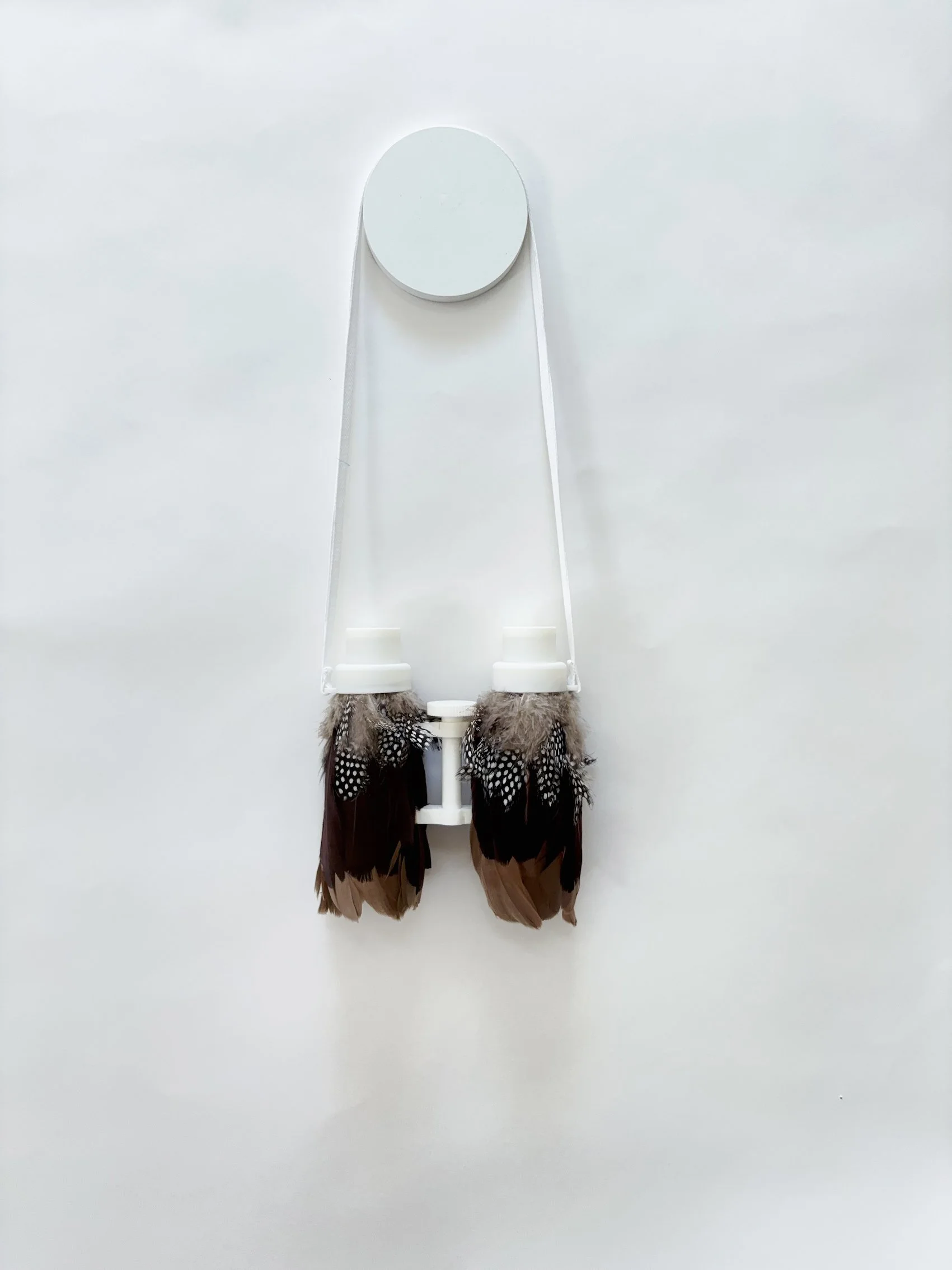
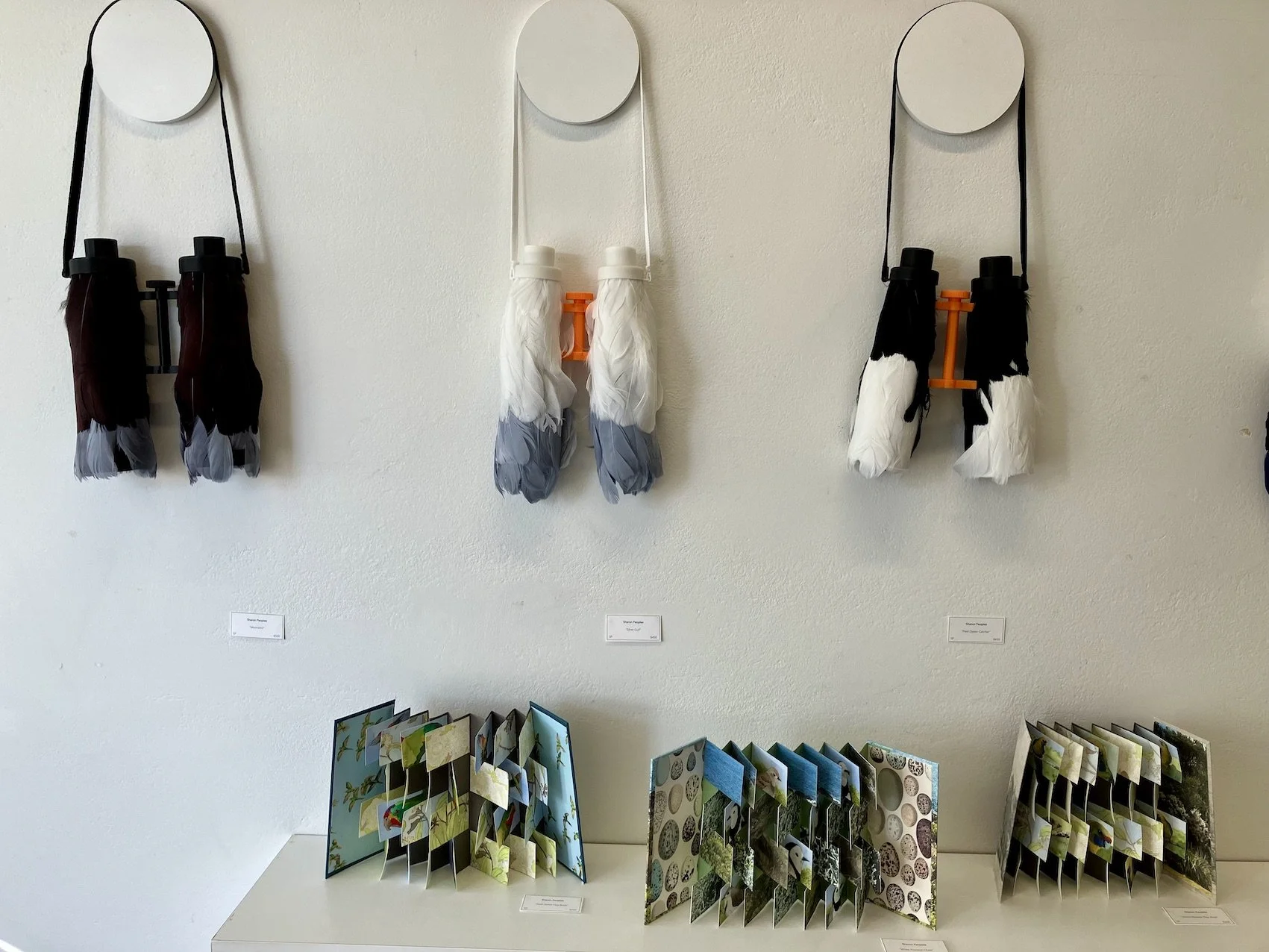
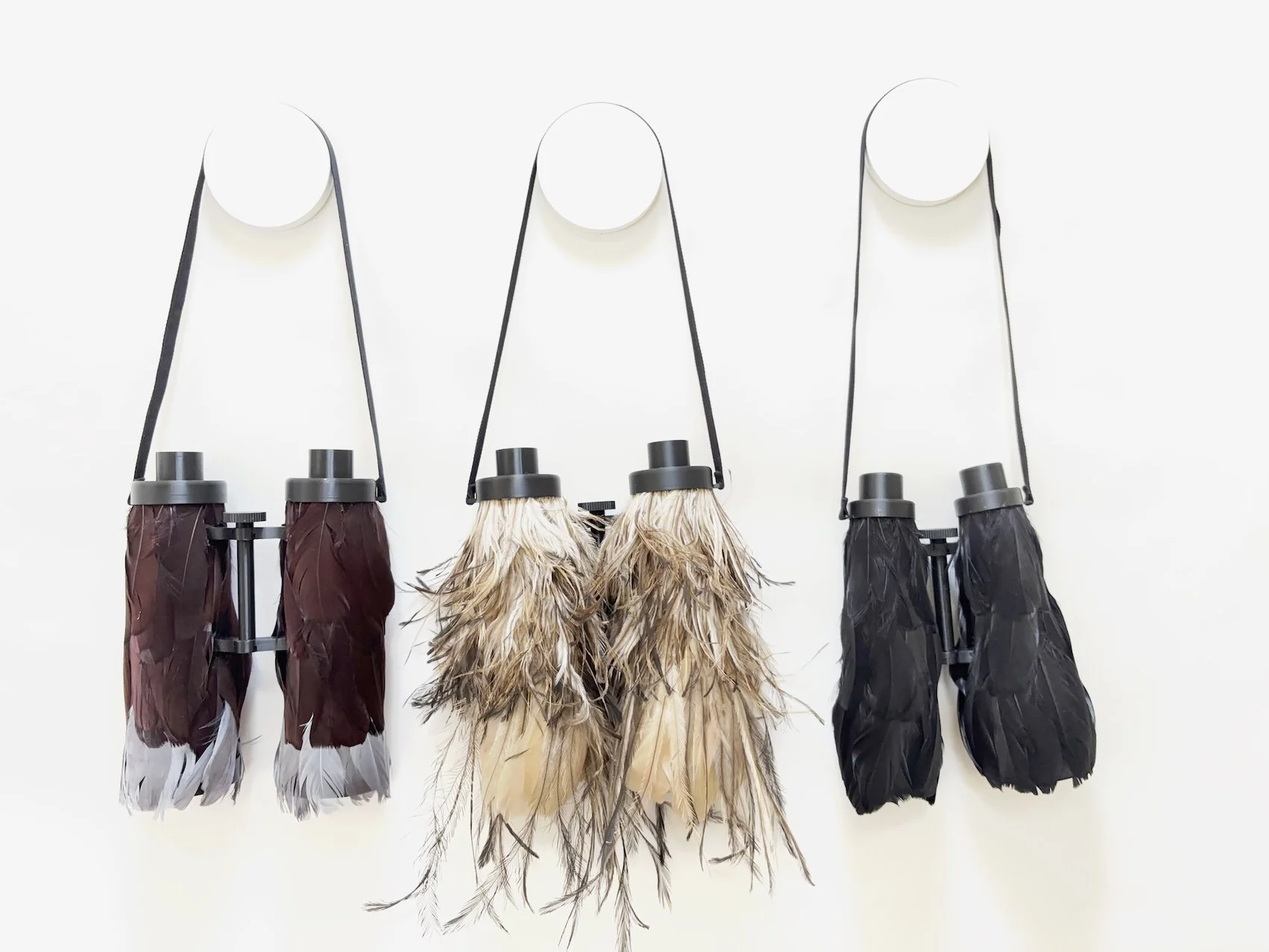
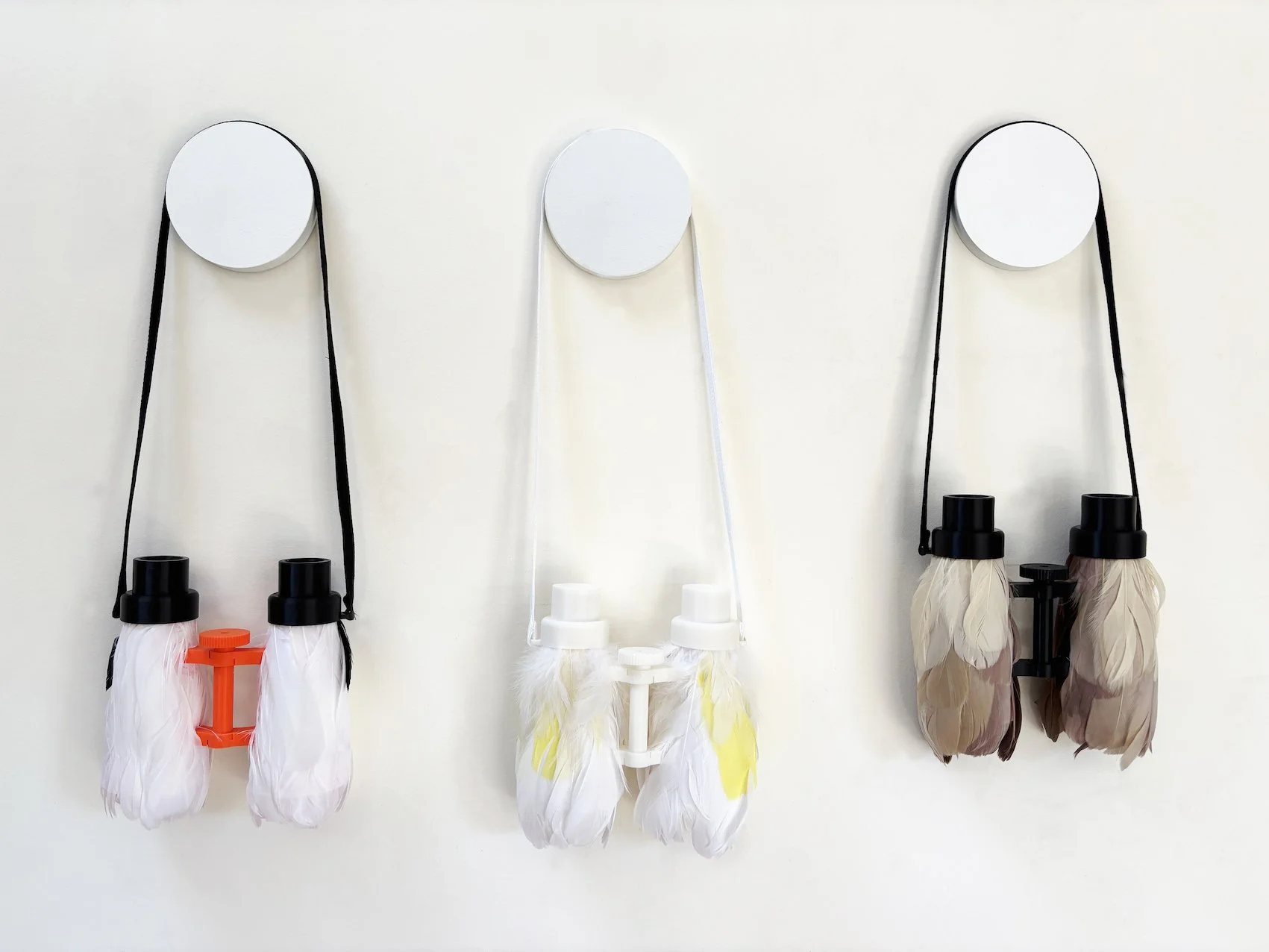
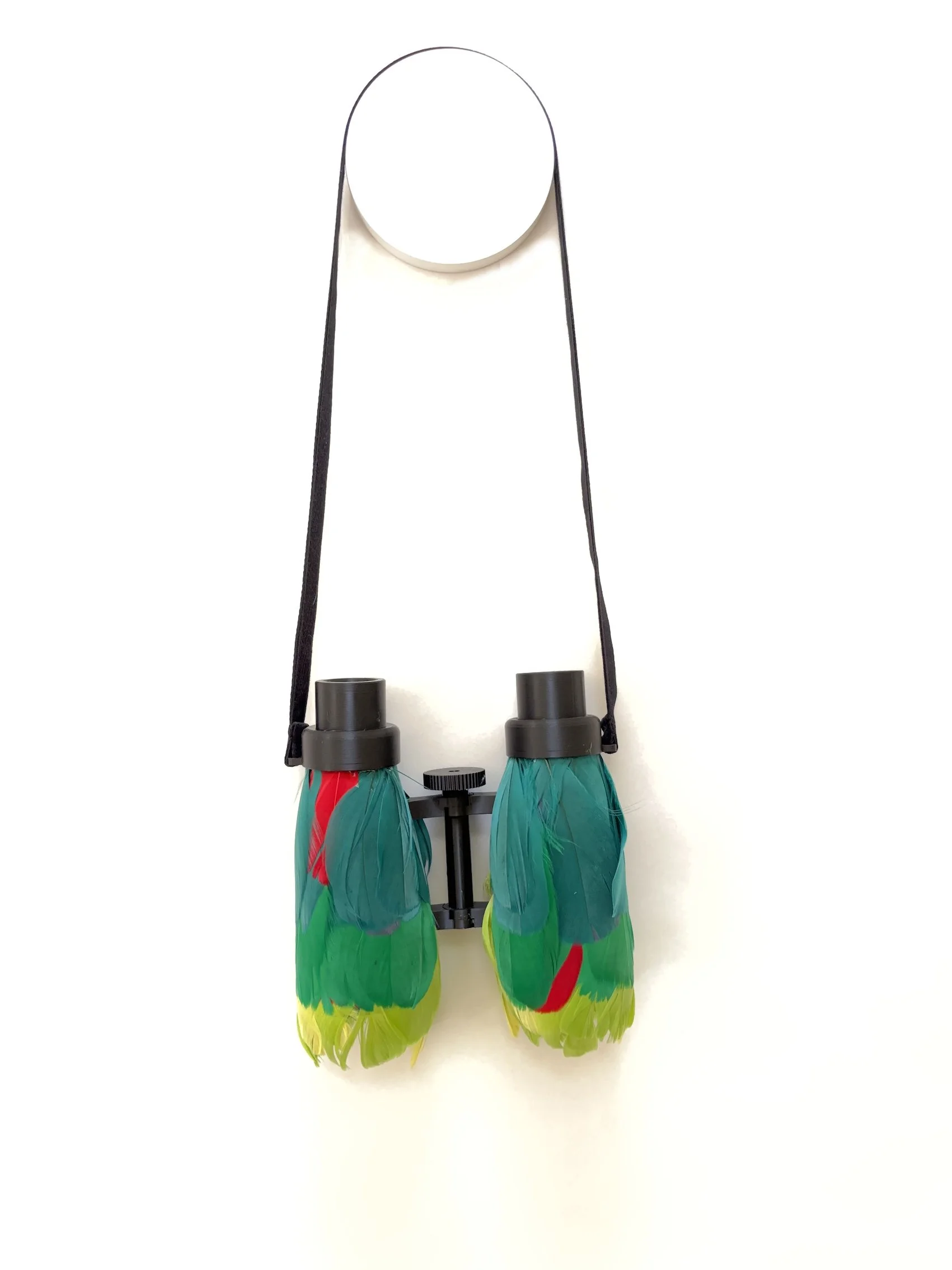
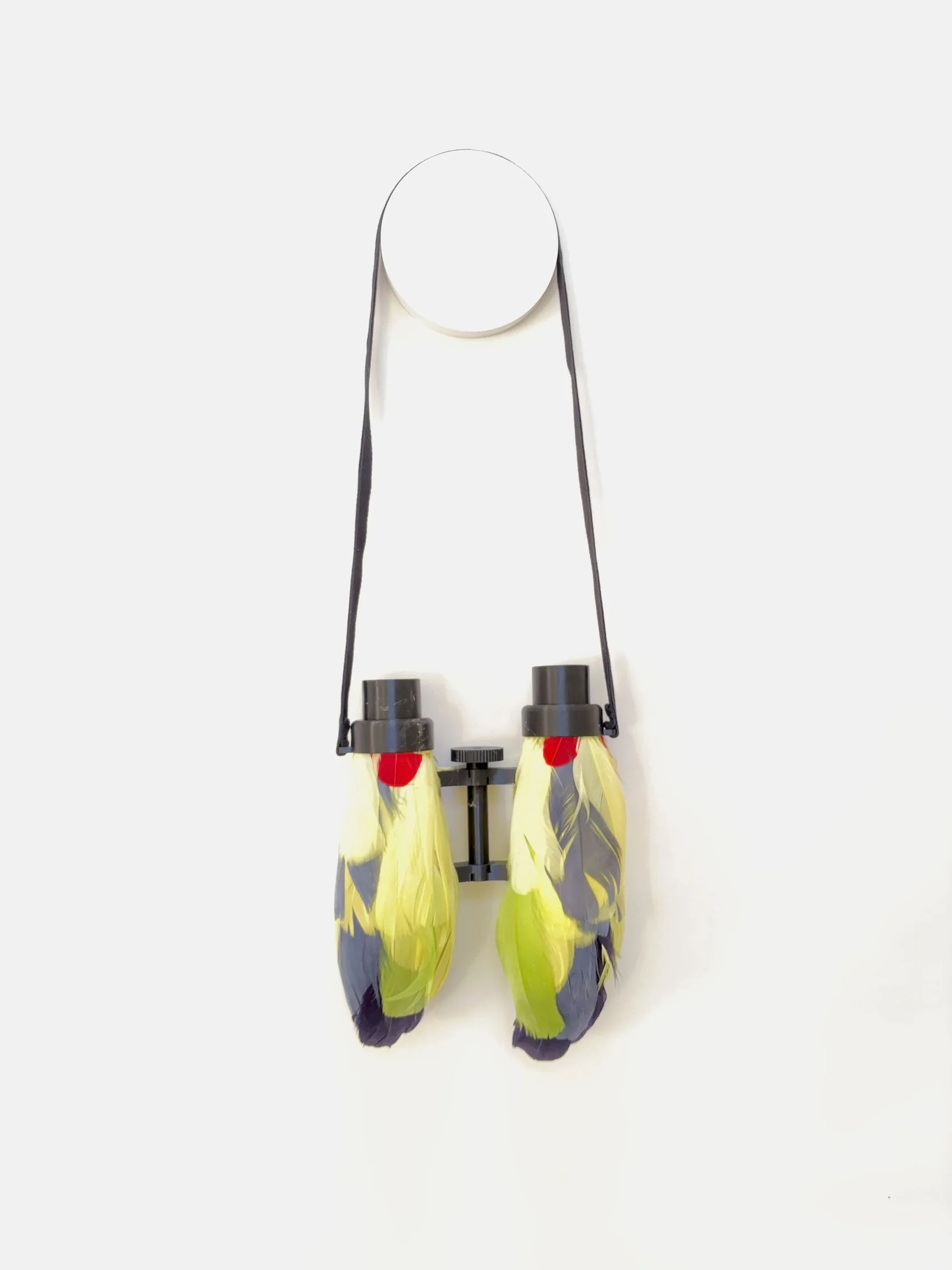
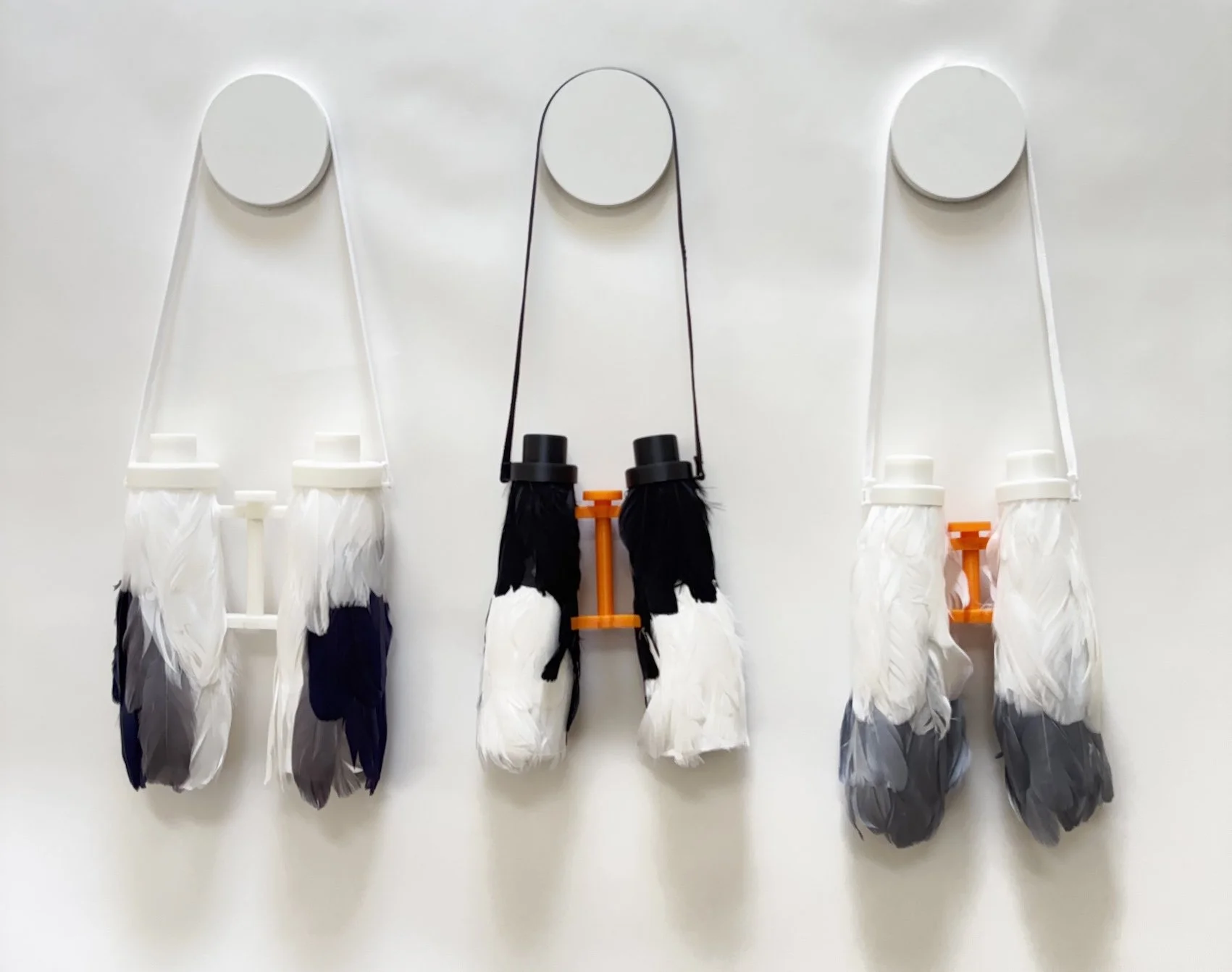
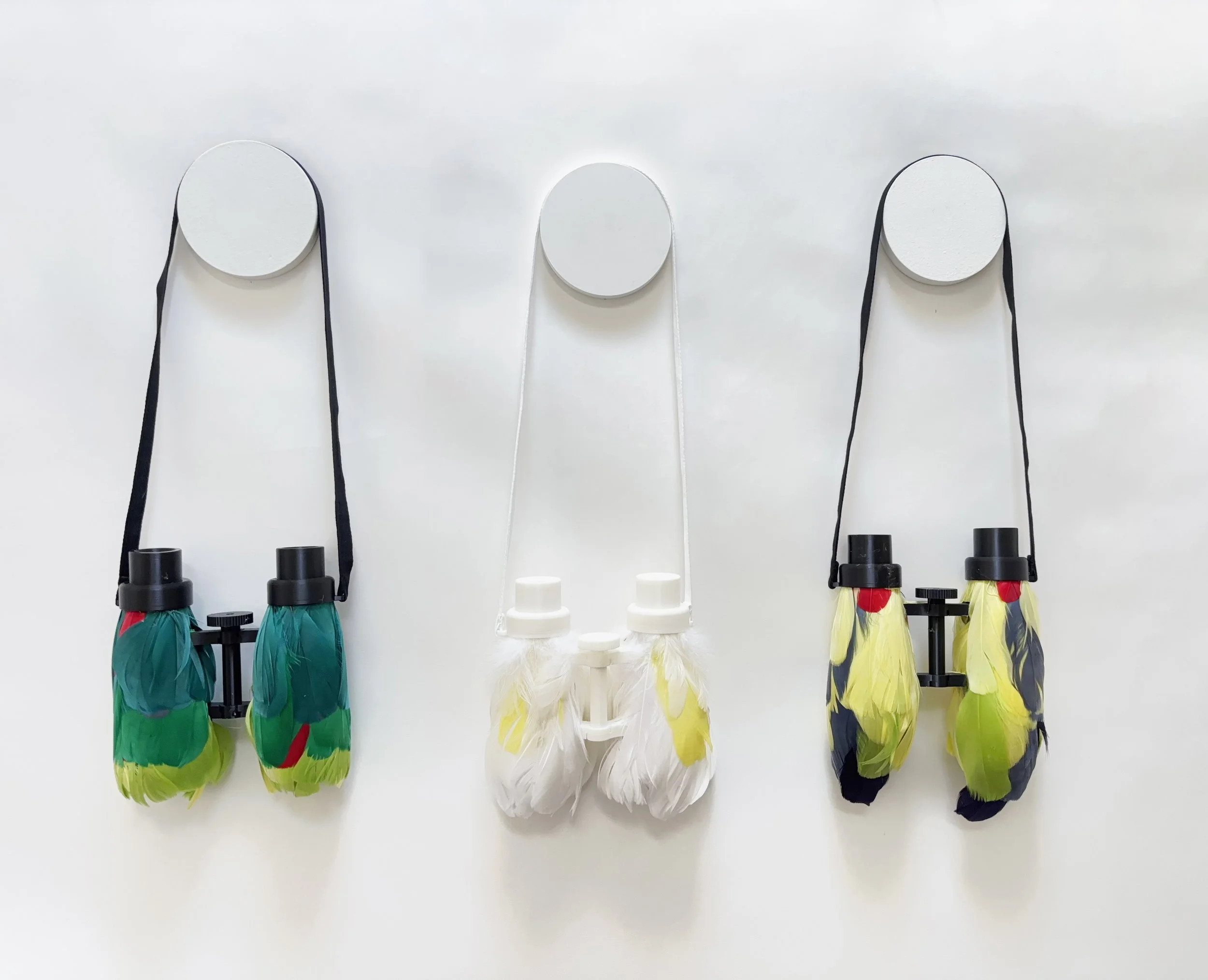
Once on the island the very strong winds, the Roaring Forties, quickly shifted my intentions of making the aural visible. I participated in the Spring bird count organised by the local LandCare group and supported by Birdlife Australia. What became apparent was the observation that all participants, including myself, sported binoculars. These status pieces were worn much like jewellery around the neck. Combining this format with the birds seen on the count and the local bird guides led me to constructing artworks based on binoculars in my home studio. I worked with an engineer to 3-D print parts of binoculars, such as the focussing mechanism and eye pieces. The feathers matched the birds I saw as well as those that are extinct and endangered on King Island. In particular work comments on the steep decline of the number of Swift Parrots, that migrate from northeastern Australia, across King Island and onto Tasmania in the spring and summer to feed. In the 1980s there were 3500 parrots. With the decimation of breeding grounds by logging, experts say that by 2030 there will be 70.
I chose the hallway space as often binoculars are kept in accessible spots in order to be able to grab them as you run out the door to see what bird was making that noise.
The ‘bird guide’ books are more for the birds - a guide to the best spots on the island where their favourite foods can be found. Three of the books are called flag books - concertina books. Again flagging for the birds their favourite habitats.
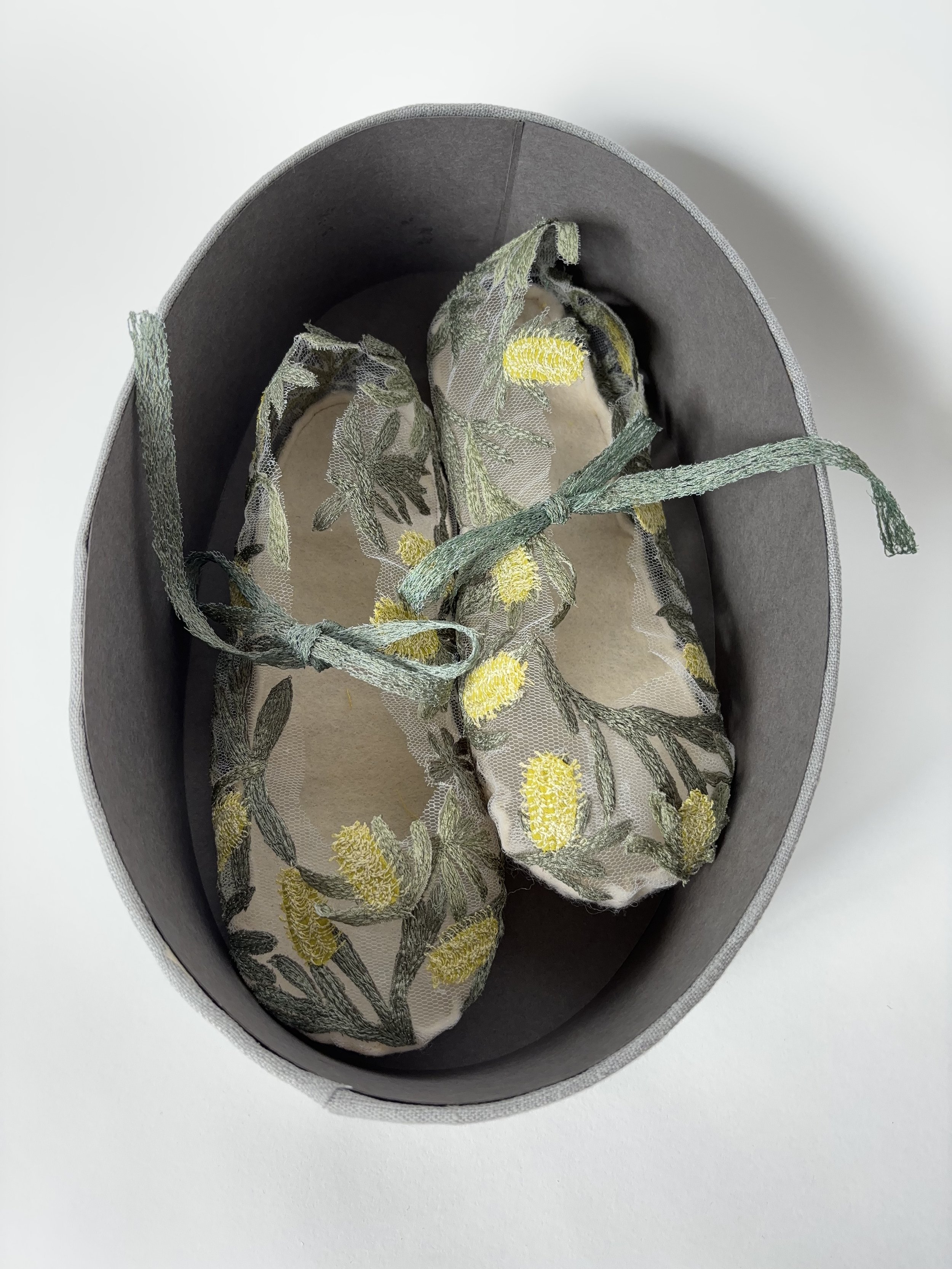
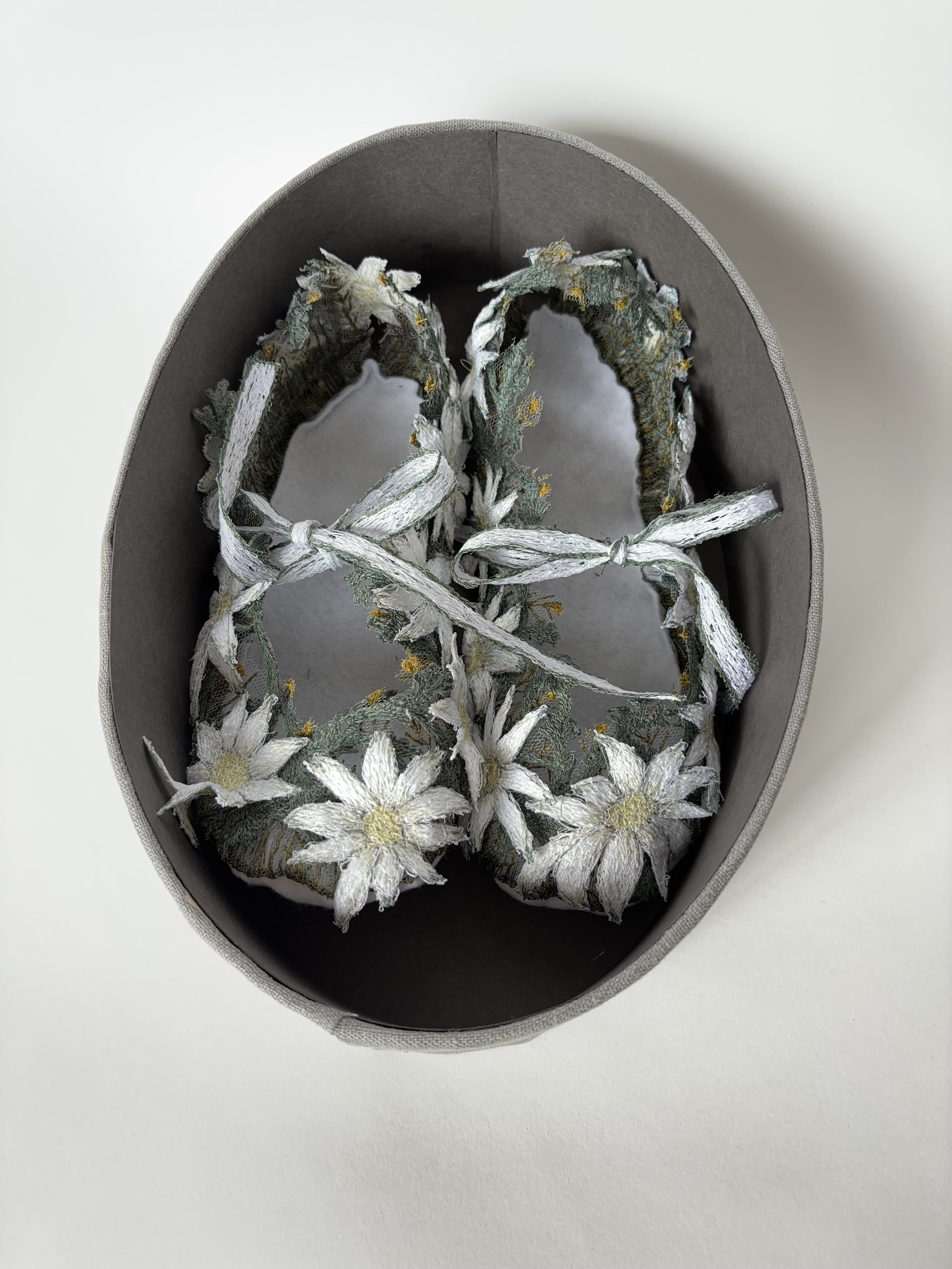
Garden Promenade playfully speculates with the question ‘What if Sarah Sophia Banks made the journey to Australia, instead of or alongside her brother Joseph. Sarah spent much of her time advancing Joseph’s career while she built her own priceless collection of coins medals, visiting cards, satirical prints and print ephemera. She had an “eyebrow-raising fashion sense” and was often described as a “fashion whip”. Sharon focuses on motifs of plants that her brother collected such as flannel flowers, grevilleas and banksias in lace-like textiles to draw attention to the potential of the feminine eye. Using the live collection of the Australian National Botanic Gardens over the last two years, Sharon speculates that perhaps what could have been or the hypothetical contribution to the decorative arts, and the influence of the landmark journey to Australia.
This exhibition is at the Australian National Botanical Gardens, Canberra 3 -29 October 2024
From October 14 - 28 a new solo exhibition will be at Avid Gallery in Wellington New Zealand. Although birds have long been a motif in my work, they have become much more central in my thinking and an important constituent to my stitching. In my travels through the ‘garden’ of New Zealand, my response has been birds and their environments. The work focuses on threatened birds, encountered both in nature and in museums in New Zealand. This investigation combines my background in museum studies with my concerns of the environment. Fragility of both the environment and the human condition is reflected in stitch as a metaphor for mending the environment.
The hand stitched works go beyond a literal translation of imagery of birds into textiles. While these are very small works, I have been thinking of very large historic embroideries, such as the Bayeux Tapestry which shows the marks of stitchers, restorers and menders, all of which stand for me, illustrate the repair, care and protection that is required for the environment. The hand stitched works take time, and time is of the essence in the current climate.
In the machine embroidered works I use a water-soluble fabric to stitch on. This is washed away and left with a lace-like, delicate material, again reflecting the fragility of the environment that the birds live in. This thread of work was included in the recent substantial international publication “Stitch Journeys with Birds” (Martha Sielman 2023).
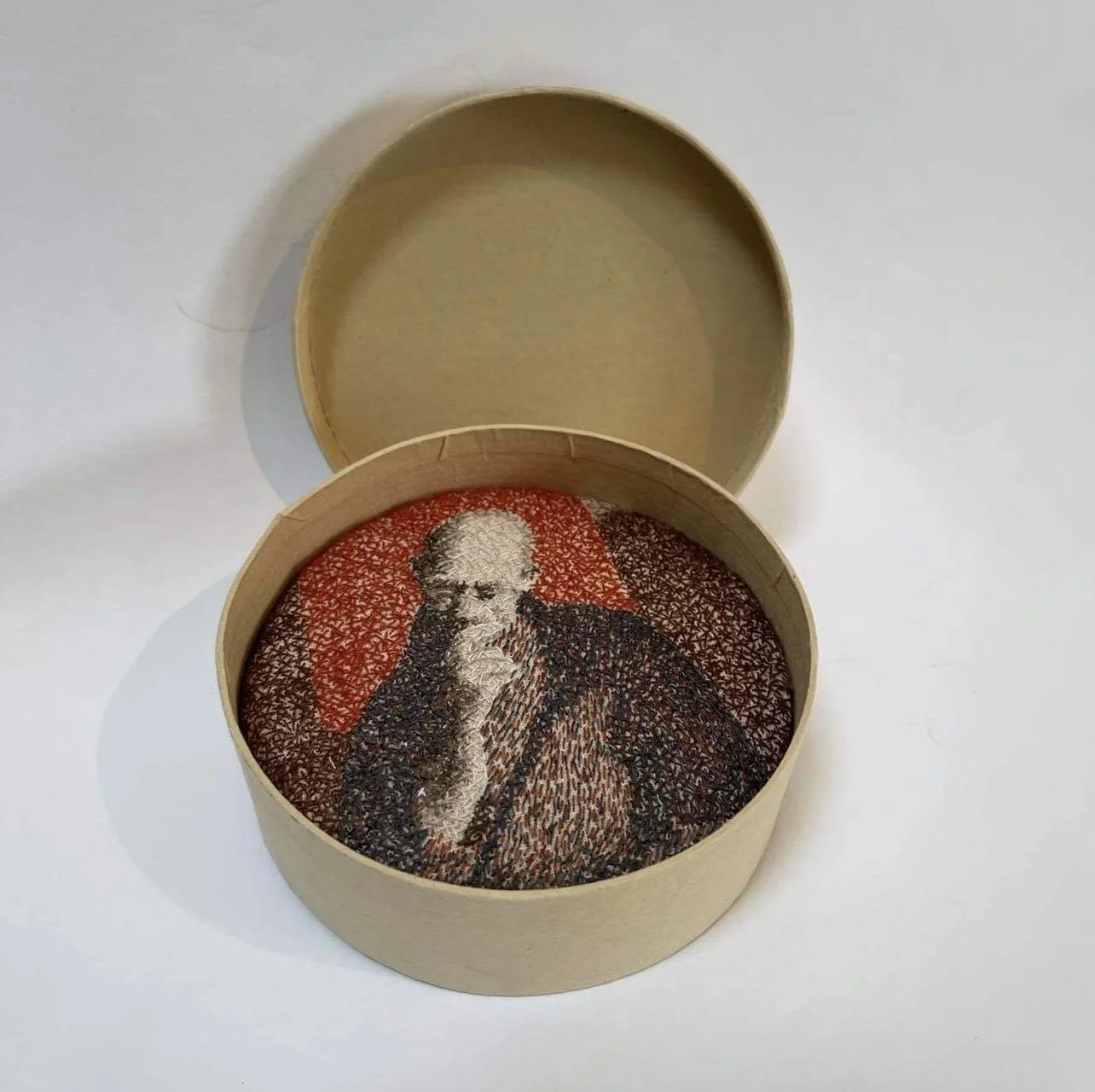
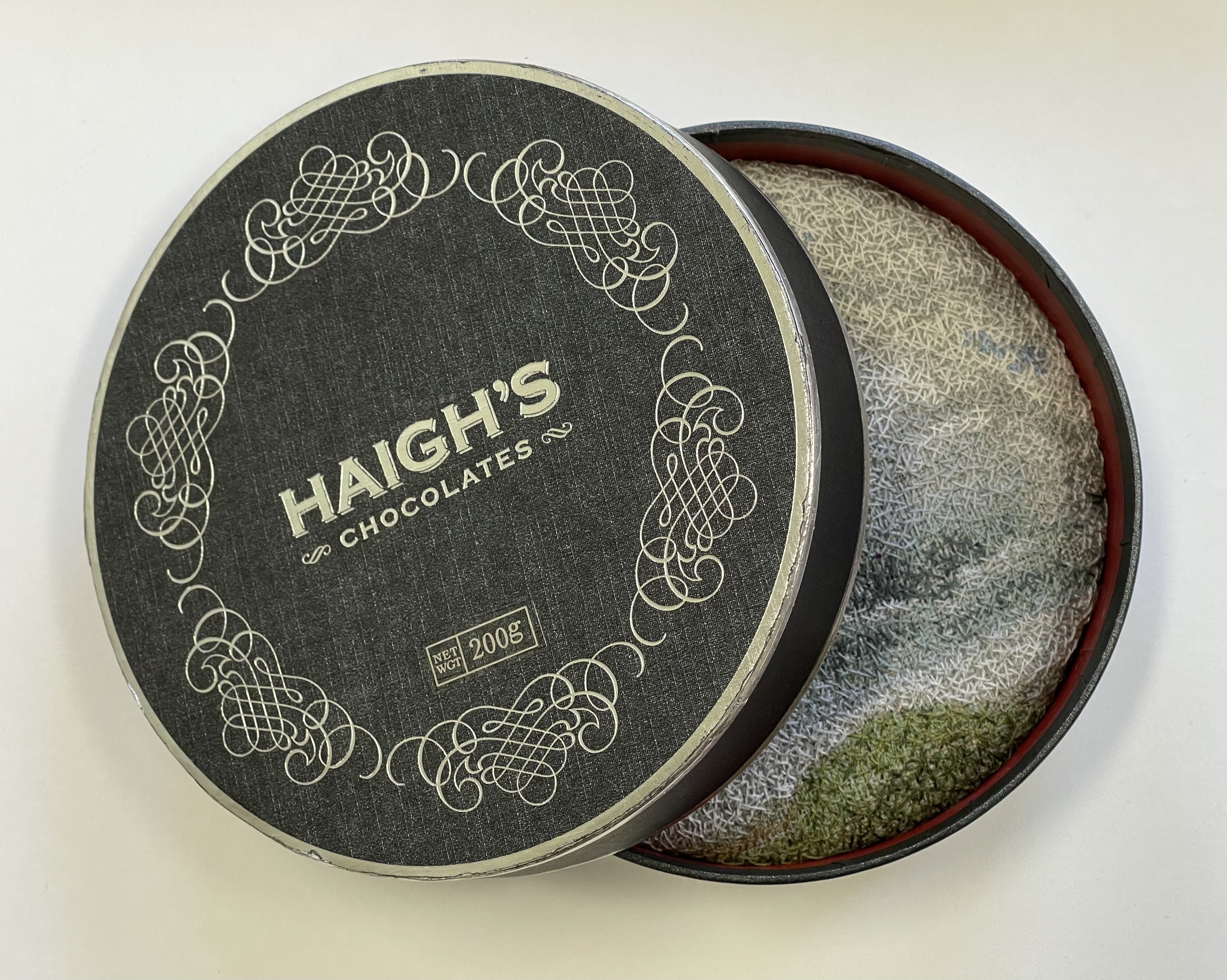
Placing the works withing hand-made boxes reflect the museum environment. Seeing collection cases upon collection cases at the Tring Museum, which houses the British Museum’s ornithology collection, astounded me. Many birds that were now extinct in their endemic environments. For some birds the only place to see them is in a museum.
More works can be seen on the Avid Gallery website with details for purchase at https://www.avidgallery.com/exhibitions
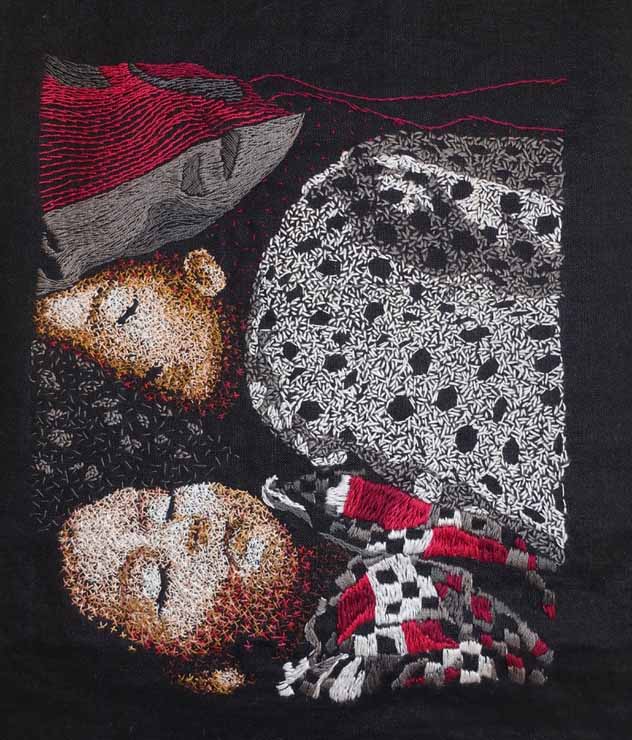
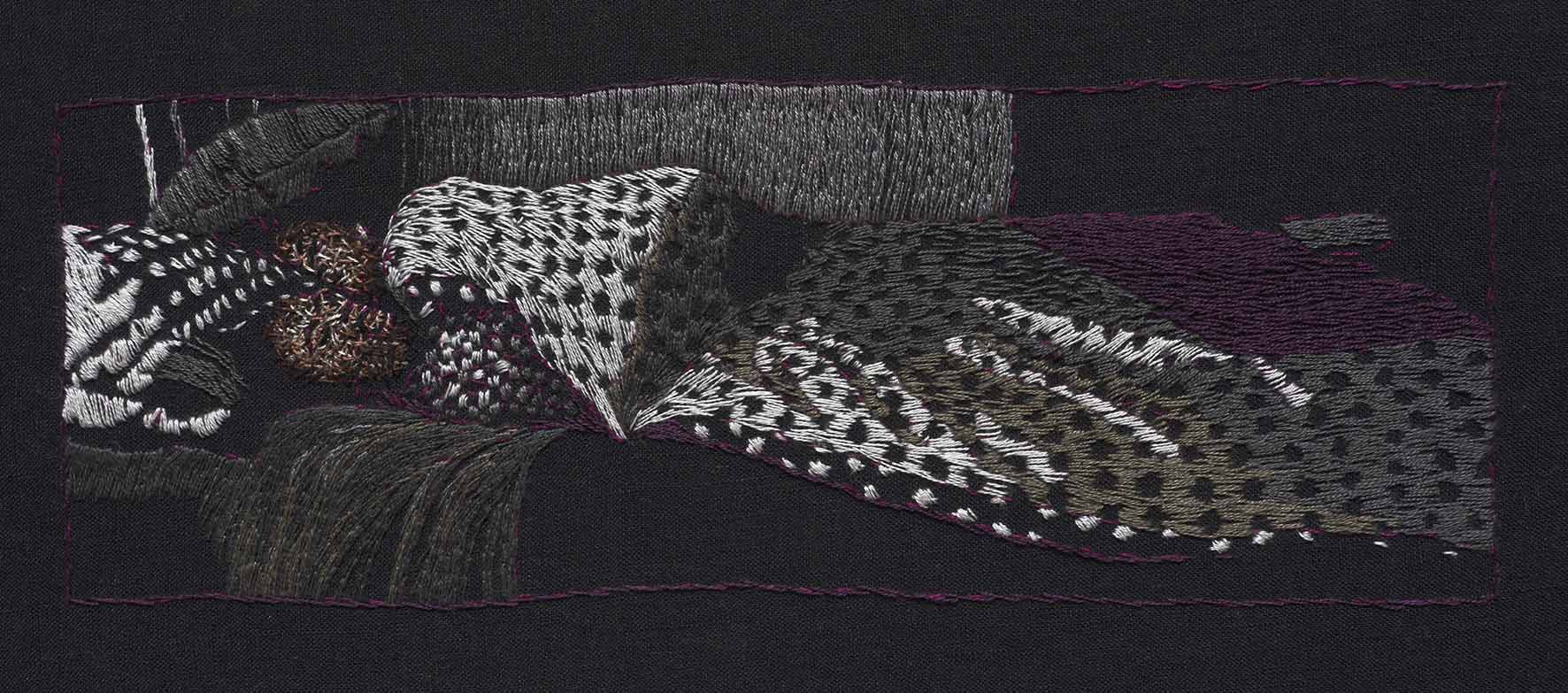
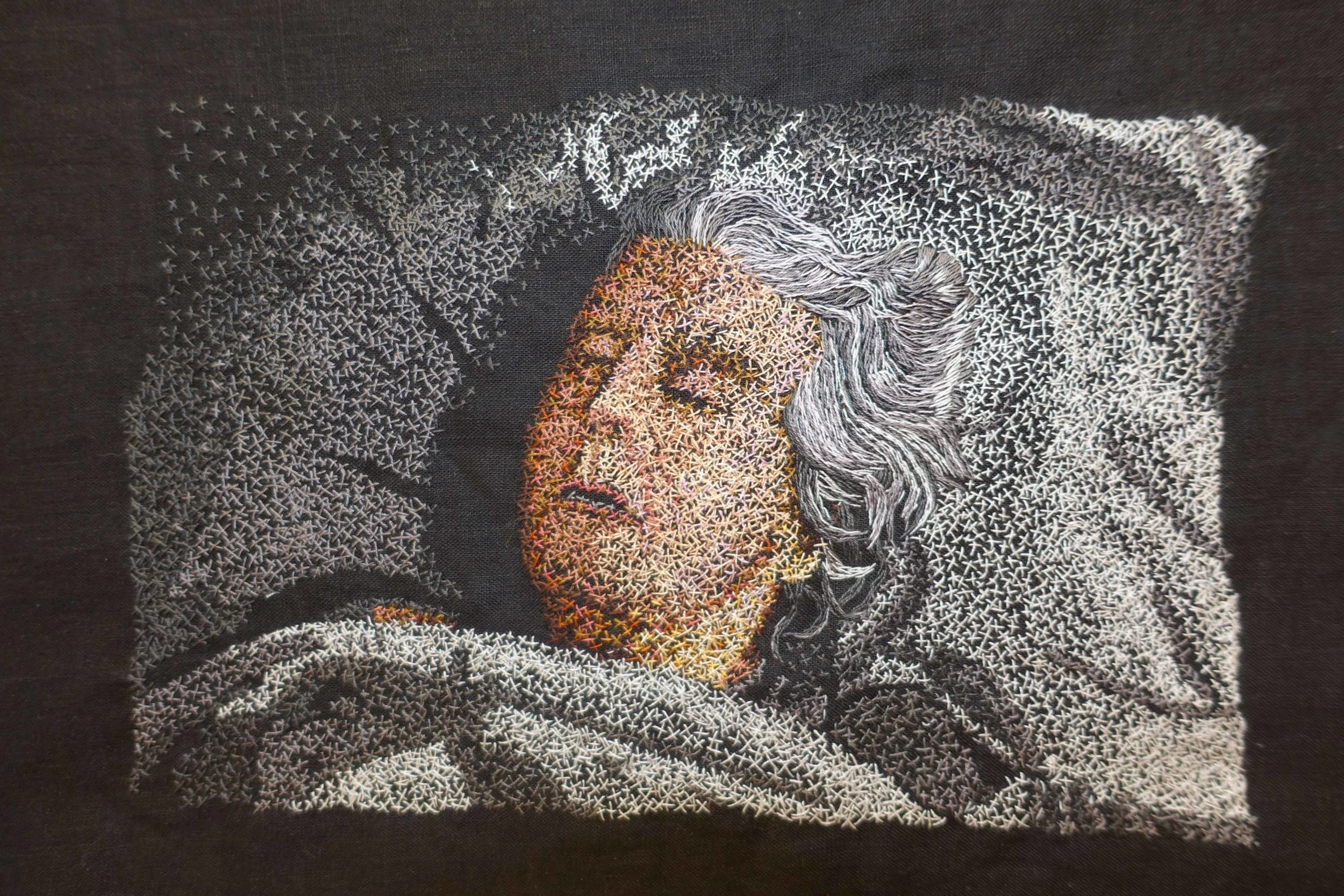
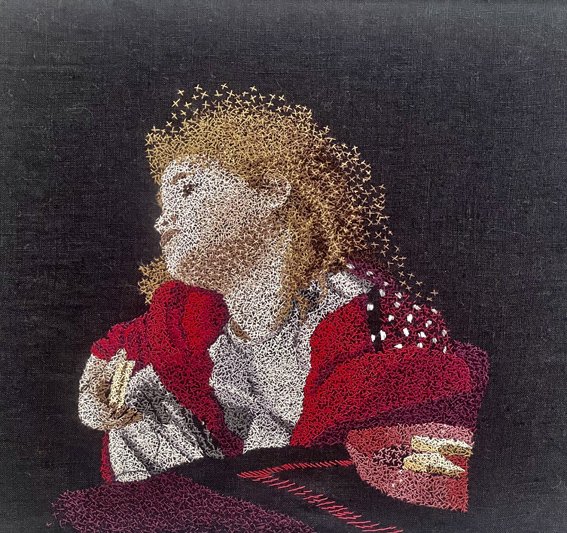
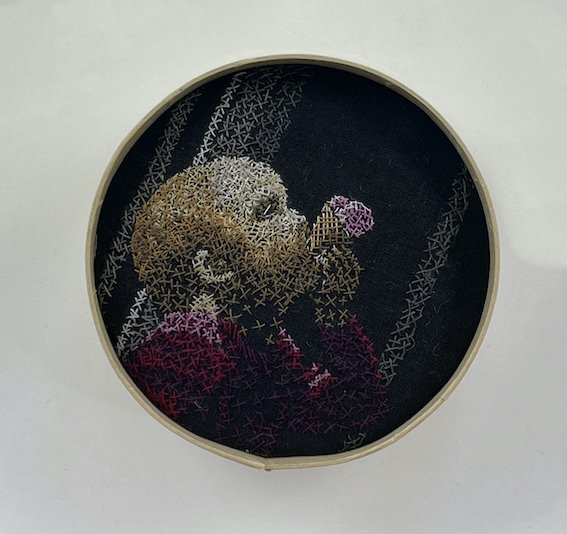
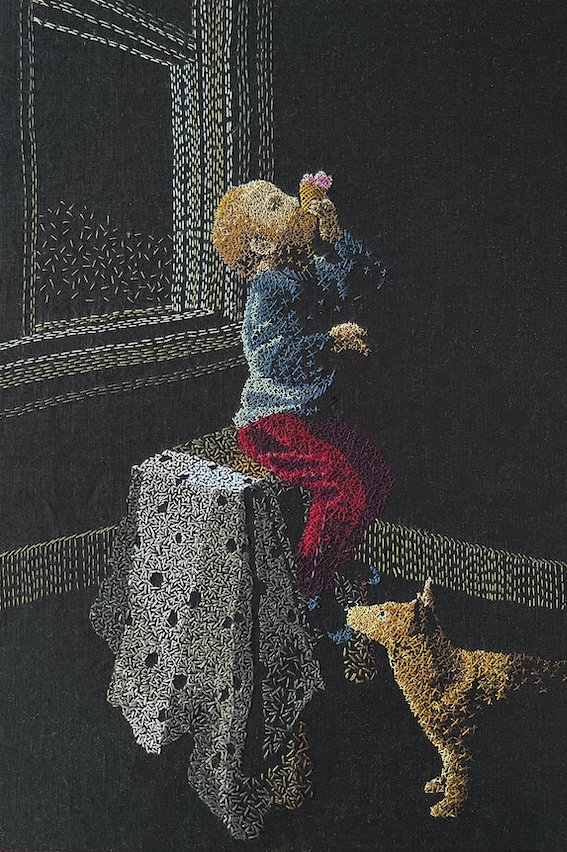
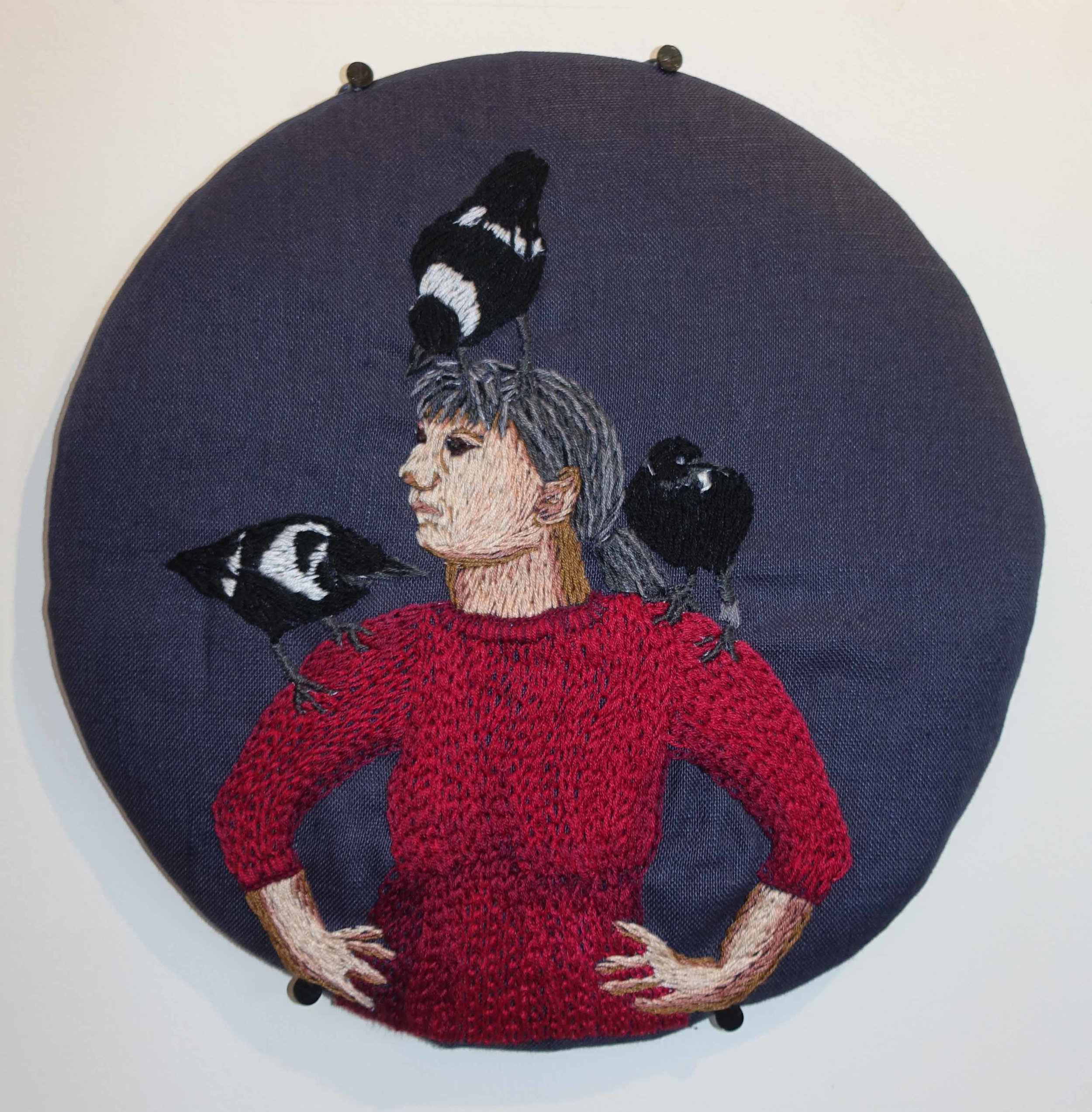
Late in 2016 I decided to return to hand stitching again. I try to practice mindful stitching each day. This helps me to ground myself and seems to help me have a more productive day if I stitch quietly for 15 minutes or so. Here is a selection of works created in the last few years. I fell love with stitching on black linen when I read a book on Swedish for embroidery titled Yllebroderier.
The work for the exhibition ‘Propagate’ began during the first pandemic lockdown in 2021. My daughter Nellie Peoples and I worked on this concept and finally exhibited in January 2022 at the Webb Gallery, QCA, Southbank, Brisbane, Australia. Here I have shown a selection of my own work. In time Nellie’s work can be seen on her website https://hello7927.wixsite.com/nelliepeoples A beautiful catalogue was design by Janet Brand and will be available for sale.
My work explores plants and gardens: the inner secret garden, artists’ gardens, public gardens, national parks as gardens and gardens of the imagination. Fragility of both the environment and the human condition is reflected in the medium. I use my work, embroidery, as a metaphor for repair. In thinking of very large historic embroideries, such as the Bayeux Tapestry, the marks of stitchers, restorers and menders stand to illustrate the repair, care and protection that is required for the environment.
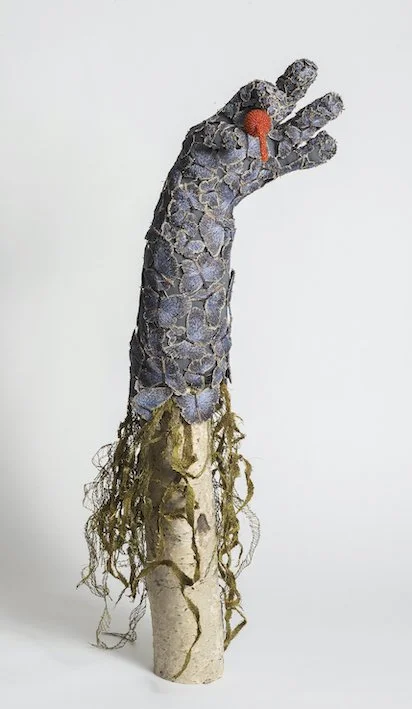
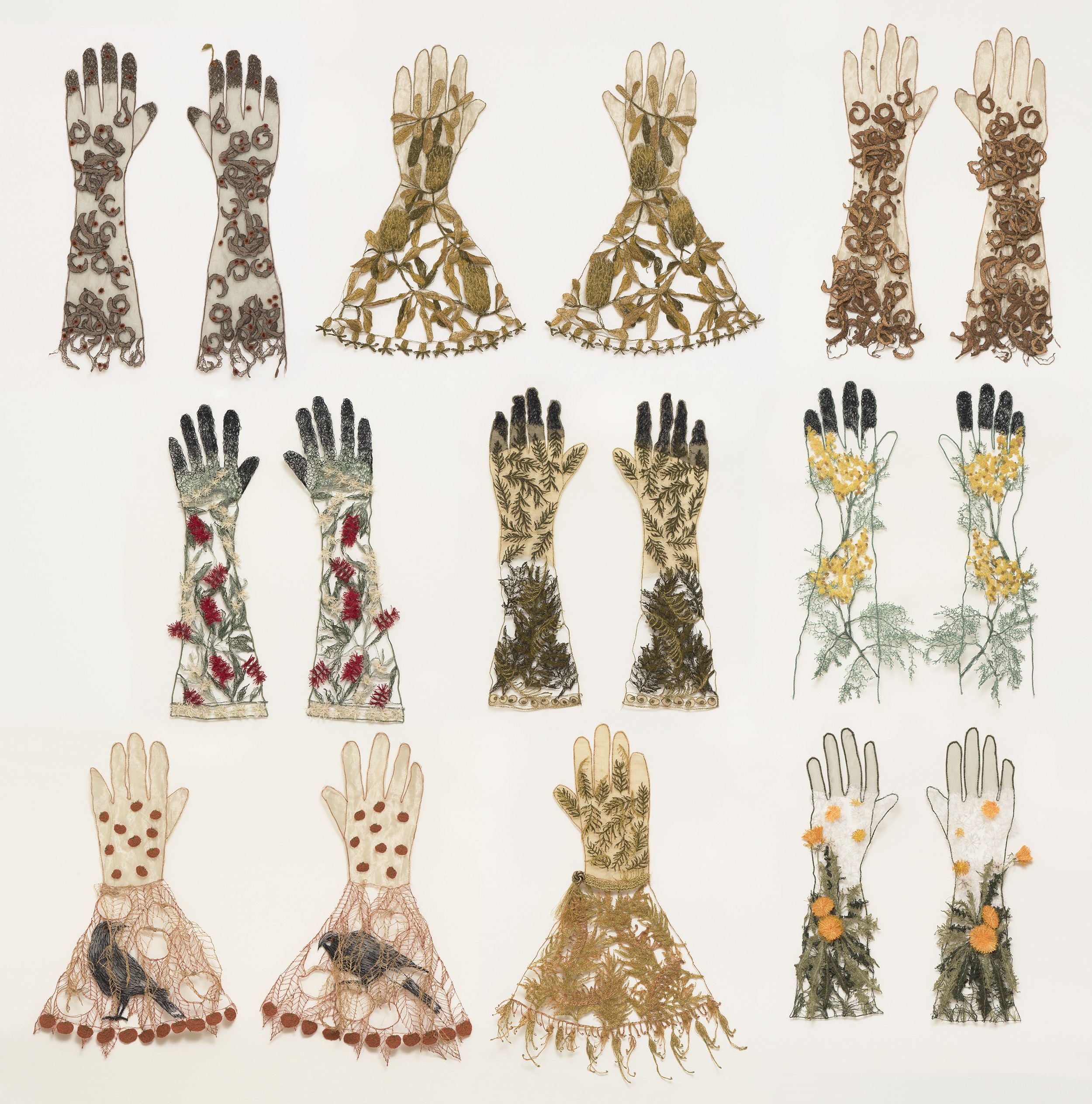
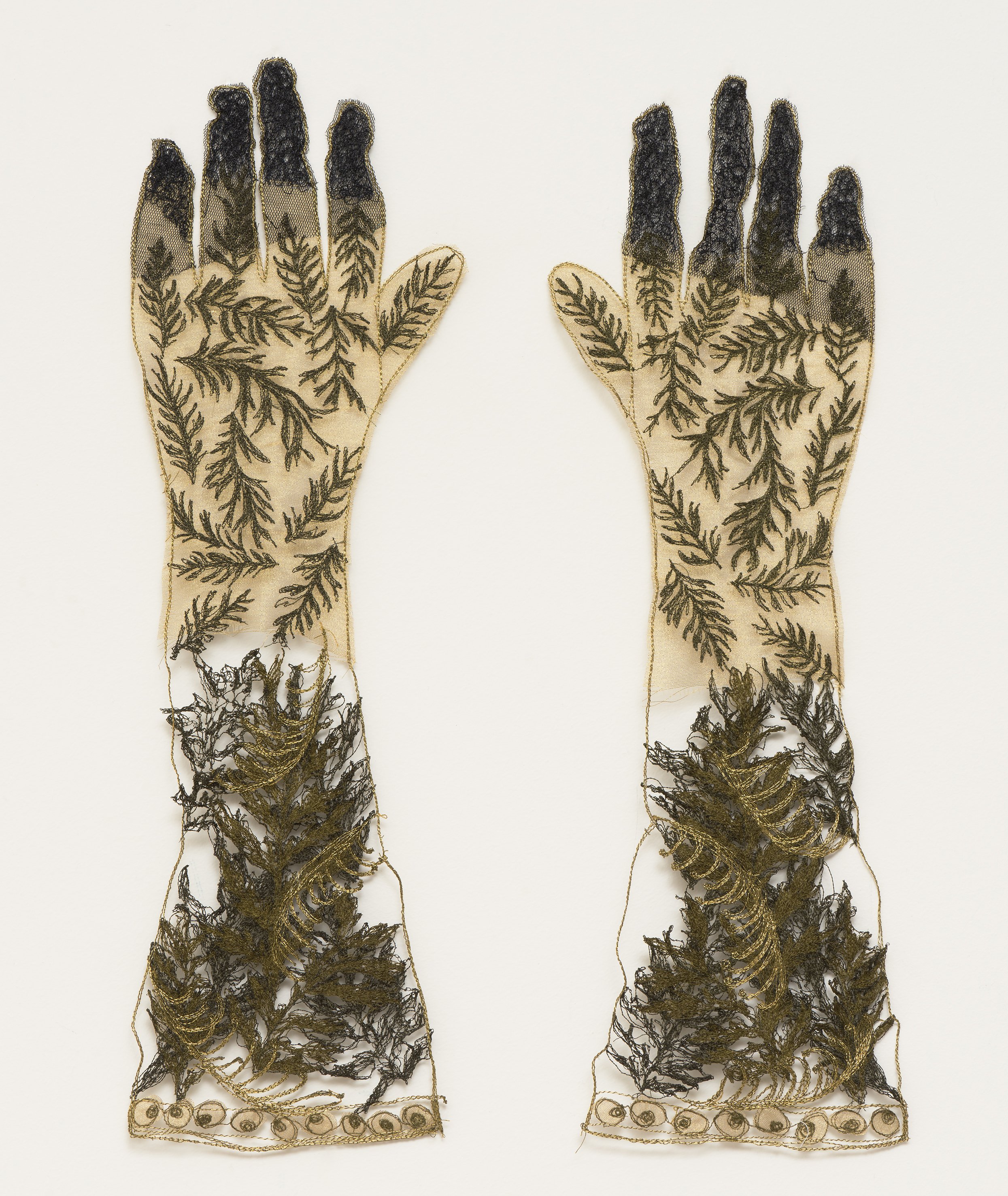
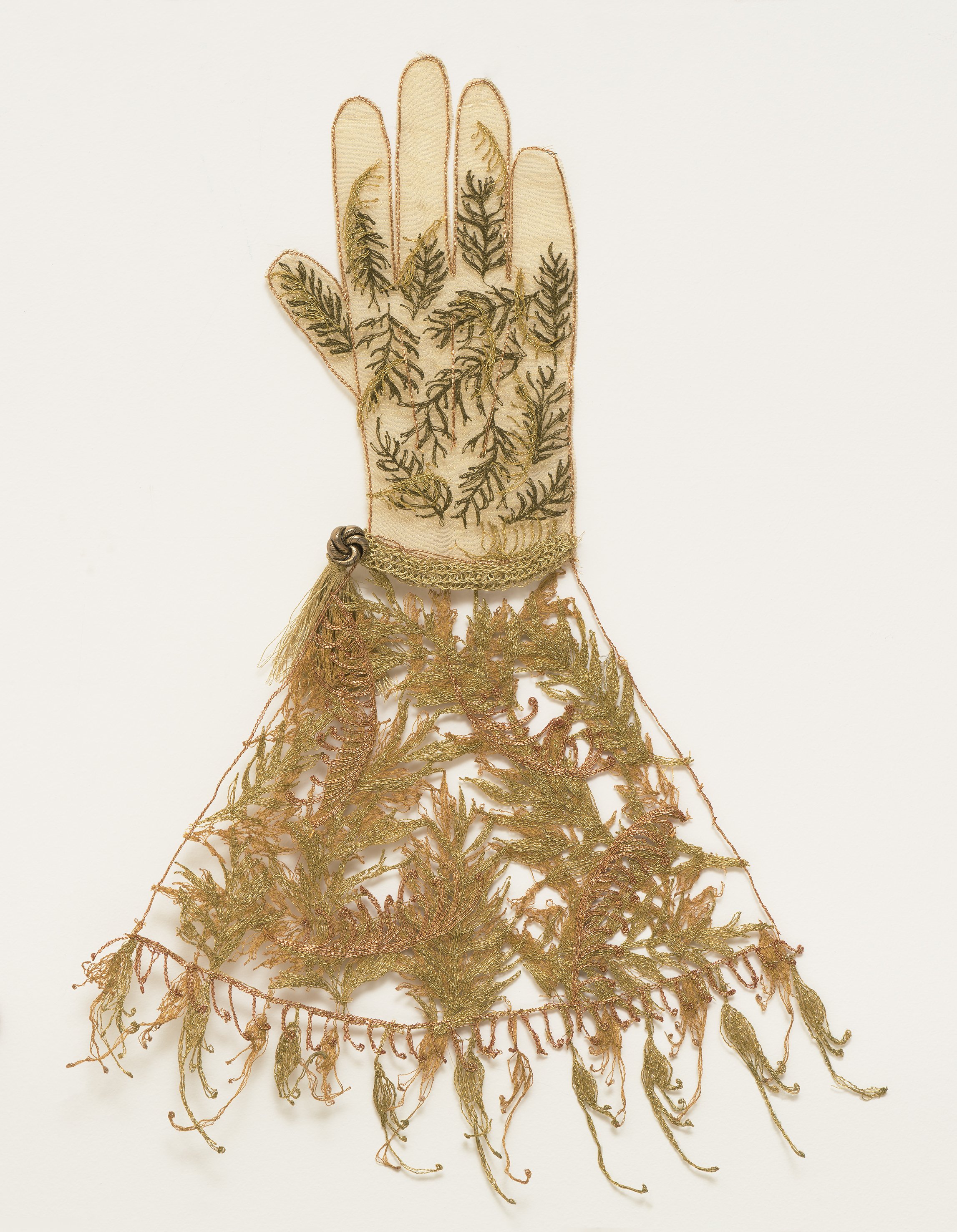
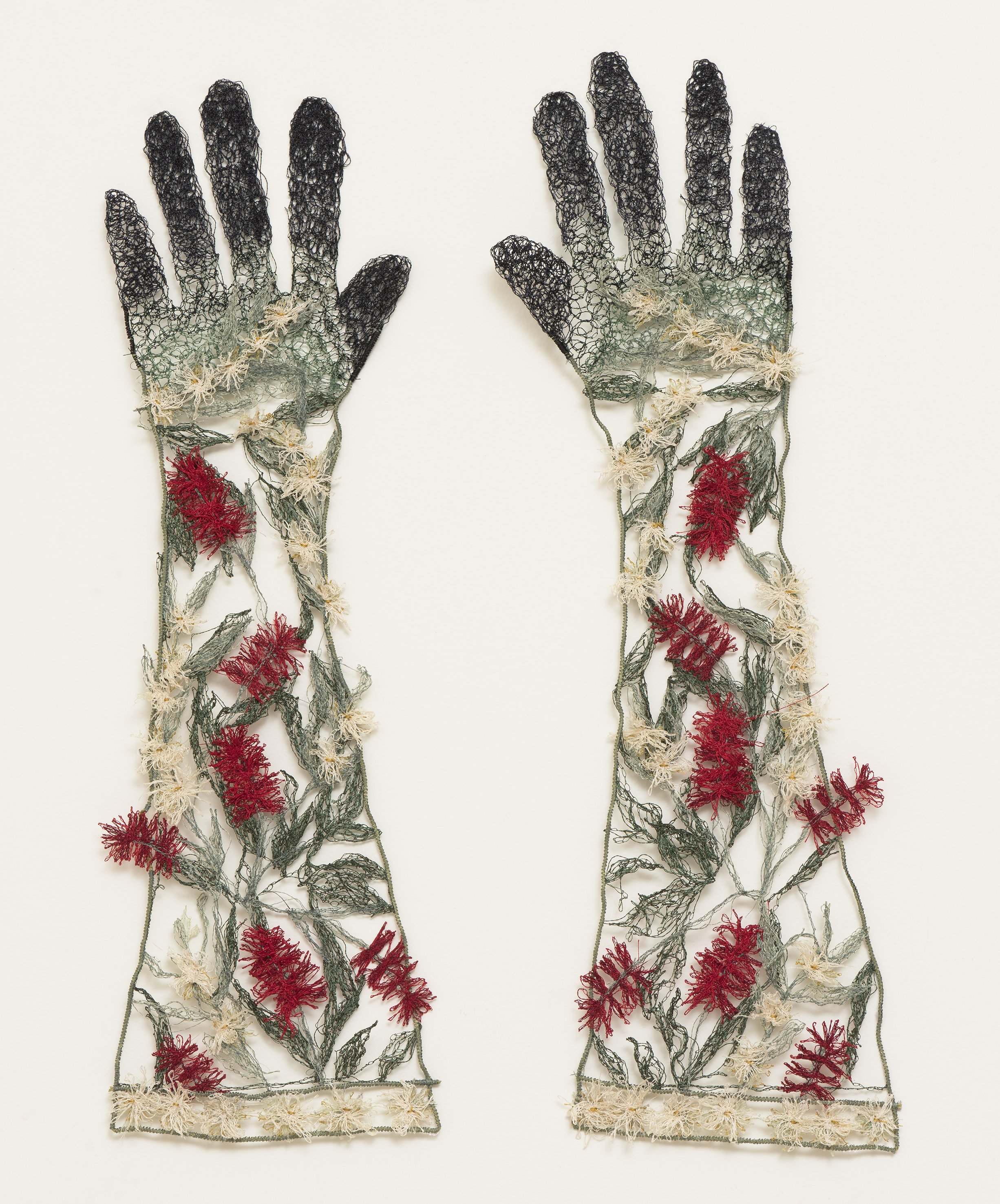
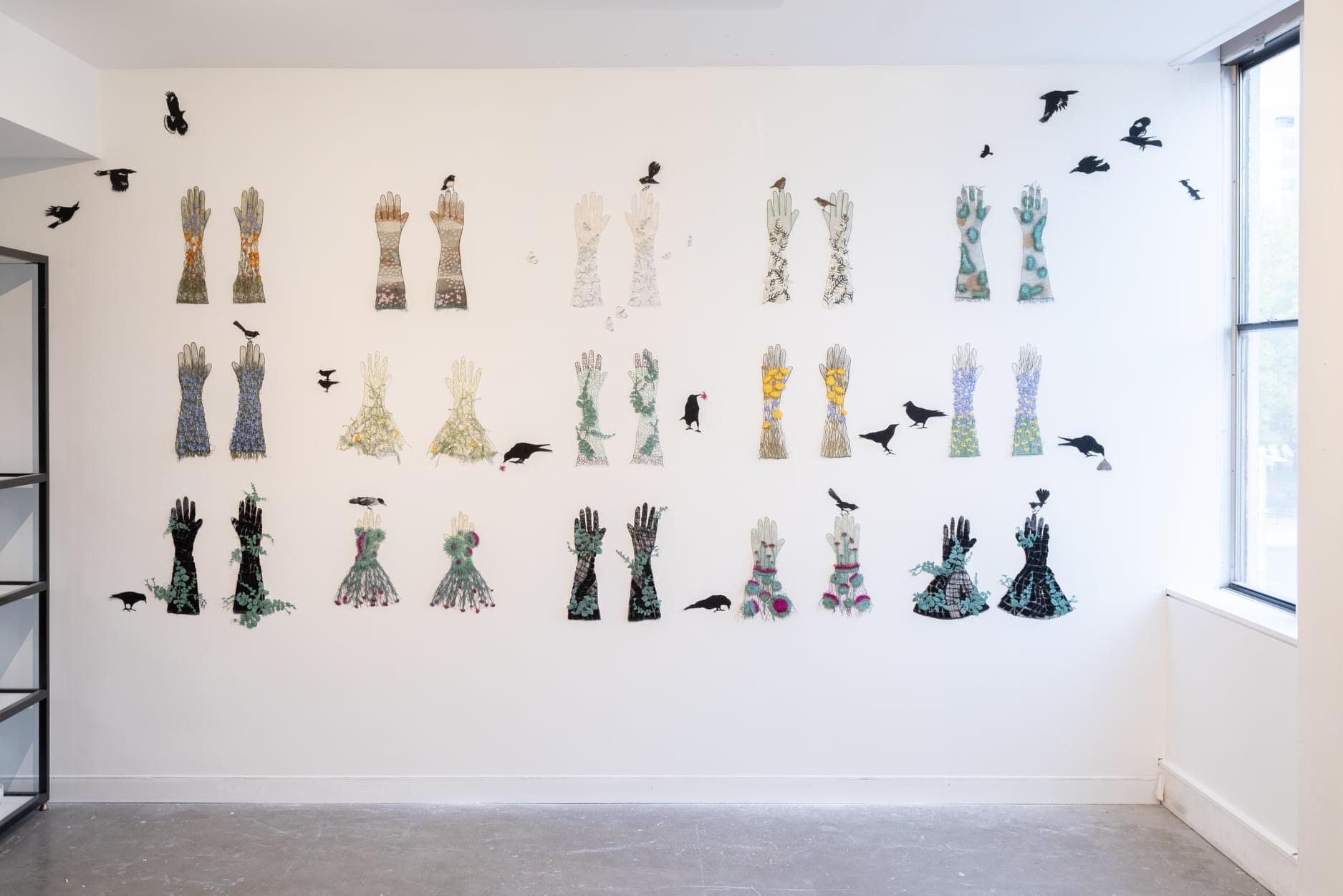
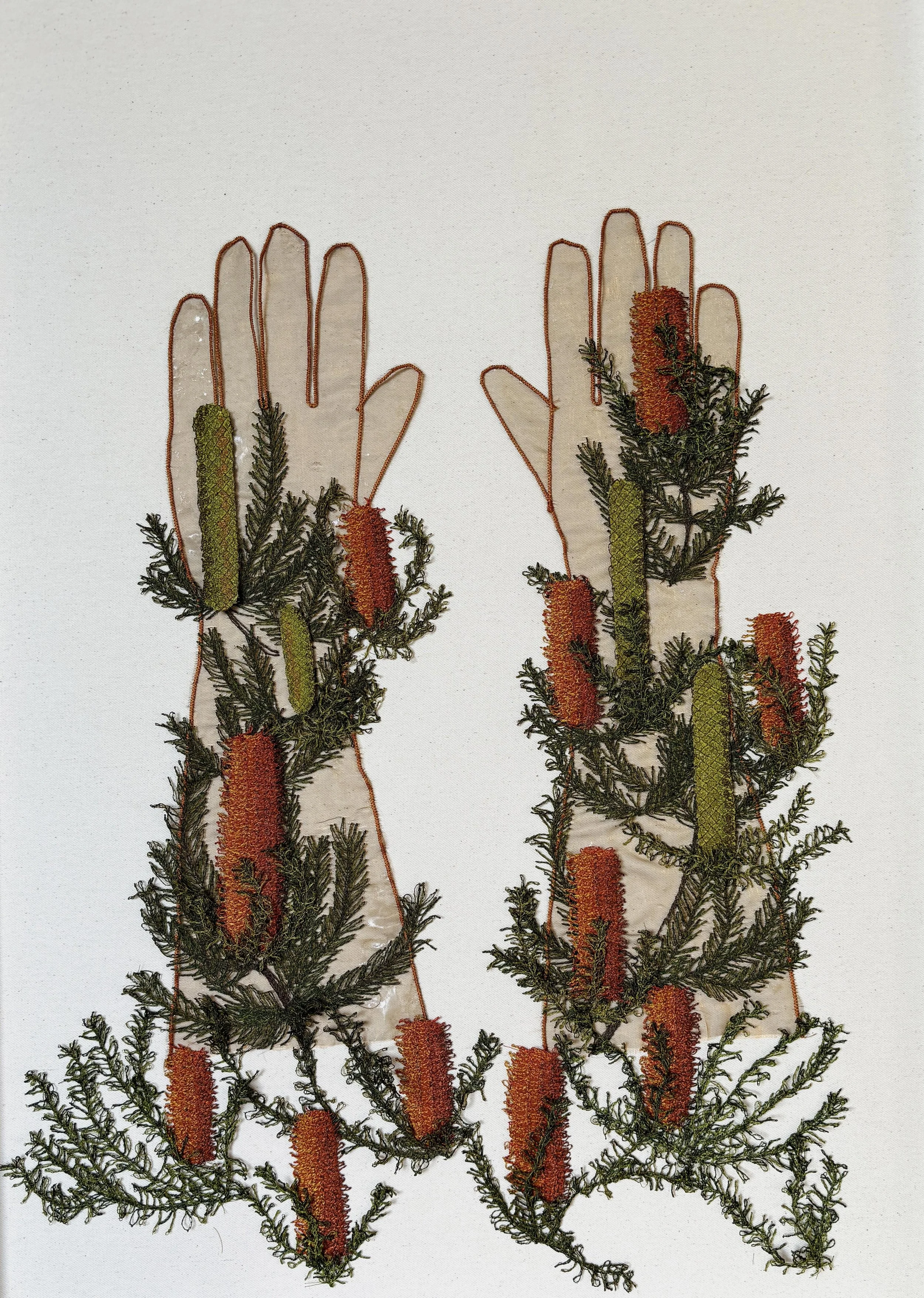
The series of Gardening Gloves emerged during the Covid-19 Lockdown in 2020. Working in the garden was a displacement activity from the high demands of the studio. However, rough dry work hands and fine hand embroidery was difficult. Looking at my hands I realised, as a maker, that they are one of the most important organs. The tub of gardeners’ protective ointment in the bathroom, regularly rubbed into my hands both before putting on work gloves and after, became a routine.
Protecting hands. Hiding the hands away from the dirt.
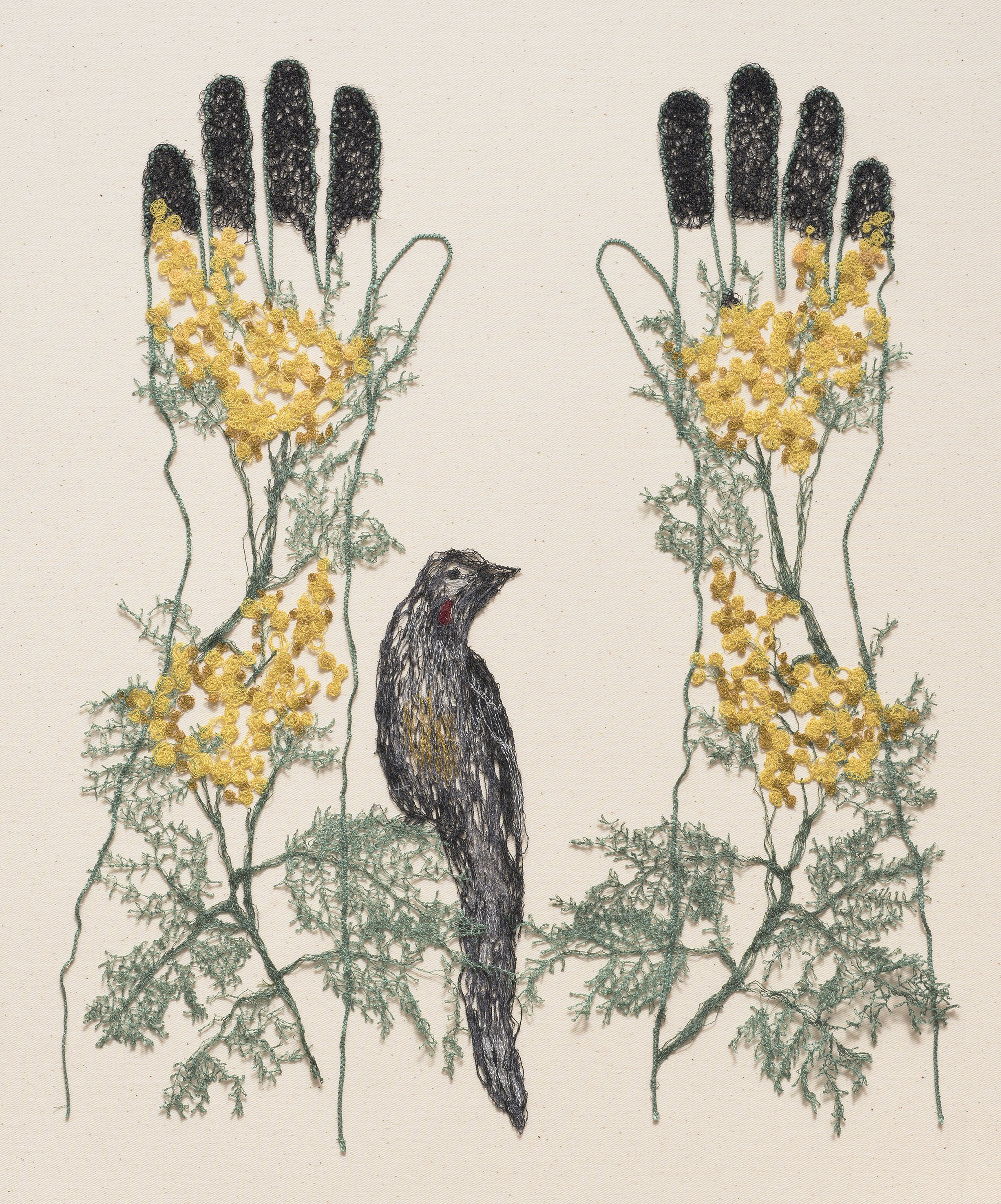
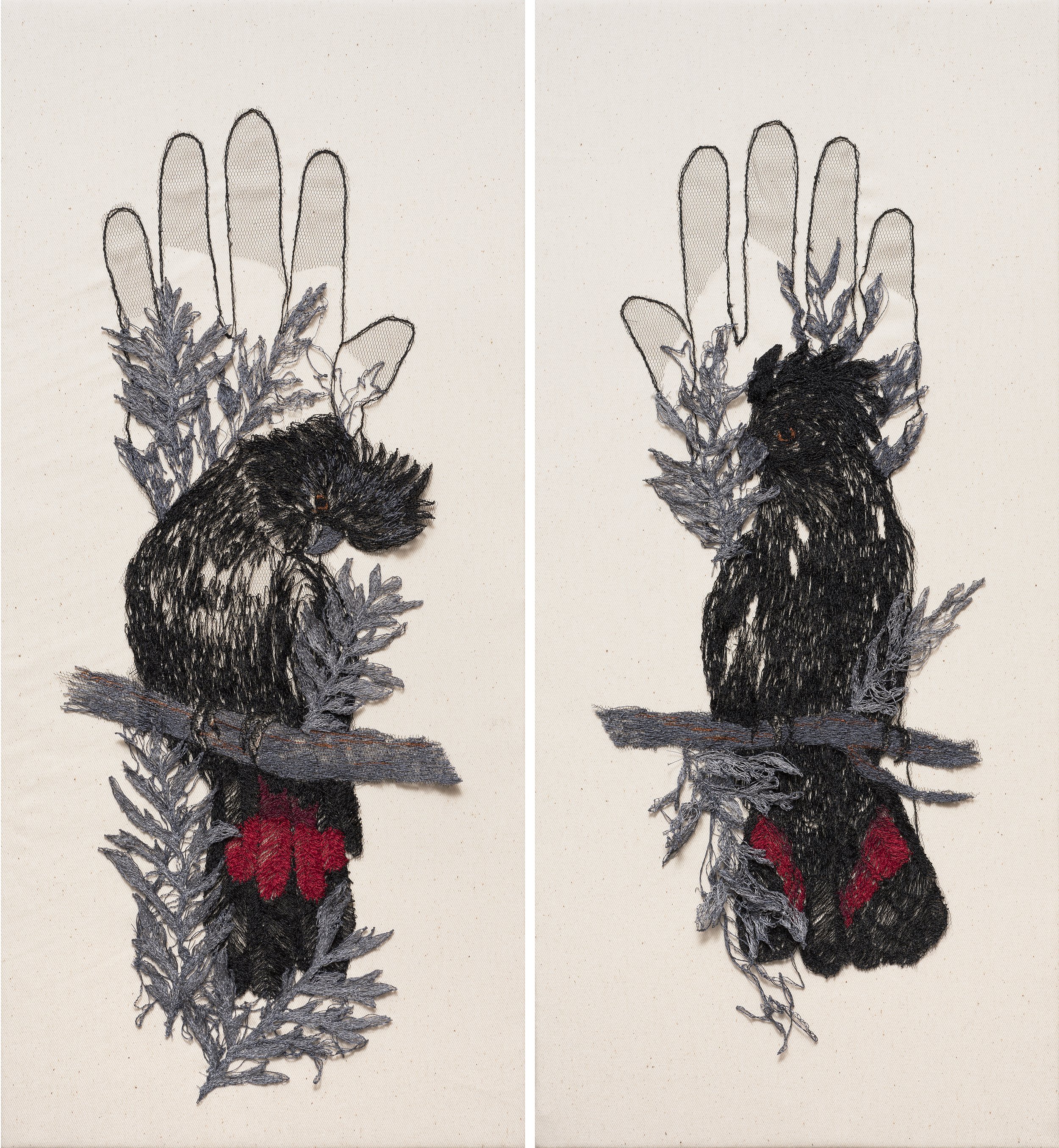
Sitting in the garden, drinking a cup of tea, my regular visitor, a Willie wagtail, moved around my discarded gloves. I spoke to her as I usually do, watching her wag her tail. Her scratchy ‘chucka chucka chucka chucka!’ answered me. Her approval of my digging around, turning over the soil for her to pick over seemed apparent.
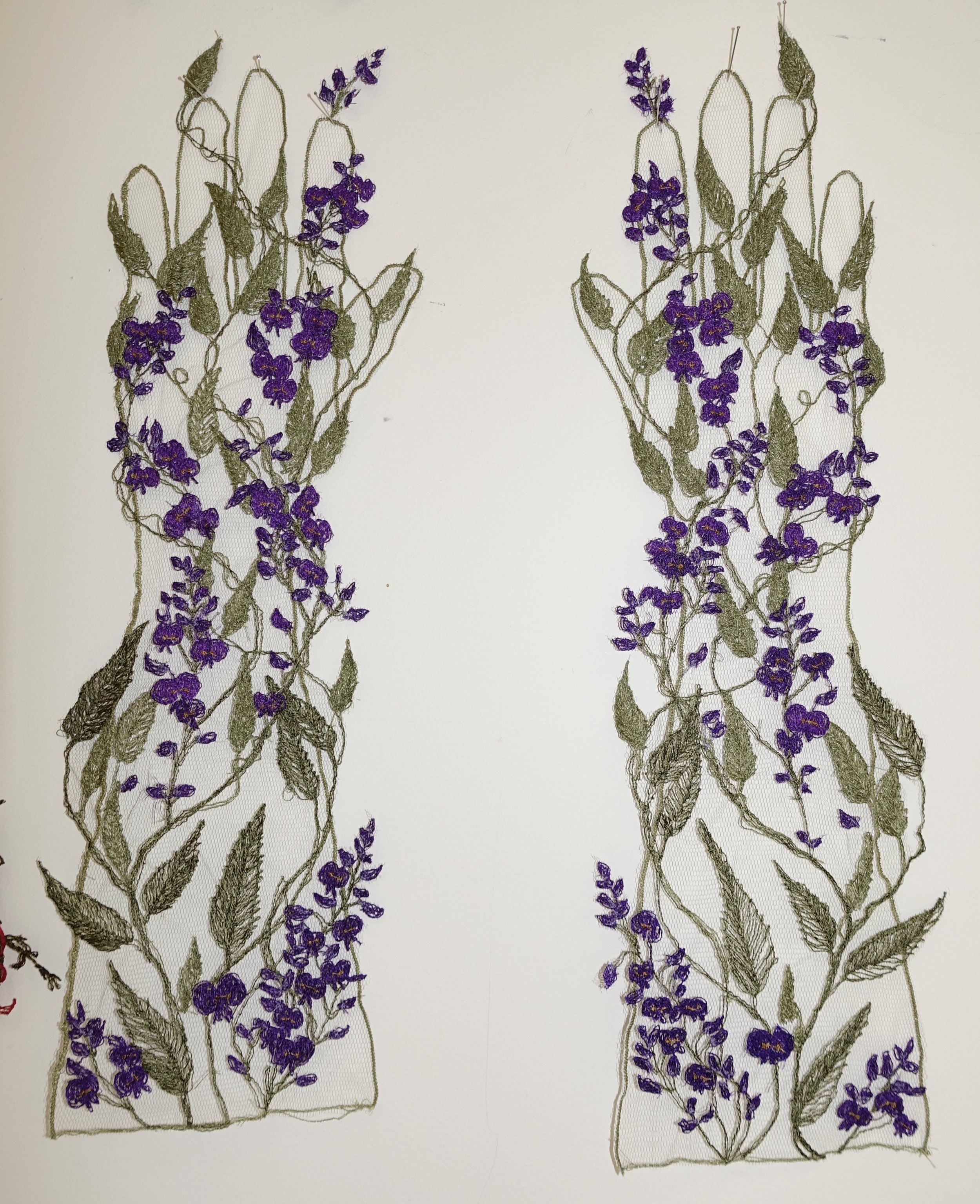
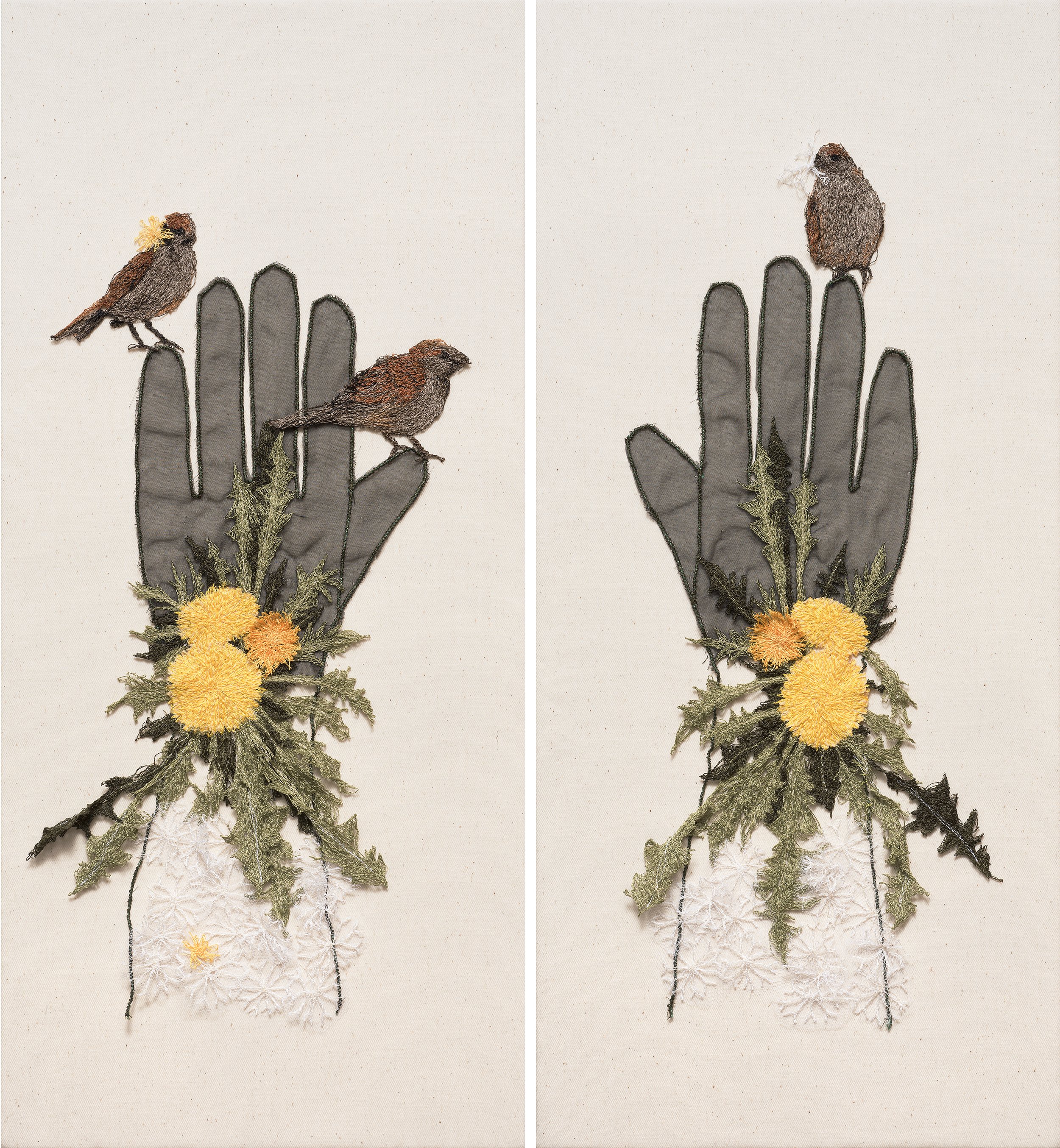
My gloves retained the memory of my own body. I drew the three-dimensional shapes of fingers and palms. These were then translated into embroidered works incorporating the seasonal plants at hand and the birds. Research into gloves set me on a new path of discovery, bringing in previous thoughts and imagery. Gloves are rich with metaphoric value and have great decorative potential. Moving from objects to be worn for protection, to political statements of wealth and elitism, to subjects as artwork, reflected the importance of stitch. Stitching is visible and key to the aesthetics of gloves.
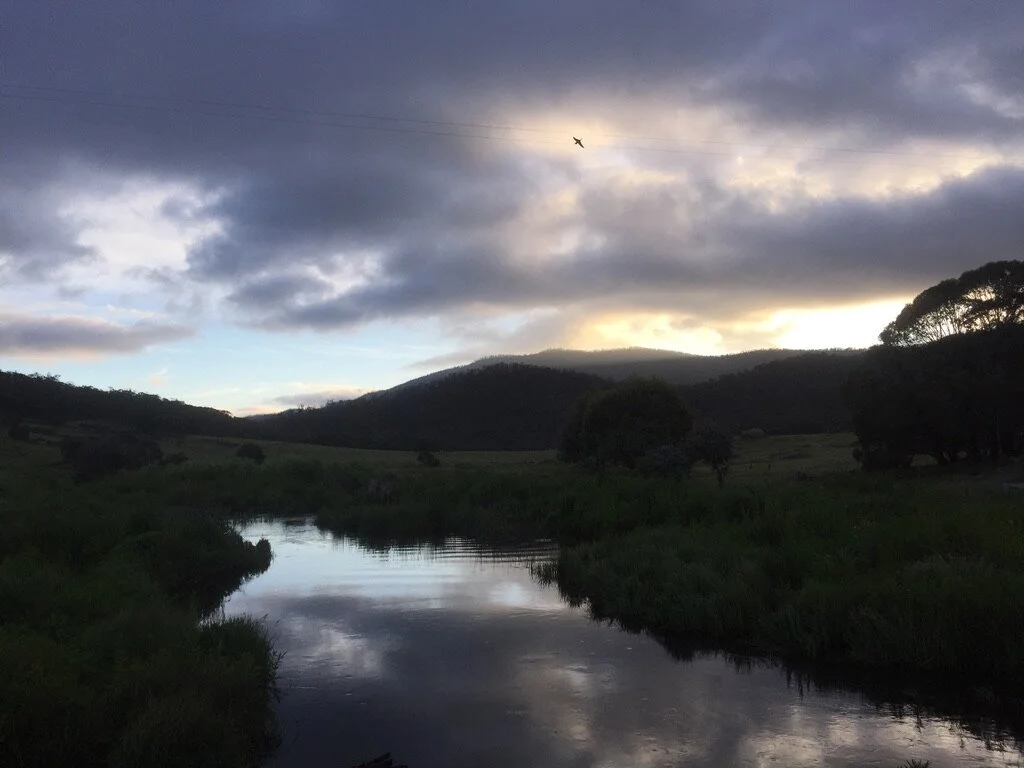
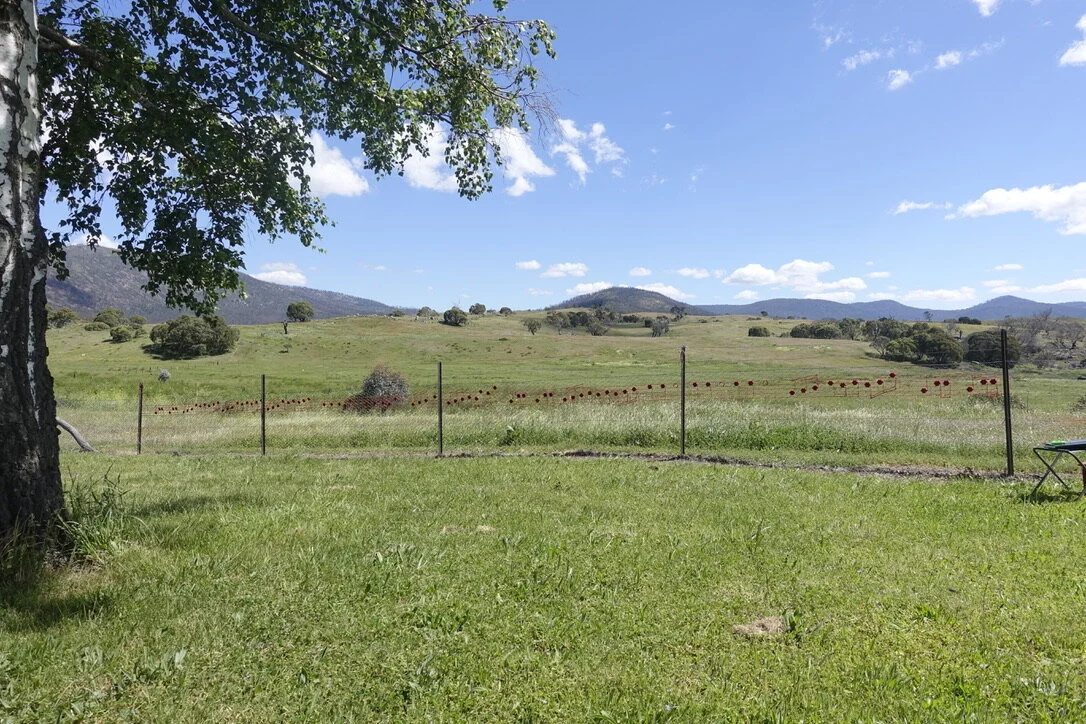
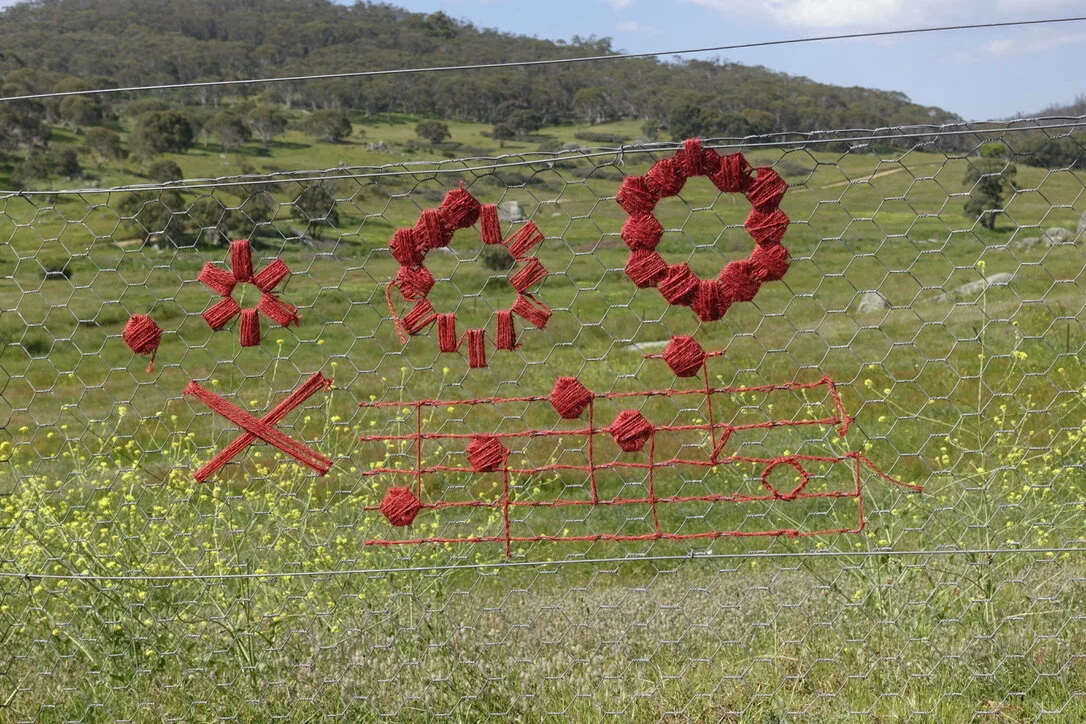
In coming to the CraftACT Residency, I was interested in observing first-hand how national parks are crafted, often by hand, to manage nature and how conditions need to be manipulated in order to not lose such unique environments such as the Namadgi National Park. In one sense the artificial, hands-on management of nature, how we manage nature politically and economically, are incredibly important at this time in the Age of the Anthropocene.
Gardening gloves were the right vehicle for thinking about the environment. Out at Namadgi, I returned to the writings of eco-feminist Val Plumwood. She noted how we battle in with our colonial-influenced gardens as we fight off the pests, struggle with the unwanted plants and battle with reducing the biodiversity of our vegetable plots.
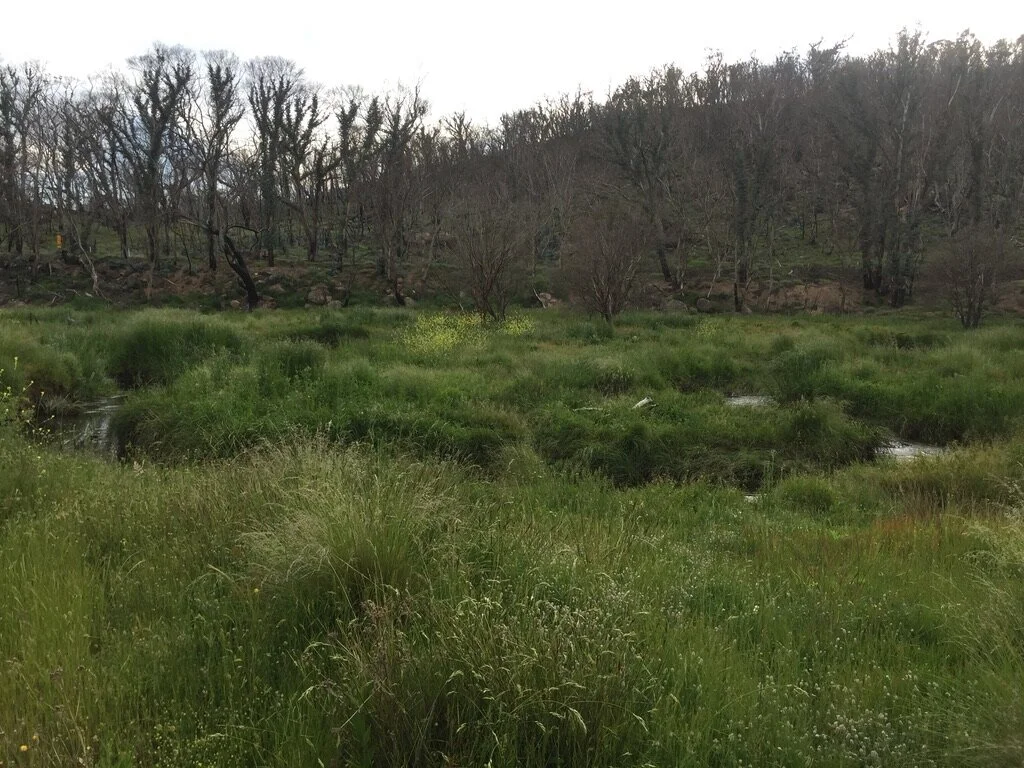
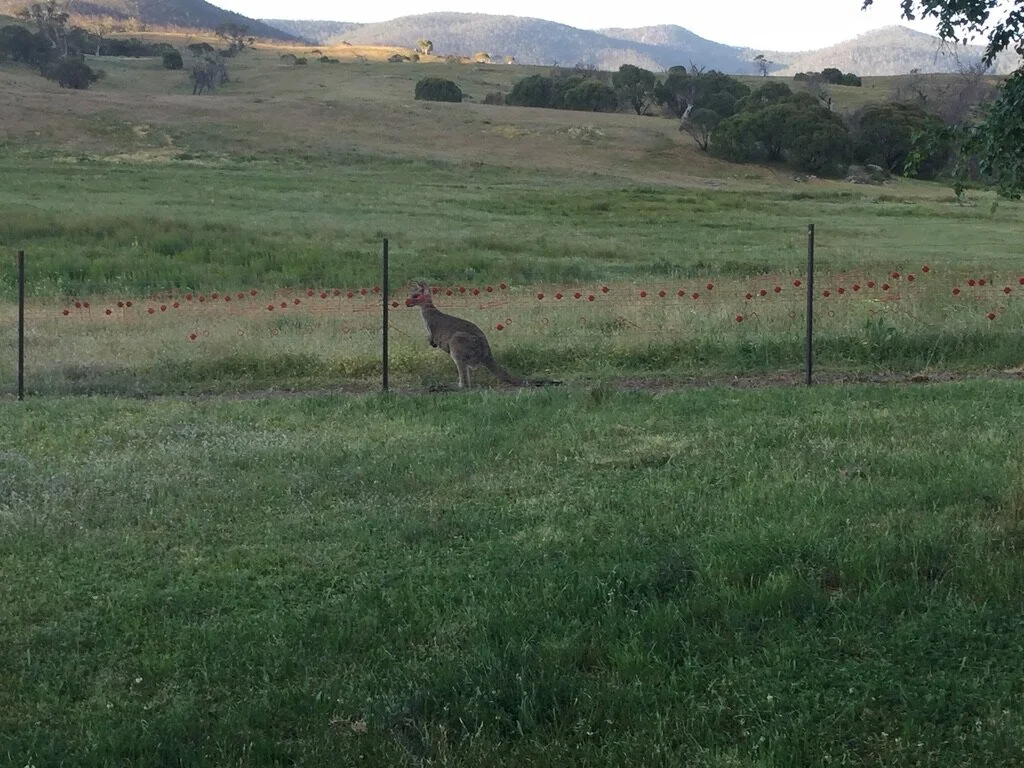
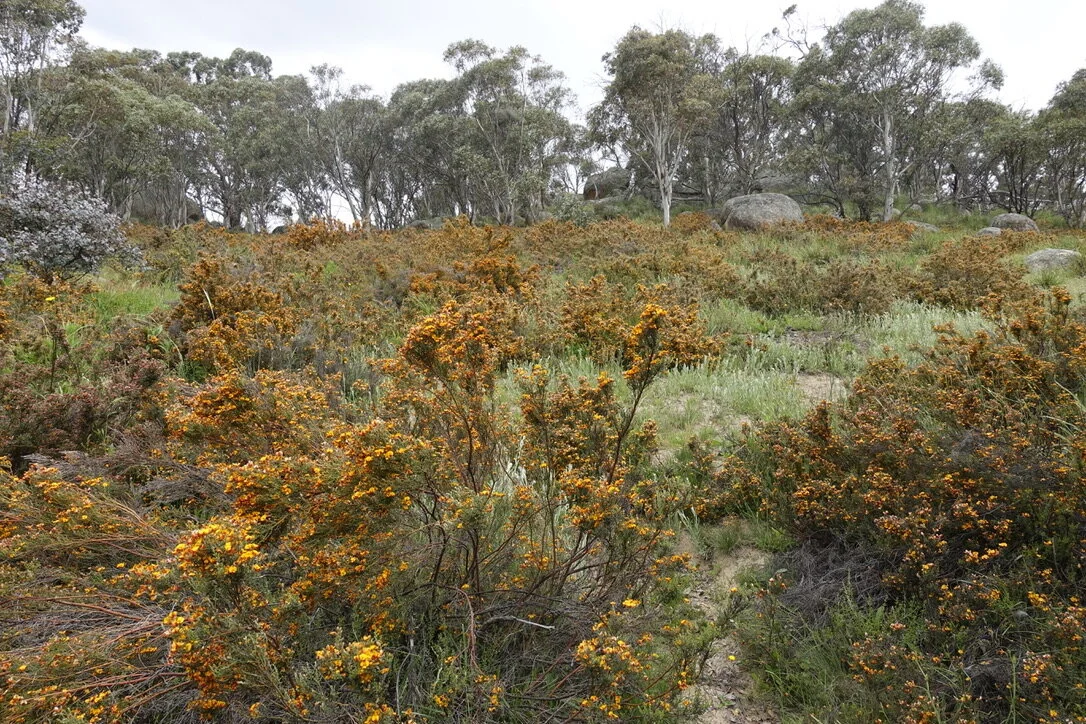
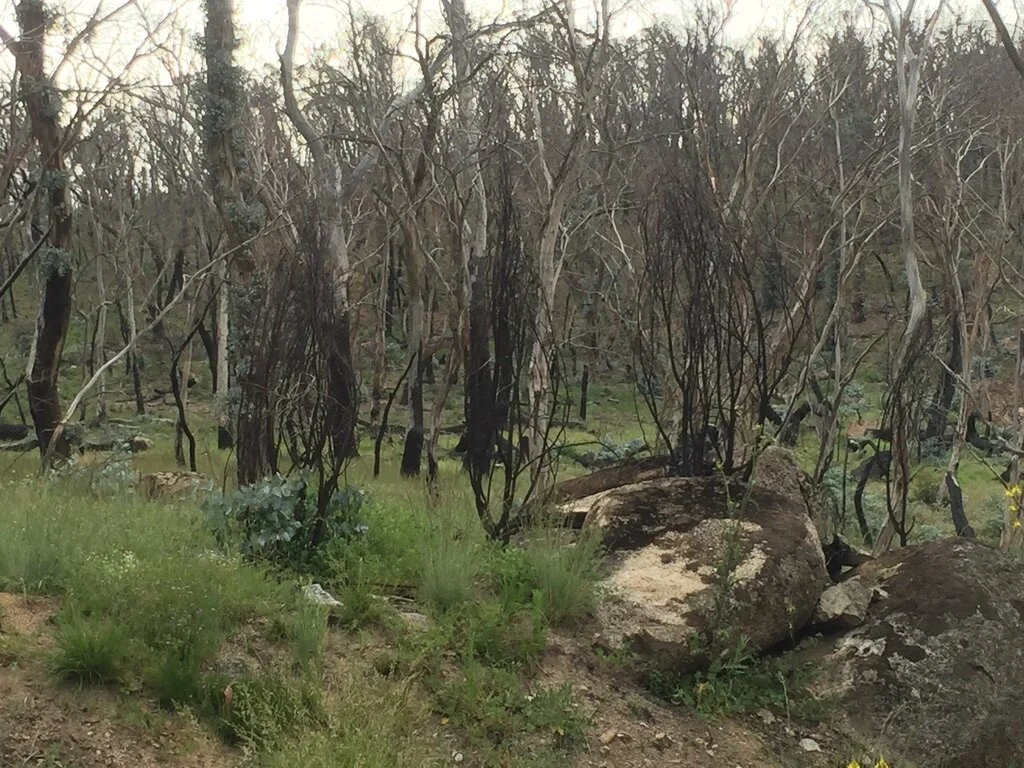
Walking everyday through the landscape surrounding Ready Cut Cottage I marvelled at the regeneration of the land. Water was abundant, wildlife passed by constantly and the growing season was apparent. Sure, the weeds were abundant, and the blackened landscape was dominant, but seeking out the wildflowers and native grasses became my focus. The daily visits of the Willie wagtail, proclaiming her territory from the fence posts, calling to her mate, swooping on the multitudinous cabbage moths and dancing away, drew me back to the idea of gloves.
‘Drawn from the Garden’ was a three person exhibition held at Sturt Gallery from May to July 2022. I exhibited work along with Julie Ryder (textile artist) and Fiona Hiscock (ceramicist). The work we produced indicated our connection with our immediate environments and inspired by our observations and discoveries.
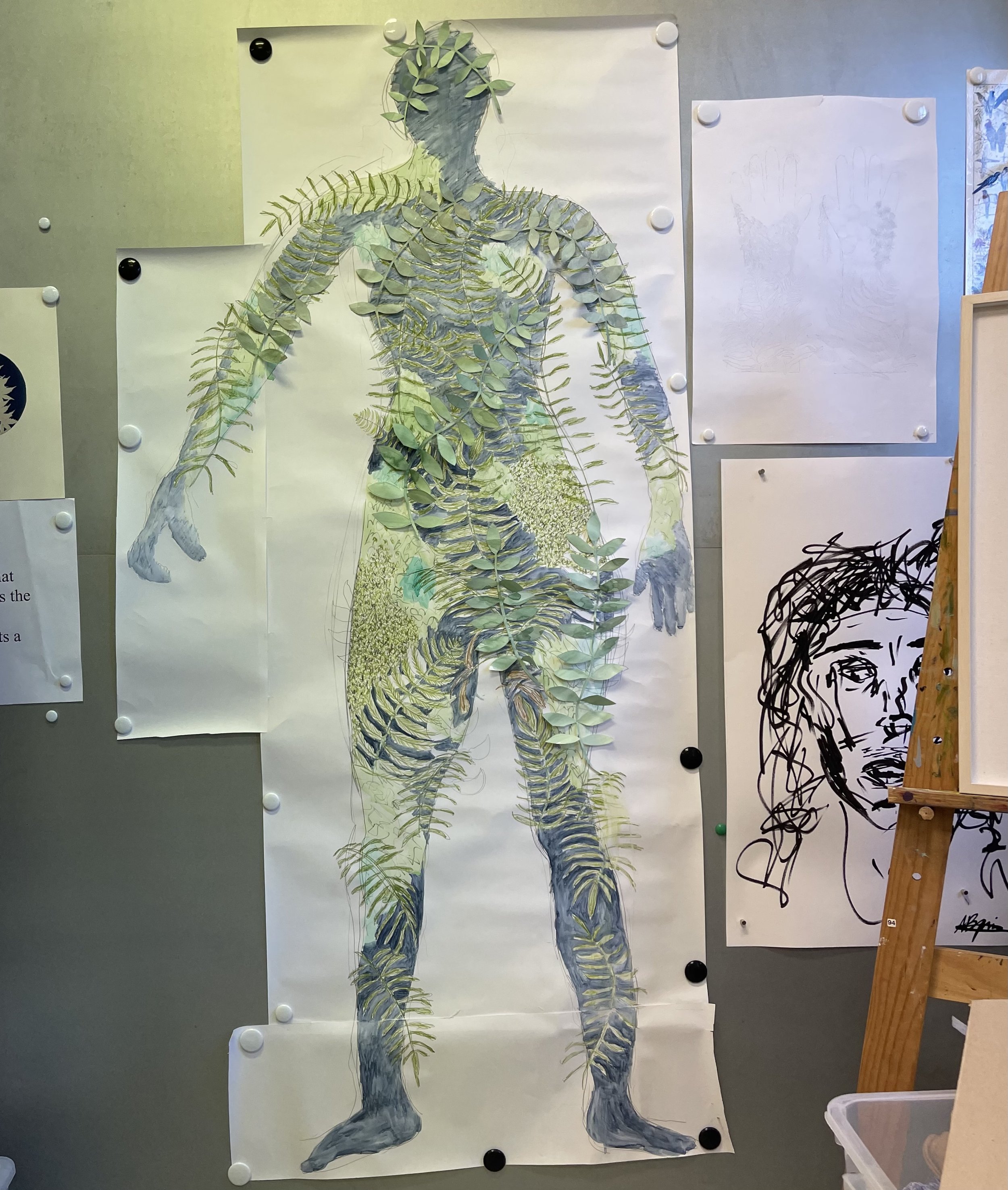
My ‘gardeners’ series built on and used some of the work I made for Death of a craft exhibition from 2017. I really enjoyed getting the older work out and making new bodies from plants found during my walks.
I used the concept of the warrior to indicate the battles we have in our gardens - fighting the weeds, keeping the water up in the long dry Australian summers and warding off unwanted visitors to the garden.
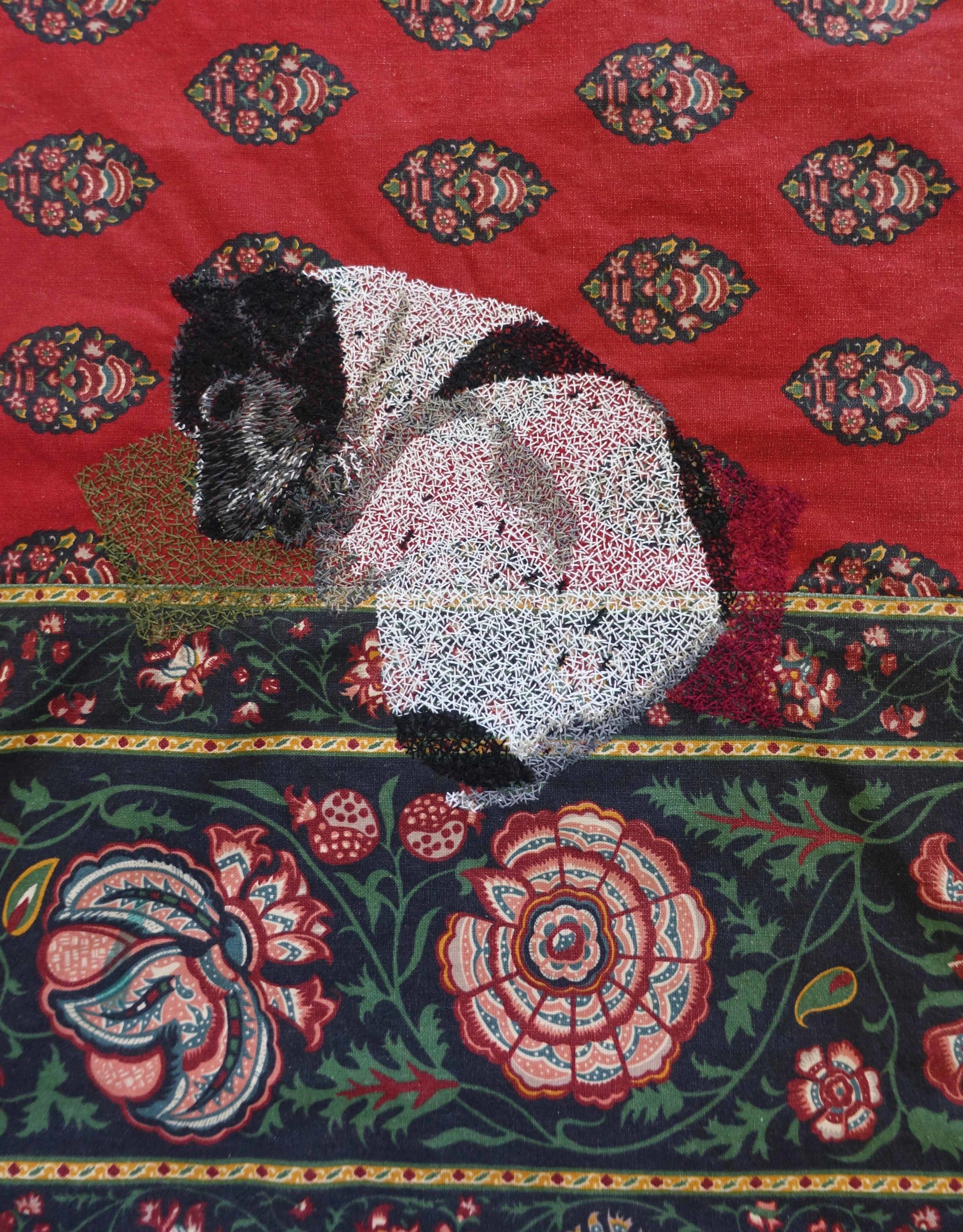
I have worked with images of birds for many years. They often appear in works about gardening but also in portraits. These are machine stitched onto a water soluble fabric which is then rinsed, leaving just the threads. This medium reflects the fragility of the environment in which the birds live.
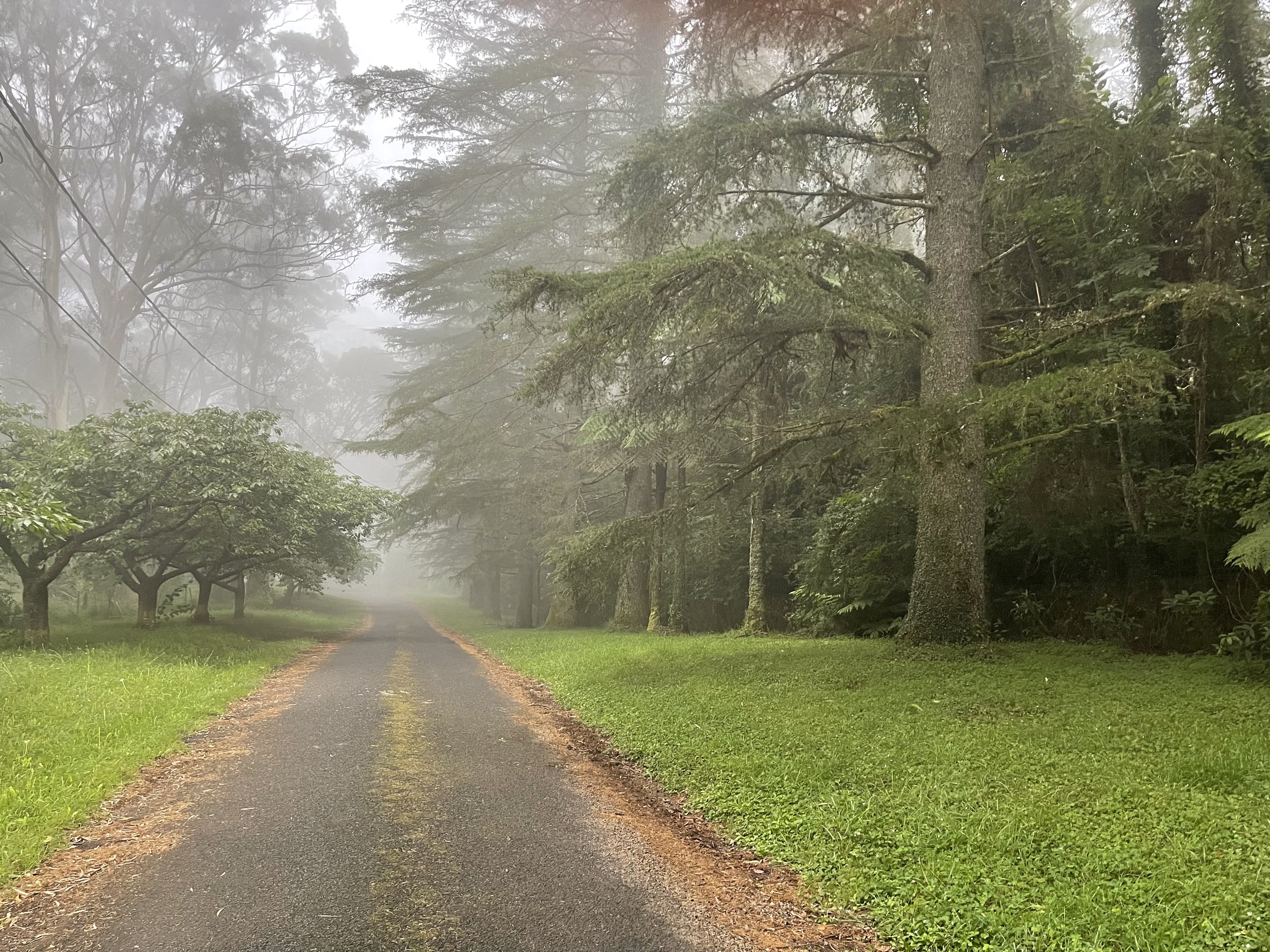
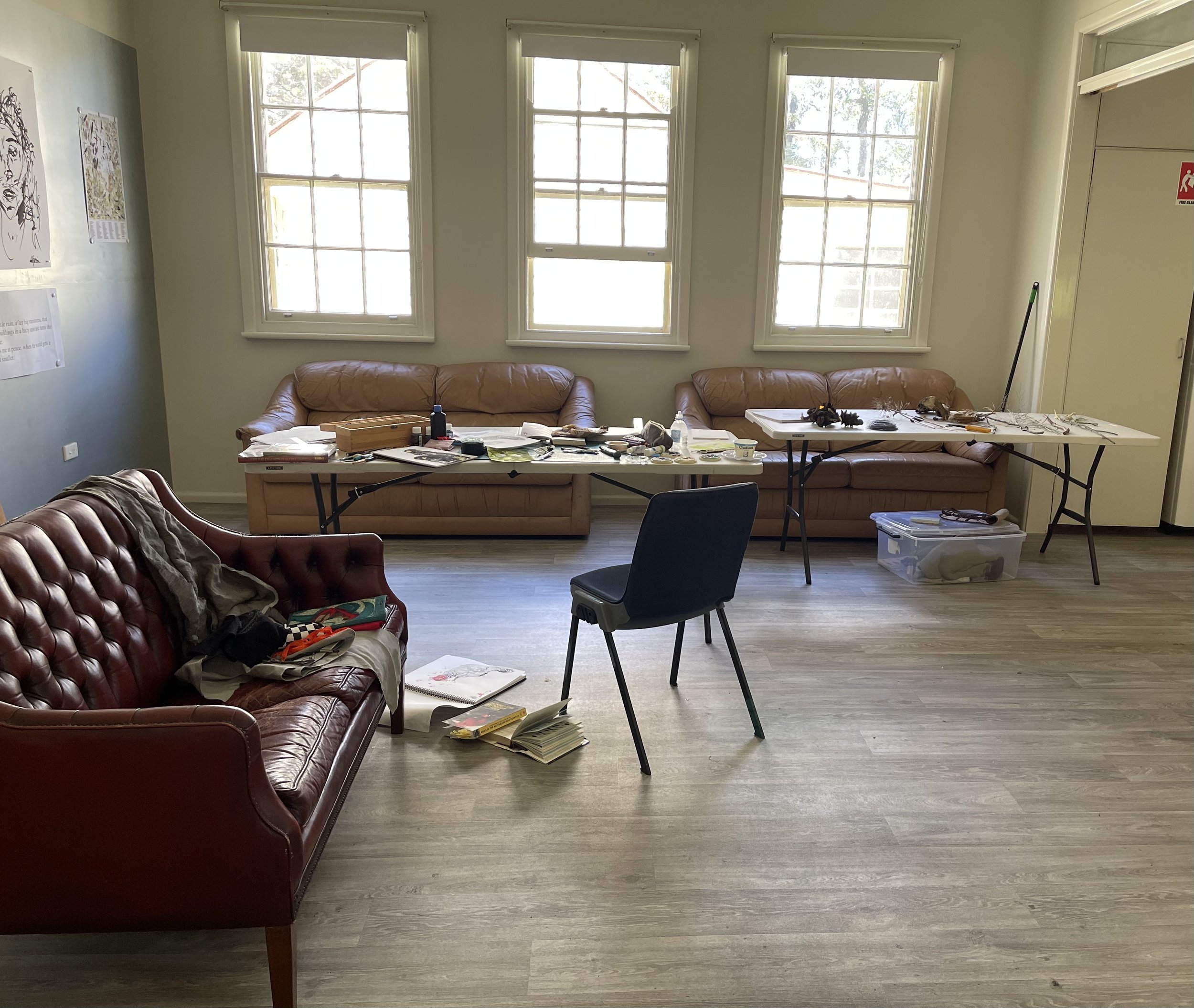
I was very lucky to be chosen as an artist in residency in February 2023. I arrived after a four-hour drive, north from Canberra, through Goulburn to the Blue Mountains. I really felt as though I had arrived driving through dark tunnels made by the branches of very old exotic deciduous trees along The Avenue. I became so excited that I missed the old school house where I was to stay for four weeks.
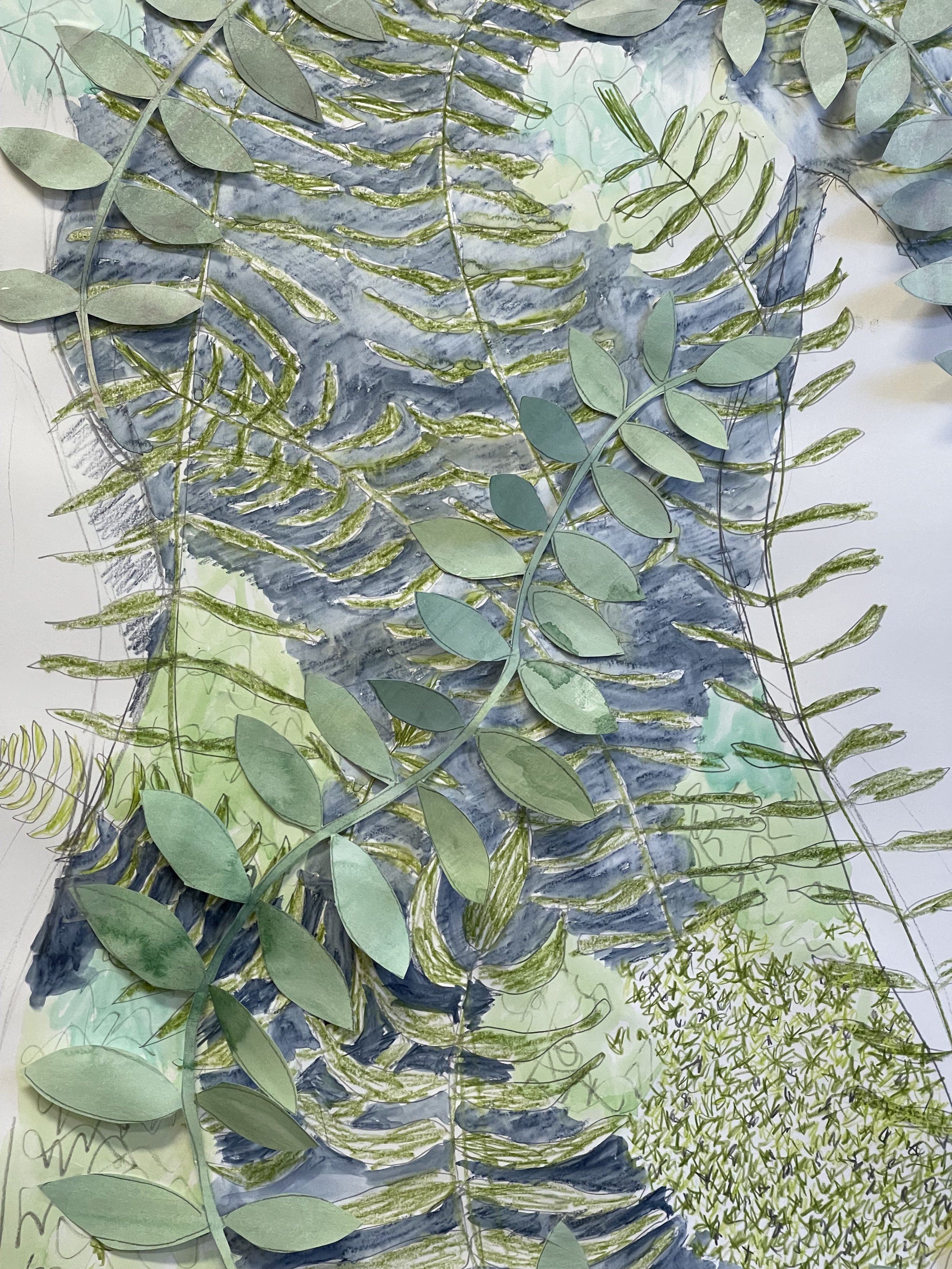
I walked most mornings for a couple of hours along the fire trails and designated tracks. In the studio I would write in my journal first, followed by drawing or painting. After a week or so I then began some little stitched pieces which I could work on at night in the Teacher’s Cottage. I loved being able to think for hours on end without any interruptions.
It was incredibly quiet. I was quite isolated as most of the properties were large ornamental gardens or small farms. Mt Wilson was 30 minutes from any shops or cafes.
I was very privileged to be invited to some of the gardens and properties for afternoon tea or drinks. This was always preceded by a walk around the garden. I feel I need to return in Spring to see all the plants in bloom.
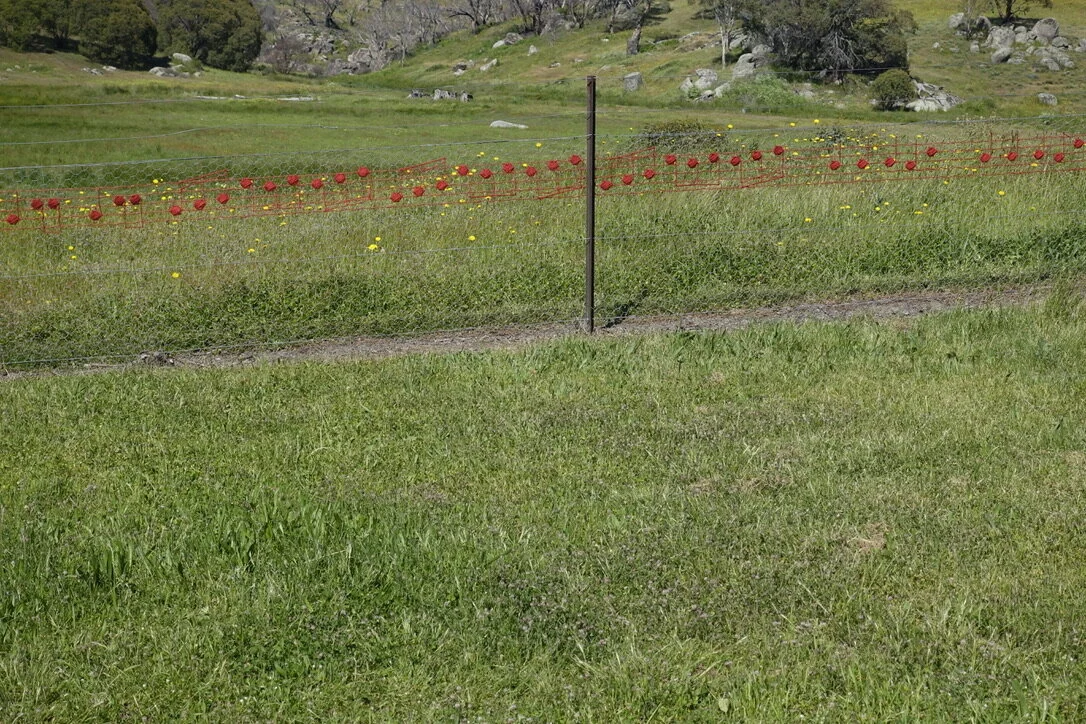
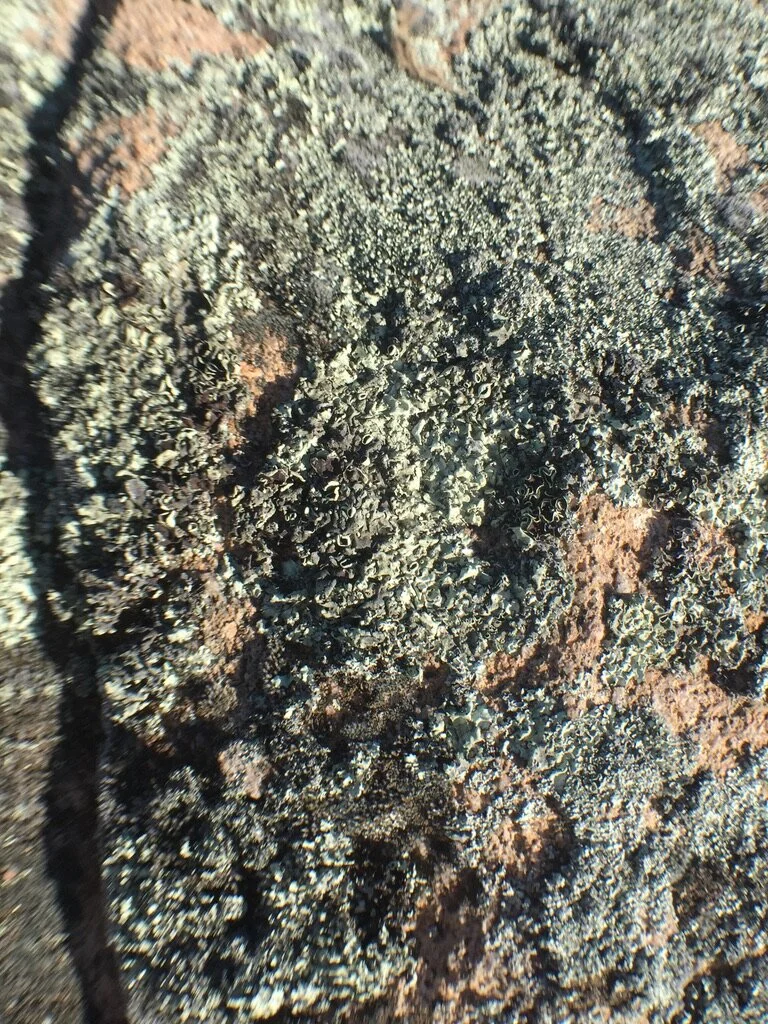
I gathered together some great resources that I am looking forward to playing around with over the next year or so.
To view each body of work simply click the image. My visual art CV can be found here.
I was born Melbourne, Australia into a family that encouraged creativity and making. In my family someone was always making something. From a young age, sewing and embroidery became my lifelong passion. Even though at times I pursued other paths, these paths spiralled: returning to and exploring themes related to the body. While I often I try to pare down and intellectualise my work, there is no denying the strongly decorative elements. In the last fifteen years I have been constructing machine embroidered textiles using soluble fabric to make lace-like structures. These structures are the vehicle for the narratives of life’s complexities.
I can be contacted at sharon.peoples.studio@gmail.com